
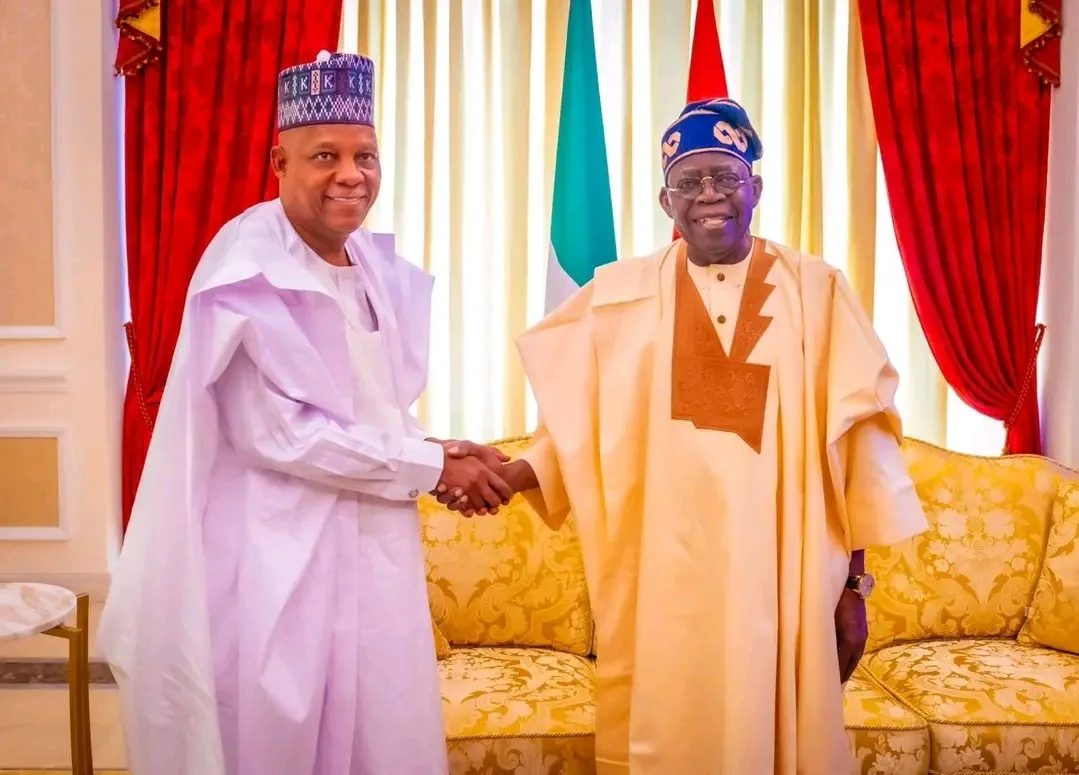
APC defends continuity and competence as opposition parties, regional groups and political stakeholders remain divided over the implications of another same-faith presidential ticket ahead of the 2027 general election.
By Angela Udende
ABUJA, Nigeria — July 13, 2026
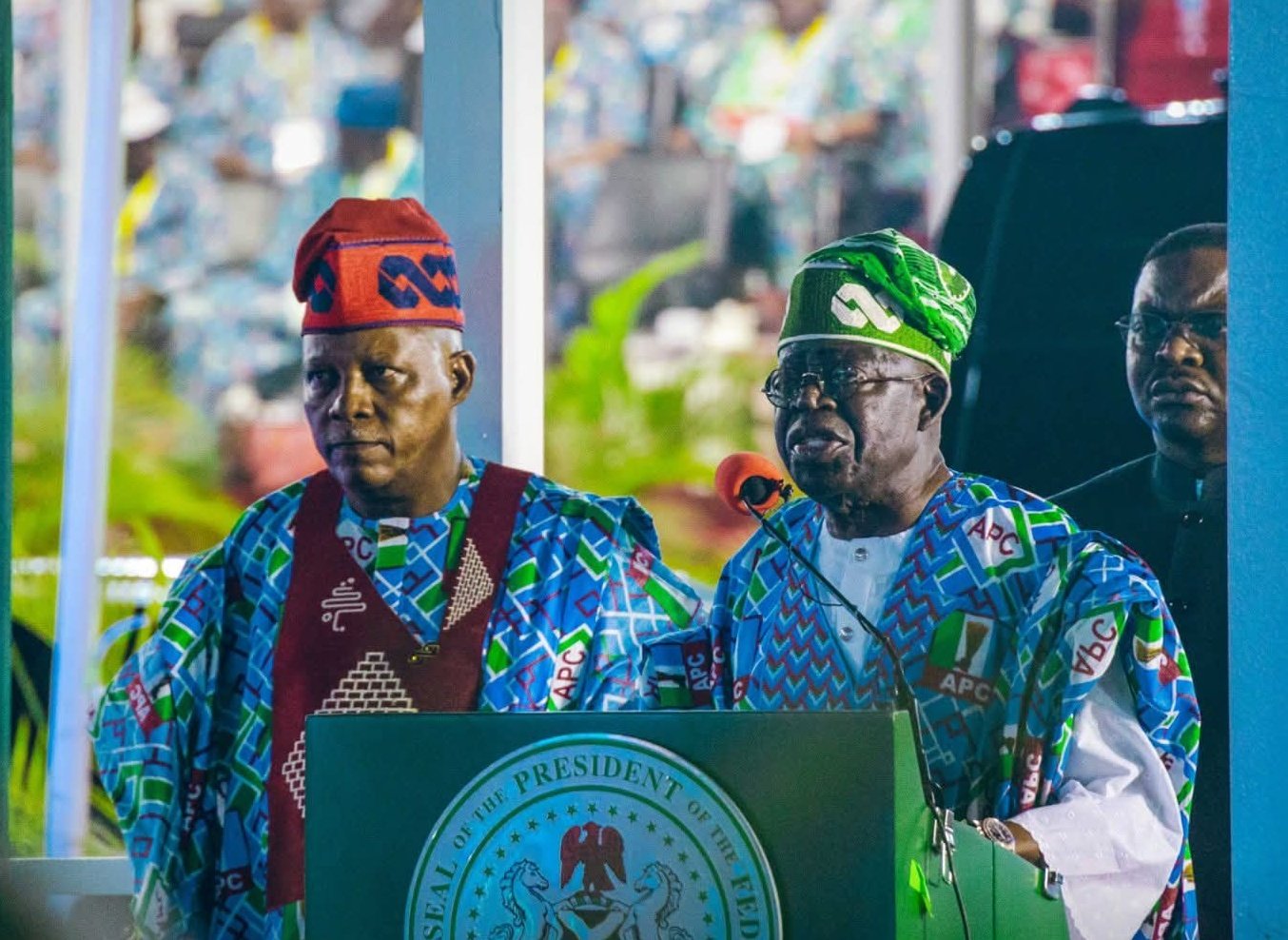
President Bola Ahmed Tinubu’s decision to retain Vice President Kashim Shettima as his running mate for the 2027 presidential election has reignited one of Nigeria’s most contentious political debates—the place of religion, inclusiveness and competence in the country’s leadership selection.
The confirmation by the All Progressives Congress (APC) effectively ends months of speculation over the possibility of replacing Shettima with a Northern Christian and signals the party’s determination to seek re-election with the same presidential ticket that secured victory in the 2023 polls.
However, the announcement has once again polarized political opinion, with supporters arguing that leadership competence and political stability should outweigh religious considerations, while critics insist that the decision ignores Nigeria’s delicate religious diversity and risks deepening feelings of exclusion among sections of the population.
The renewed debate comes as political parties begin positioning for what is expected to be a fiercely contested 2027 presidential election.
APC Ends Months of Speculation
For months, political observers had speculated that President Tinubu could reshuffle his ticket in response to persistent criticisms of the Muslim-Muslim presidential pairing.
Among personalities repeatedly linked with the vice-presidential position were:
- Defence Minister Gen. Christopher Musa (Rtd.)
- Catholic Bishop of Sokoto Diocese, Bishop Matthew Hassan Kukah
- Former Speaker of the House of Representatives, Yakubu Dogara
Friday’s confirmation of Shettima, however, settled the speculation and reaffirmed the APC’s confidence in its current leadership team.
Party officials maintain that the decision followed extensive consultations and strategic political assessment rather than religious considerations.
A Debate That Never Truly Ended
The controversy surrounding the Muslim-Muslim ticket first dominated national discourse before the 2023 general election when Tinubu, a Muslim from the South-West, selected Shettima, a Muslim from the North-East, as his running mate.
At the time, critics argued that abandoning the long-standing practice of balancing presidential tickets along religious lines could undermine national cohesion in Nigeria’s multi-faith society.
Supporters countered that the Constitution places no religious qualification on elective offices and that competence should remain the overriding consideration.
Despite widespread debate, the APC ticket defeated the Peoples Democratic Party (PDP), Labour Party (LP) and New Nigeria Peoples Party (NNPP) candidates to secure victory.
With the same ticket now confirmed for 2027, those arguments have returned to the centre of national political discourse.
APC Defends Decision
The ruling party insists that retaining Shettima reflects continuity, political stability and confidence in the administration’s leadership.
APC Director of Publicity, Bala Ibrahim, dismissed claims that the same-faith ticket threatens national unity.
According to him, the fears expressed before the 2023 election have not materialised.
He argued that the Tinubu administration has continued to promote interfaith cooperation while governing in the interest of all Nigerians irrespective of religion.
The party maintains that political decisions must ultimately reflect national interest rather than identity politics.
Competence Versus Religious Identity
Several political parties have also argued that Nigerians should focus more on governance than religious identity.
The All Progressives Grand Alliance (APGA) said voters should evaluate candidates based on competence, capacity and performance rather than faith.
Its National Publicity Secretary, Ejimofor Opara, urged Nigerians to move beyond identity politics and prioritise effective leadership.
Similarly, the Young Progressives Party (YPP) argued that Nigeria’s greatest challenge has never been religious composition but poor governance.
The party maintained that accountability, integrity and service delivery should determine electoral choices in 2027.
Political Analysts Predict Shift in Campaign Issues
Some political analysts believe religion will play a less dominant role in the next election.
Action Democratic Party (ADP) National Chairman, Yabagi Yusuf, said electoral success would depend more on strategic political calculations than religious balancing.
According to him, political parties are primarily concerned with assembling tickets capable of attracting the broadest national support.
Former Coalition of United Political Parties (CUPP) spokesman, Mark Adebayo, shares a similar view.
He argued that worsening economic conditions, insecurity, inflation, unemployment and governance performance are more likely to shape voter decisions than the religious identity of candidates.
Many analysts note that the economic realities confronting millions of Nigerians may overshadow identity-based campaigns.
Regional Groups Express Concerns
Not all stakeholders agree with the APC’s position.
The Coalition of South East Youth Leaders (COSEYL) criticised the decision, arguing that it fails to reflect Nigeria’s religious and cultural diversity.
Its leadership warned that overlooking the opportunity to nominate a Northern Christian could reinforce perceptions of exclusion among Christian communities.
Likewise, the South-South Youths Initiative questioned the political calculations behind Shettima’s retention, suggesting that electoral considerations in Northern Nigeria may have influenced the APC’s decision.
Middle Belt Forum Raises Concerns
The Middle Belt Forum also expressed disappointment over the ruling party’s decision.
Its National President, Dr. Pogu Bitrus, described the continuation of another Muslim-Muslim ticket as insensitive to Nigeria’s religious diversity.
According to the forum, leadership in a plural society should reflect both competence and inclusiveness.
The organisation argued that symbolic representation remains important for strengthening national unity and public confidence in democratic institutions.
Civil Society Offers Alternative Perspective
Civil society groups remain divided on the issue.
The Chairman of the Centre for Accountability and Open Leadership (CAOL), Debo Adeniran, observed that many fears raised before the 2023 election did not materialise.
He pointed out that President Tinubu and Vice President Shettima have maintained a stable working relationship since assuming office.
According to him, loyalty and continuity may have played significant roles in the President’s decision to retain his deputy.
Support Grows Within APC
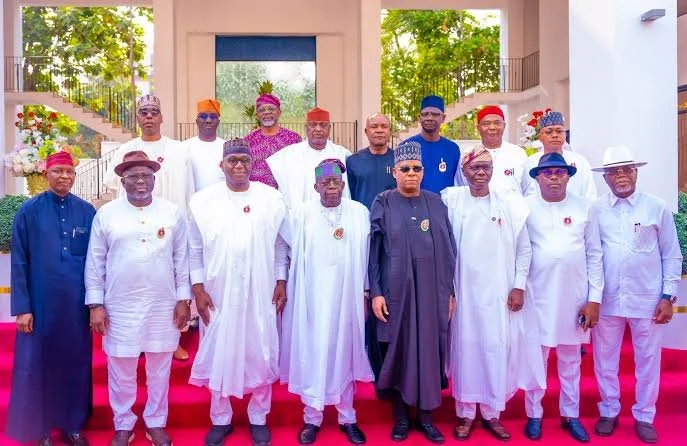
Within the ruling party, support for Shettima’s retention appears overwhelming.
APC leaders in Abia State described the decision as logical and politically sound.
Party Chairman Chijioke Chukwu argued that replacing a loyal deputy who has worked harmoniously with the President would have been unnecessary.
Prominent businessman and politician Dr. Sam Ohuabunwa also supported the move, noting that the ticket had already proven electorally successful in 2023.
Similarly, Ohanaeze chieftain Justice Rowland Ajuzieogu argued that the Constitution gives every presidential candidate the exclusive right to select a running mate.
Afenifere Faults Same-Faith Ticket
A faction of the Yoruba socio-cultural organisation Afenifere, however, disagreed.
Led by Oba Olaitan Oladapo, the group criticised the APC for failing to reflect fairness and religious inclusiveness.
Its National Publicity Secretary, Justice Faloye, argued that another same-faith ticket raises concerns about federal character, equity and national cohesion.
The group urged political leaders to promote broader inclusion in leadership appointments to strengthen Nigeria’s unity.
Beyond Religion: Issues Likely to Define 2027
While debate over the Muslim-Muslim ticket continues, many political observers believe the 2027 election may ultimately be decided by issues beyond religion.
Among the issues expected to dominate public discourse are:
- Economic reforms
- Inflation and cost of living
- National security
- Employment
- Power supply
- Education
- Healthcare
- Anti-corruption efforts
- Infrastructure development
Analysts argue that voter expectations have increasingly shifted toward measurable governance outcomes rather than identity politics alone.
President Tinubu’s decision to retain Vice President Kashim Shettima has once again placed religion and political inclusiveness at the centre of Nigeria’s electoral conversation.
While the APC insists competence, continuity and political stability justify the decision, critics continue to argue that leadership in a diverse nation must also reflect religious balance and national inclusion.
As preparations for the 2027 general election gather momentum, the debate over the Muslim-Muslim ticket is likely to remain an important political issue. However, with economic hardship, insecurity and governance challenges dominating public concern, the electorate may ultimately judge candidates less by religious identity and more by their ability to provide effective leadership and improve the lives of Nigerians.




Leave a Reply