
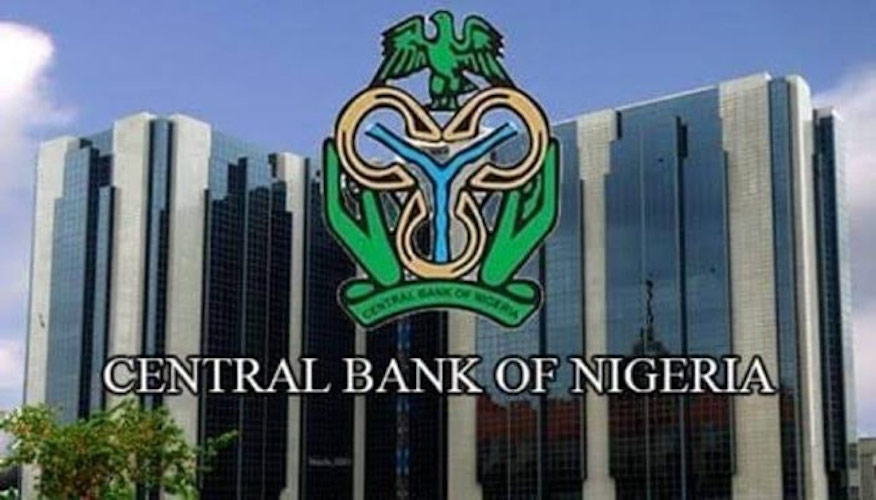
Monetary Policy Committee sustains tight monetary stance for a second consecutive meeting, citing inflation concerns, global geopolitical uncertainty and the need to preserve macroeconomic stability
By Emma Adeboye
ABUJA, Nigeria — July 21, 2026
The Central Bank of Nigeria (CBN) has retained its benchmark Monetary Policy Rate (MPR) at 26.5 per cent, maintaining a tight monetary policy stance despite signs of easing inflation, as policymakers remain cautious over persistent domestic price pressures and mounting global uncertainties.
The decision was reached at the conclusion of the 306th Monetary Policy Committee (MPC) meeting held in Abuja on Tuesday and announced by the Governor of the Central Bank, Mr. Olayemi Cardoso.
The move marks the second consecutive MPC meeting in which the apex bank has left interest rates unchanged following an earlier reduction of 50 basis points from 27 per cent, signalling that Nigeria’s monetary authorities remain focused on consolidating recent gains in inflation control rather than stimulating economic expansion through cheaper credit.
Why the CBN Chose to Hold Rates
Speaking after the meeting, Cardoso said members of the Monetary Policy Committee carefully reviewed both domestic economic indicators and global developments before unanimously deciding to maintain the current policy rate.
According to him, although Nigeria recorded a marginal decline in inflation during June, the MPC concluded that significant upside risks remain, particularly those arising from renewed geopolitical tensions in the Middle East, which could disrupt global energy markets and trigger another round of imported inflation.
He noted that maintaining the existing monetary stance would help safeguard recent progress in stabilising prices while allowing policymakers to monitor the evolving domestic and international economic environment.
“The Committee considered it appropriate to sustain the current policy stance in order to preserve the gains already achieved in moderating inflation,” Cardoso said.
Key Monetary Policy Decisions
Beyond retaining the Monetary Policy Rate at 26.5 per cent, the MPC also announced several complementary policy decisions aimed at maintaining liquidity discipline within the banking sector.
The Committee resolved to:
- Retain the Monetary Policy Rate (MPR) at 26.5%;
- Narrow the Standing Lending and Deposit Facilities corridor to +50/-450 basis points around the MPR;
- Maintain the Cash Reserve Ratio (CRR) for Deposit Money Banks at 45%;
- Retain the CRR for Merchant Banks at 16%;
- Sustain the 75% reserve requirement on non-Treasury Single Account (non-TSA) public sector deposits.
Financial analysts say the adjustment to the standing facilities corridor is designed to discourage banks from parking excess funds with the CBN while encouraging increased lending to productive sectors of the economy.
Inflation Shows Slight Improvement, But Risks Persist
The MPC’s decision follows the release of the latest inflation figures by the National Bureau of Statistics (NBS), which showed that Nigeria’s headline inflation rate eased slightly to 15.91 per cent in June, compared with 15.93 per cent recorded in May.
Although the decline represents a modest improvement, policymakers believe inflation remains significantly above the CBN’s long-term target.
Several underlying factors continue to threaten price stability, including:
- Rising transportation costs;
- Food supply disruptions;
- Exchange rate volatility;
- High energy prices;
- Imported inflation resulting from global market developments.
Economists note that while inflation appears to be slowing, the pace of moderation remains fragile and could easily reverse if external shocks intensify.
Middle East Conflict Adds Fresh Economic Uncertainty
One of the major concerns highlighted during the MPC meeting was the renewed geopolitical tension in the Middle East.
The region remains central to global crude oil production, and any prolonged disruption to supply chains could significantly increase international oil prices.
For Nigeria, higher crude prices may generate increased export earnings and improve government revenue.
However, analysts warn that rising global energy costs could simultaneously increase domestic fuel prices, transportation costs, electricity generation expenses and the cost of imported goods.
Such developments would place renewed upward pressure on inflation, potentially offsetting recent gains recorded by the CBN.
Investigative Perspective: The Delicate Balance Between Inflation and Growth
The CBN’s decision reflects one of the most difficult policy dilemmas confronting central banks worldwide.
While high interest rates help reduce inflation by limiting money supply and slowing consumer spending, they also make borrowing more expensive for businesses and households.
Manufacturers, small businesses and investors have repeatedly argued that elevated borrowing costs constrain investment, reduce production capacity and slow job creation.
Conversely, economists caution that prematurely reducing interest rates before inflation is firmly under control could reverse recent progress and trigger another inflationary cycle.
The MPC therefore appears to have opted for caution, prioritising macroeconomic stability over short-term economic stimulus.
What the Decision Means for Nigerians
For businesses and consumers, the retention of the benchmark interest rate means borrowing costs are likely to remain elevated.
Commercial banks are expected to maintain relatively high lending rates, making access to credit more expensive for entrepreneurs, manufacturers and households seeking personal or business loans.
However, higher interest rates may continue to encourage savings by offering relatively attractive returns on deposits and fixed-income investments.
The policy also signals to investors that the CBN remains committed to maintaining monetary discipline and preserving confidence in Nigeria’s financial system.
Financial Sector Responds to Liquidity Measures
The decision to narrow the standing facilities corridor is expected to influence liquidity management within the banking industry.
Under the revised framework, financial institutions may find it less attractive to hold excess liquidity with the apex bank and instead increase lending to productive sectors of the economy.
Banking analysts believe the adjustment could improve credit allocation without compromising the broader objective of controlling inflation.
Nevertheless, the high Cash Reserve Ratio continues to limit the amount of deposits banks can deploy for lending, reflecting the CBN’s cautious monetary posture.
Economic Outlook
The Committee indicated that future monetary policy decisions will remain data-driven.
Key indicators likely to influence subsequent MPC meetings include:
- Inflation trends;
- Exchange rate stability;
- Global crude oil prices;
- Fiscal policy implementation;
- Foreign exchange inflows;
- Domestic food production;
- International geopolitical developments.
Analysts expect the CBN to continue monitoring these variables before considering any adjustment to the benchmark interest rate.
By retaining the Monetary Policy Rate at 26.5 per cent, the Central Bank of Nigeria has reaffirmed its commitment to prioritising price stability amid persistent inflationary risks and an increasingly uncertain global economic environment.
While the slight moderation in inflation offers cautious optimism, policymakers remain wary of external shocks—particularly geopolitical tensions that could reignite imported inflation and undermine recent progress.
For businesses, investors and consumers alike, the decision signals that Nigeria’s monetary authorities are prepared to sustain a restrictive policy stance until inflation is placed on a more durable downward path, even as debates continue over the impact of high borrowing costs on economic growth and private sector investment.












Leave a Reply