
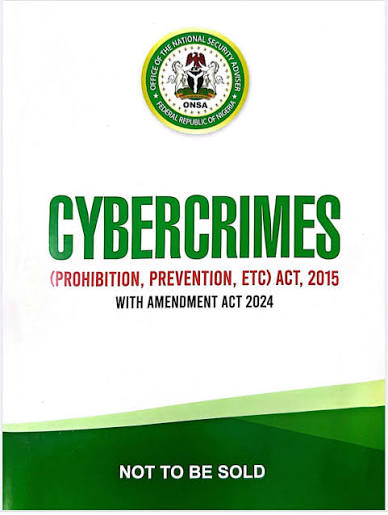
Viral claims about a “new 2025 Cybercrimes Act” spark confusion as legal experts urge Nigerians to distinguish between verified provisions of the law and misleading online interpretations.
By A1NEWS International
Abuja, Nigeria | July 29, 2026
A viral message circulating across WhatsApp, Facebook and other social media platforms claims that Nigeria has enacted a “2025 Cybercrimes Act” introducing sweeping new offences, including penalties for recording private conversations, publishing false information and holding social media administrators liable for posts made by members.
The message has generated widespread concern among Nigerians, particularly journalists, bloggers, content creators, business owners and administrators of online communities.
However, an investigation by A1NEWS International shows that while Nigeria’s Cybercrimes (Prohibition, Prevention, etc.) Act, as amended, contains numerous criminal offences relating to cybercrime, hacking, identity theft, cyberstalking, fraud and attacks on critical national information infrastructure, several claims circulating in the viral message either oversimplify the law, misstate legal provisions or present legal interpretations as settled facts.
Legal practitioners say citizens should rely on the actual text of the law and official government publications rather than unverified social media broadcasts.
Viral Message Sparks Public Confusion
The widely circulated notice claims that the Federal Government has enacted a “2025 Cybercrimes Act” and warns Nigerians that several online activities now attract prison terms ranging from two years to life imprisonment.
The message specifically references offences including:
- Unauthorized access to digital devices.
- Tampering with electronic data.
- Disclosure of critical information.
- Recording private conversations.
- Publishing false or misleading information.
- Online harassment.
- Inciting ethnic or religious hatred.
- Liability for WhatsApp, Facebook and Telegram administrators.
While some of these topics are addressed in Nigerian law, legal analysts caution that the message does not accurately reflect the wording or scope of every provision.
What the Cybercrimes Law Actually Covers
Nigeria’s Cybercrimes legislation was enacted to combat offences committed through computers, digital networks and electronic communications.
Among the major offences covered are:
- Unauthorized access to computer systems.
- Identity theft and impersonation.
- Computer-related fraud.
- Cyberstalking.
- Online financial crimes.
- Child pornography.
- Electronic forgery.
- System interference.
- Data interference.
- Attacks on critical national information infrastructure.
- Cyberterrorism.
- Electronic theft and related offences.
The legislation also empowers law enforcement agencies to investigate cyber-enabled crimes while establishing obligations for service providers in certain circumstances.
Claims About Recording Conversations Require Legal Context
One of the most widely shared claims is that recording a private conversation—even if a person participates in that conversation—automatically attracts imprisonment.
Legal experts contacted by A1NEWS International note that this assertion is overly broad.
Whether recording a conversation constitutes an offence depends on the specific circumstances, the applicable statutory provisions, constitutional privacy protections and judicial interpretation.
They advise Nigerians against relying solely on viral legal summaries when making decisions involving privacy or evidence gathering.
Fake News Provision More Complex Than Viral Message Suggests
Another claim states that publishing “false or misleading information” automatically constitutes a criminal offence punishable by imprisonment.
Legal analysts argue that this description omits important legal elements, including the exact wording of the legislation, prosecutorial requirements and judicial interpretation.
The issue has generated significant legal debate in Nigeria, particularly regarding constitutional guarantees of freedom of expression, media freedom and public-interest reporting.
Several provisions of the Cybercrimes Act have previously been challenged in court by civil society organisations, journalists and digital rights advocates who argue that some sections could affect legitimate speech if broadly interpreted.
Can WhatsApp Group Administrators Be Prosecuted?
Perhaps the most alarming claim in the viral message concerns administrators of WhatsApp groups, Facebook pages and Telegram channels.
The message suggests administrators are automatically liable for any illegal content shared by members.
Lawyers say the position is not so straightforward.
Criminal liability in Nigeria generally depends on the specific facts of each case, including evidence of intent, knowledge, participation or failure to comply with legal obligations where applicable.
Being an administrator alone does not automatically establish criminal responsibility for every post made by another individual.
Nevertheless, experts recommend that administrators actively moderate online communities, remove unlawful content where appropriate and discourage the circulation of misinformation, hate speech, fraud and threats.
Growing Importance of Digital Responsibility
Despite questions surrounding the viral message, cybersecurity specialists agree that Nigerians should exercise greater caution online.
Users are advised to:
- Verify information before sharing it.
- Protect personal devices and passwords.
- Avoid unauthorized access to another person’s digital accounts.
- Refrain from cyberbullying, online threats and harassment.
- Respect privacy rights.
- Report suspected cybercrime to appropriate authorities.
- Familiarize themselves with Nigeria’s cybercrime laws and other relevant legislation.
Journalists and content creators are also encouraged to maintain rigorous fact-checking standards to reduce the spread of misinformation.
Legal Experts Call for Public Awareness
Digital rights advocates argue that public education remains one of the most effective ways to reduce cybercrime and prevent unintentional violations of the law.
They have urged government agencies to simplify legal information for the public while encouraging citizens to consult authentic legal texts and qualified legal practitioners whenever questions arise about criminal liability.
Experts also stress that the courts—not viral social media messages—ultimately determine how statutory provisions are interpreted and applied.
The circulation of misleading legal summaries highlights the growing challenge of misinformation in Nigeria’s digital space. While the Cybercrimes Act gives law enforcement agencies significant powers to combat cybercrime, citizens should distinguish between the actual provisions of the law and unverified social media interpretations.
For Nigerians, the safest approach is to verify legal information through official government publications, legal professionals and authoritative sources before acting on claims shared online. As digital communication continues to shape public discourse, legal literacy has become just as important as digital literacy.










Leave a Reply