
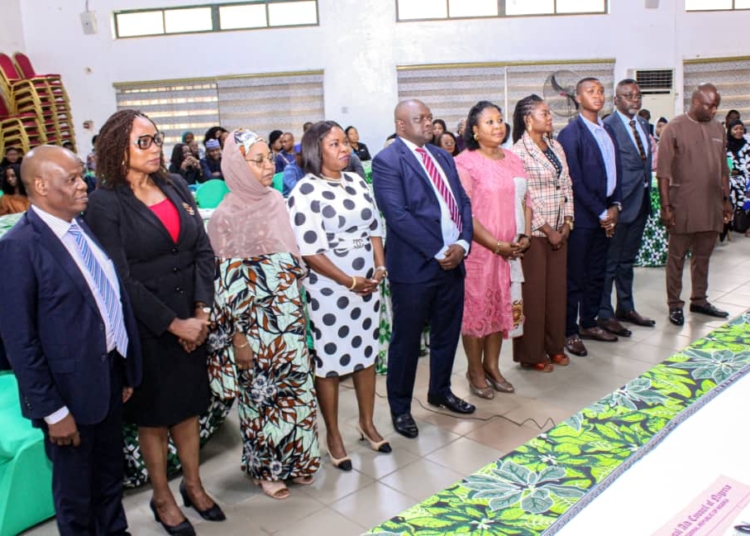
Attorney-General Lateef Fagbemi says effective policing and human rights are inseparable as NHRC, Police unveil nationwide implementation framework to transform law enforcement.
By A1NEWS International
ABUJA, Nigeria — August 6, 2026
In what stakeholders have described as one of the most significant institutional reforms in Nigeria’s criminal justice system in recent years, the National Human Rights Commission (NHRC) and the Nigeria Police Force (NPF) have officially launched a Joint Implementation and Liaison Framework aimed at strengthening human rights protection, enhancing police accountability and rebuilding public confidence in law enforcement.
The landmark initiative, inaugurated in Abuja by the Attorney-General of the Federation and Minister of Justice, Chief Lateef Fagbemi (SAN), seeks to institutionalise cooperation between the country’s foremost human rights watchdog and its largest law enforcement agency.
The framework establishes a permanent mechanism for collaboration on human rights monitoring, complaint resolution, detention facility inspections, police training, information sharing and coordinated responses to rights violations across Nigeria.
Legal experts, civil society organisations and criminal justice stakeholders say the initiative represents a shift from decades of institutional tension to strategic partnership in promoting justice, transparency and constitutional governance.
Fagbemi: Human Rights and Effective Policing Must Work Together
Declaring the framework open, Attorney-General Chief Lateef Fagbemi (SAN) said Nigeria’s security architecture can only gain public confidence when policing is firmly rooted in respect for human dignity and constitutional rights.
He stressed that every Nigerian deserves to feel safe, protected and respected in every interaction with security agencies.
According to him, while Nigeria has enacted several landmark laws—including the Administration of Criminal Justice Act (ACJA), the Anti-Torture Act, and the Nigeria Police Act—the country’s greatest challenge remains translating those legal provisions into everyday policing.
“Respect for human rights is not incompatible with effective policing,” Fagbemi stated.
“Rather, it strengthens professionalism, reinforces the rule of law and builds public confidence in our justice system.”
He described the NHRC-NPF Liaison Framework as a critical milestone in the Federal Government’s broader criminal justice reforms.
A New Era of Institutional Cooperation
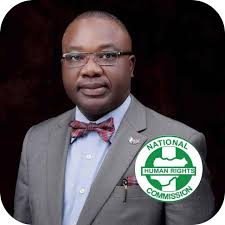
Executive Secretary of the National Human Rights Commission, Dr. Tony Ojukwu (SAN), described the initiative as the beginning of a new chapter in the relationship between the Commission and the Nigeria Police Force.
According to him, the framework emerged after years of dialogue and consultation between both institutions.
Rather than relying on isolated interventions whenever allegations of abuse arise, Ojukwu explained that the new arrangement establishes a structured system for continuous collaboration.
“This marks the beginning of a new phase of institutional cooperation,” he said.
“It replaces fragmented engagements with a coordinated mechanism capable of delivering sustainable human rights protection.”
Framework Targets Human Rights Violations at the Source
One of the framework’s major innovations is its emphasis on preventing abuses before they occur.
Among its key components are:
- Joint inspections of police detention facilities;
- Prompt investigation and resolution of complaints;
- Regular human rights training for police personnel;
- Information sharing between NHRC and the Police;
- Coordinated responses to alleged violations;
- Continuous monitoring of compliance with constitutional safeguards.
Observers believe these measures could significantly reduce arbitrary arrests, unlawful detention, torture and other forms of abuse that have historically generated public criticism of policing in Nigeria.
Police Leadership Commits to Rights-Based Policing
Representing the Inspector-General of Police, IGP Disu, the Assistant Inspector-General of Police, Force Criminal Investigation Department (FCID), Mr. Ihebum Chukwuma, reaffirmed the Nigeria Police Force’s commitment to professionalism, transparency, integrity and respect for fundamental human rights.
He pledged that officers across the country would implement the framework faithfully while ensuring constitutional rights are protected during law enforcement operations.
According to him, the Police have already designated liaison officers at:
- Force Headquarters;
- Zonal Commands;
- State Commands nationwide.
These officers will coordinate implementation and serve as direct links between the Police and the National Human Rights Commission.
“The greatest beneficiaries of this partnership are the Nigerian people,” he said.
“Today’s inauguration marks the beginning of a partnership founded on mutual respect, accountability, justice, truth and protection of human rights.”
He added that the success of the initiative would depend on translating its objectives into measurable improvements in policing.
Stakeholders Welcome Shift from Confrontation to Collaboration
Representatives of key justice-sector institutions applauded the initiative.
Among them were officials from:
- Police Service Commission;
- Legal Aid Council of Nigeria;
- Administration of Criminal Justice Monitoring Committee;
- Civil society organisations.
While welcoming the framework, they challenged both institutions to ensure that reforms move beyond policy documents and become visible realities inside police stations, detention facilities and communities nationwide.
Legal Aid Council: Justice Begins at First Contact
Speaking on behalf of the Legal Aid Council of Nigeria, Mr. Oliver Chukwuma described the framework as timely and essential.
According to him, justice does not begin inside the courtroom.
Instead, it starts at the very first interaction between citizens and law enforcement officers.
He observed that many indigent Nigerians lack legal representation or adequate knowledge of their constitutional rights during arrest or detention.
He argued that early legal assistance serves as a vital safeguard against:
- Illegal detention;
- Torture;
- Abuse of rights;
- Wrongful prosecution;
- Miscarriages of justice.
He added that the framework aligns closely with the Legal Aid Council’s statutory responsibility of providing legal assistance to vulnerable Nigerians.
Civil Society Calls Framework a Turning Point
Representing civil society organisations, Mr. Peter Maduoma of CLEEN Foundation praised the initiative as a decisive milestone in democratic policing.
He noted that for decades, relations between law enforcement agencies and human rights defenders had largely been characterised by confrontation.
The new framework, he said, changes that narrative by institutionalising direct engagement between Nigeria’s primary policing institution and its foremost human rights monitoring agency.
According to him, effective policing and protection of human rights should never be viewed as opposing objectives.
Instead, both reinforce each other.
He further called for greater transparency in detention centres and increased civil society participation in police oversight.
Maduoma also commended the National Human Rights Commission for its consistency in promoting accountability and strengthening democratic governance.
Can the Framework Deliver Real Change?
Although stakeholders widely welcomed the initiative, several experts cautioned that the true test will lie in implementation rather than policy declarations.
Nigeria has previously introduced numerous reform initiatives aimed at improving policing and reducing human rights violations.
However, reports of unlawful detention, torture, excessive use of force and poor police-public relations have persisted.
Analysts believe the success of the NHRC-NPF Liaison Framework will depend on:
- Political will;
- Institutional independence;
- Adequate funding;
- Regular monitoring;
- Transparency in investigations;
- Public reporting of implementation outcomes;
- Accountability for erring officers.
Without these measures, observers warn that the framework risks becoming another well-intentioned policy with limited practical impact.
Implications for Nigeria’s Criminal Justice System
The inauguration comes at a time when Nigeria continues to pursue broad reforms across the criminal justice sector.
Human rights organisations have consistently advocated stronger collaboration between oversight institutions and security agencies to reduce abuses while improving operational efficiency.
If fully implemented, the framework could contribute significantly to:
- Better police-community relations;
- Increased respect for constitutional rights;
- Faster complaint resolution;
- Improved professionalism;
- Greater public trust in law enforcement;
- Enhanced international confidence in Nigeria’s justice system.
The launch of the NHRC–Nigeria Police Joint Implementation and Liaison Framework marks a potentially transformative moment in Nigeria’s human rights and criminal justice landscape.
By creating a structured mechanism for collaboration instead of confrontation, the initiative offers an opportunity to bridge the long-standing gap between policing and human rights protection.
However, stakeholders agree that success will ultimately be judged not by speeches or signed agreements but by measurable improvements in police conduct, accountability, detention conditions and the daily experiences of Nigerians interacting with law enforcement agencies.
Whether this framework becomes a lasting reform or another unrealised promise will depend on sustained commitment from both institutions and unwavering oversight from government, civil society and the public.






Leave a Reply