
46 suspects paraded as police probe highway blockade; key youth leaders allegedly being traced amid rising political tensions ahead of 2027
By Emmanuel Angulu
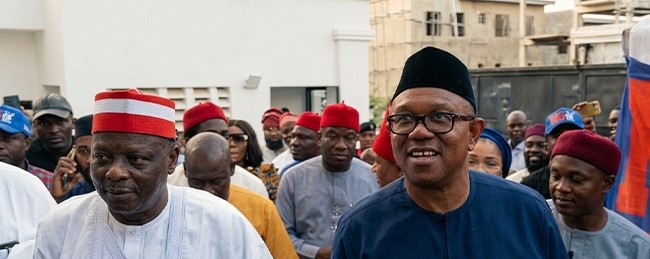
MAKURDI, BENUE STATE — September 8, 2026: Police authorities in Benue State have arrested and paraded 46 suspects in connection with the disruption of the convoy of presidential candidate Peter Obi during his visit to the state, as competing claims over the incident raise fresh questions about political intolerance, security and the conduct of the 2027 election campaign.
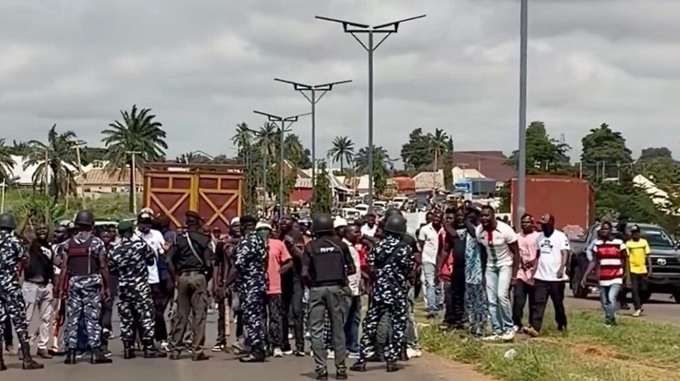
The suspects were arrested following the blockade of the Makurdi-Gboko Federal Highway by a group of youths who reportedly prevented Obi’s convoy from proceeding to Yelewata, where the presidential candidate was scheduled to meet survivors and families affected by the deadly June 2025 attacks.
The incident has triggered sharply contrasting narratives. While Obi described those who blocked his convoy as “thugs” and condemned the incident as unacceptable political intimidation, the Benue State Government denied any involvement and suggested the confrontation could be connected to internal political issues within Obi’s party.
The police, meanwhile, say their investigation remains active, with additional persons of interest reportedly being traced.
46 Suspects Arrested as Investigation Continues
Addressing journalists in Makurdi, the Benue State Commissioner of Police, Cletus Nwadiogbu, said 46 suspects had been arrested in connection with the incident.
Nwadiogbu said the investigation had not been concluded and indicated that police operatives were still pursuing what the authorities described as key leaders linked to the youths involved in the confrontation.
The police commissioner also warned against political intolerance, stressing that security agencies would not permit violence or actions capable of threatening the peaceful conduct of political activities as Nigeria approaches the 2027 general election.
The arrests represent the clearest official law-enforcement response so far to the confrontation, although questions remain over the identities and alleged roles of the suspects, the specific offences for which they were arrested and whether they will ultimately face prosecution.
Those details will be critical to establishing whether Tuesday’s confrontation was primarily a spontaneous protest, an organised political action or a more coordinated attempt to disrupt Obi’s movement.
How the Highway Blockade Unfolded
Obi arrived in Makurdi as part of activities connected with his political campaign and a planned visit to Yelewata to commiserate with victims of the June 2025 violence.
But shortly after leaving the airport, his convoy encountered a roadblock on the two-lane Makurdi-Gboko Federal Highway.
The confrontation reportedly brought traffic to a standstill, with the highway effectively closed to motorists while the youths occupied the roadway.
Obi subsequently abandoned the attempt to proceed, saying he did not want to escalate the situation or expose members of his entourage and other road users to further danger.
The circumstances surrounding the initial gathering of the youths, their political affiliations, the extent of advance knowledge of the convoy’s movement and the response of security personnel at the scene are among the issues that warrant further investigation.
Obi: ‘This Is Unacceptable’
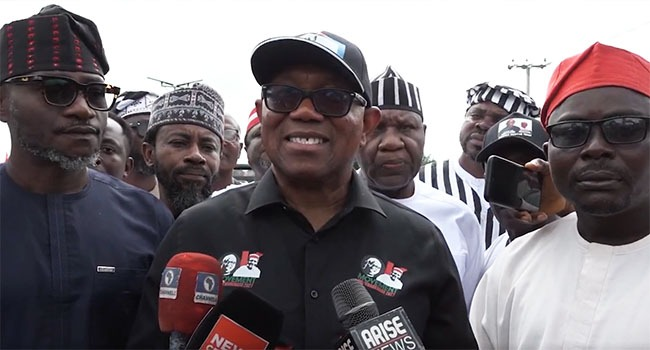
Speaking after the incident, Obi expressed concern that a presidential candidate could be prevented from moving freely within the country while carrying out political activities.
He said his convoy had arrived in Makurdi at about 9 a.m. and was heading towards Yelewata when it was stopped by youths chanting that he should leave.
Obi linked his planned visit to the need to show solidarity with families affected by the killings and questioned why he would be prevented from reaching the community.
He also appealed to security authorities, including the Inspector-General of Police and other agencies, to intervene and ensure that political actors were able to campaign without intimidation.
For Obi, the episode went beyond a disagreement between political supporters. He characterised it as evidence of a wider deterioration in political tolerance and urged young Nigerians not to allow themselves to be used as instruments by political interests.
Benue Government Rejects Allegation of State Involvement
The Benue State Government has rejected any suggestion that Governor Hyacinth Alia or his administration sponsored the youths who blocked Obi’s convoy.
In a statement issued by the governor’s Chief Press Secretary, Tersoo Kula, the government described Obi’s allegation as unfounded and denied having any knowledge of the alleged mobilisation.
The government also questioned aspects of Obi’s account of the incident and suggested that the confrontation could have arisen from an internal political dispute within the Nigerian Democratic Congress.
It maintained that Obi was not regarded as a threat to Governor Alia and argued that, if there had been any genuine security concern surrounding his visit, recognised security agencies—not political thugs—would have been responsible for addressing it.
The government further insisted that the Alia administration does not engage, patronise or deploy thugs as instruments of governance or security.
The competing accounts mean that establishing who organised the blockade, why it occurred and whether it had political sponsorship remains central to the police investigation.
Keyamo Condemns Blockade, Warns Against Partisan Reporting
The confrontation has also drawn a reaction from the Federal Government.
Minister of Aviation and Aerospace Development Festus Keyamo condemned the prevention of Obi from reaching his intended destination, regardless of the political circumstances surrounding the incident.
Keyamo said such conduct should have no place in Nigeria’s democratic process, whether the youths were motivated by an internal dispute within Obi’s political camp or allegedly supported by a rival political interest.
At the same time, he criticised what he described as partisan media coverage of political confrontations.
According to Keyamo, incidents involving opposition politicians are sometimes characterised differently from similar confrontations involving candidates of the ruling All Progressives Congress.
He argued that political disagreements should ultimately be expressed at the ballot box rather than through violence, intimidation or physical obstruction.
His intervention adds another dimension to an already politically charged incident: the question of whether Nigeria’s political media environment is applying consistent standards when reporting confrontations involving competing parties.
The Questions the Police Investigation Must Answer
Beyond the political rhetoric, several unanswered questions remain.
First, police authorities will need to establish the identities of the 46 suspects and determine what each individual allegedly did during the blockade.
Second, investigators will have to establish whether the youths acted spontaneously or whether the gathering was planned and coordinated.
Third, the alleged role of political actors—if any—will need to be determined through evidence rather than competing political accusations.
Another significant issue is the conduct of security personnel during the blockade. Reports that the highway remained obstructed for a period raise questions about the adequacy of the security response and whether officers on the ground had sufficient resources or instructions to restore access without triggering violence.
There is also the broader question of political access. In an election season, the ability of candidates to travel, campaign, meet communities and engage supporters is fundamental to a functioning democracy.
Any deliberate effort to restrict that freedom through violence or intimidation could have implications extending far beyond a single campaign visit.
Yelewata Visit Adds Political Sensitivity
Obi’s intended destination, Yelewata, carries particular political and emotional significance because of the killings reported there in June 2025.
His decision to visit the community and meet affected families was therefore both a political activity and a public expression of solidarity with victims.
But the timing and political context of the visit have also become part of the dispute.
Critics have questioned whether revisiting the tragedy during the campaign period could be interpreted as an attempt to mobilise public emotion. Supporters, however, argue that visiting communities affected by violence and speaking with victims is a legitimate responsibility for political leaders seeking national office.
The controversy demonstrates how security incidents involving political candidates can quickly become entangled with competing narratives about motive, exploitation, responsibility and electoral strategy.
What Happens Next
The immediate focus is now on the police investigation and the legal status of the 46 suspects.
If investigators establish that individuals committed criminal offences, prosecutors will be expected to present evidence before the appropriate courts. Equally important will be whether police investigations identify organisers or political sponsors behind the confrontation, should evidence of such coordination emerge.
The authorities will also face pressure to demonstrate that security enforcement is impartial and that political candidates from all parties can campaign without fear of intimidation.
With the 2027 election approaching, the Benue incident offers an early warning of the tensions that can emerge when political rivalry, public anger and security concerns collide.
The blockade of Peter Obi’s convoy in Benue has evolved from a roadside confrontation into a wider political and security controversy.
Police have confirmed 46 arrests and say their investigation is continuing. Obi has described the incident as an unacceptable act of political intimidation. The Benue State Government has denied responsibility, while Festus Keyamo has condemned the obstruction but simultaneously challenged what he regards as partisan media treatment of political confrontations.
For investigators, however, the central issue is not the competing political narratives but the evidence.
Who organised the blockade? Why were the youths there? Were political actors involved? Did security personnel respond appropriately? And will those arrested be charged based on credible evidence?
Those questions must be answered transparently if the incident is not to become another unresolved episode in Nigeria’s increasingly contentious pre-election environment.
A1NEWS International Newsroom will continue to monitor the investigation and developments surrounding the case.

Leave a Reply