
By Hajia Hadiza Mohammed
ABUJA, Nigeria | October 23, 2026
A Warning That Raises More Questions
Nigeria’s preparations for the 2027 general election have brought renewed attention to the independence of the Independent National Electoral Commission (INEC), the responsibilities of political actors and the rights of citizens to demand credible elections.
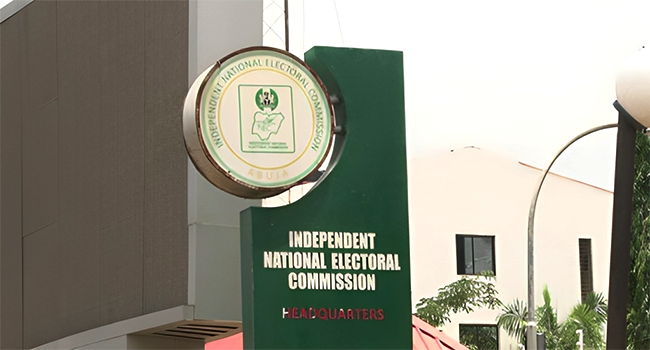
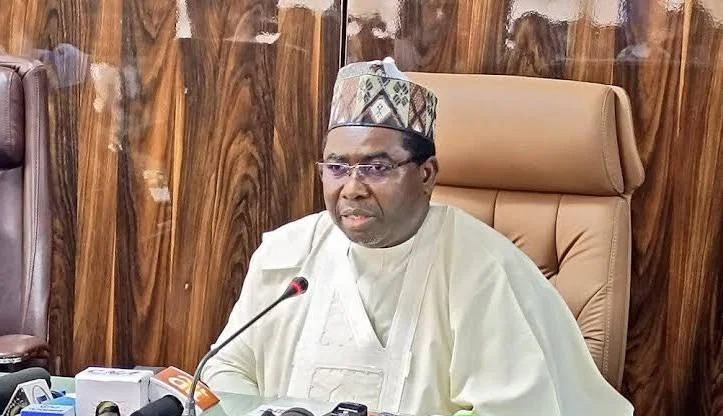
On October 6, 2026, INEC Chairman, Professor Joash Ojo Amupitan, reportedly warned Nigerians and media organisations that the commission alone has the legal authority to declare official election results. The warning was delivered at a stakeholders’ meeting in Abuja marking preparations for the forthcoming general election.
The chairman had also emphasised the commission’s exclusive responsibility for declaring election results during a strategic workshop organised in partnership with the Nigerian Guild of Editors.
At first glance, the position appears to be a reminder of INEC’s statutory responsibilities. However, in an atmosphere of political rivalry and declining public confidence in electoral institutions, the manner in which such warnings are communicated matters almost as much as their legal basis.
The central question is not whether INEC has the authority to declare official election results. It does. The more important question is whether the commission can demonstrate, through its conduct, transparency and institutional independence, that Nigerians have sufficient reasons to trust the results it eventually announces.
For a country approaching another consequential electoral contest, public confidence cannot be secured through warnings alone. It must be earned through credible preparations, transparent procedures and impartial administration.
INEC’s Independence Must Be Demonstrated, Not Merely Asserted
Since Professor Amupitan assumed office as INEC chairman in October 2025, questions surrounding the commission’s independence have remained part of the political debate.
Hajia Hadiza Mohammed argues that concerns about the chairman’s previous political associations and subsequent administrative decisions have contributed to public suspicion about his impartiality.
These concerns deserve examination, particularly because an electoral commission must not only act independently but must also inspire confidence that it is insulated from partisan influence.
Nevertheless, allegations of political interference should not automatically be treated as established facts. They must be assessed against verifiable evidence, applicable electoral laws and the commission’s actual conduct.
INEC’s credibility will ultimately depend on whether its decisions are consistent, transparent and demonstrably impartial, regardless of which political party stands to benefit.
The commission must recognise that public confidence is difficult to restore once citizens begin to suspect that the electoral referee may be favouring one of the competing teams.
The burden, therefore, is on INEC to demonstrate independence through institutional safeguards, transparent appointments and deployments, impartial enforcement of electoral regulations and the credible management of results.
Administrative Appointments and the Question of Public Confidence
One of the issues raised by Mohammed concerns the reported redeployment of Oluyemi Titilayo Adeyemi-Showunmi, described in the article as the wife of political spokesperson Segun Sowunmi, from INEC’s Lagos office to the commission’s headquarters in Abuja to head its Electoral Operations Department.
The author questions the timing and implications of the reported appointment in the context of preparations for the 2027 general election.
Appointments to sensitive electoral positions can attract public scrutiny, especially where actual or perceived political connections exist. Such scrutiny does not, by itself, establish wrongdoing. However, electoral institutions must understand that decisions involving critical operational responsibilities require a high degree of transparency.
INEC should be prepared to explain the professional criteria governing sensitive deployments, the safeguards against conflicts of interest and the procedures used to ensure that election administration remains impartial.
Where concerns arise over a potential conflict of interest, the appropriate response is not to dismiss public questions but to address them with verifiable information.
Ultimately, the credibility of an electoral appointment depends on the applicable rules, the competence of the official involved and the safeguards in place to protect the institution from political interference.
Can Political Parties Collate Their Own Election Results?
Another important issue in the controversy is the distinction between independently collating election results and officially declaring the outcome of an election.
Political parties deploy agents to polling units to observe voting, monitor counting and obtain information about the results recorded at those locations. Such processes are important components of electoral transparency.
The results recorded at polling units also provide a basis for comparing publicly available information with the figures subsequently processed and announced through the official electoral system.
The legal authority to declare official results, however, is distinct from the ability of political parties, candidates, observers and journalists to collect, document and scrutinise election-related information.
INEC should therefore communicate its position in a manner that makes this distinction clear. A legitimate reminder of the commission’s statutory responsibilities should not be interpreted as an attempt to prevent lawful observation, independent verification or scrutiny of the electoral process.
At the same time, political parties and their supporters must distinguish between independently collected figures and officially declared results. Any disagreement should be addressed through evidence, transparent verification and lawful procedures.
The objective must be to protect the integrity of the vote, not to create competing claims that could unnecessarily heighten political tensions.
Segun Sowunmi’s Statements and the Danger of Political Intimidation
Mohammed also criticises statements attributed to Segun Sowunmi, arguing that his comments could be interpreted as threatening to Nigerians who expect to defend the integrity of their votes in 2027.
The author questions why a political figure should appear to speak on behalf of an independent electoral commission and expresses concern about the possible implications of political rhetoric surrounding the announcement of election results.
These are questions that deserve public scrutiny. Political actors have a responsibility to communicate carefully, particularly when their statements concern the legitimacy of elections and the rights of citizens.
However, the precise wording and context of the statements attributed to Sowunmi must be established before conclusions can be drawn about their meaning or intent.
It would be equally inappropriate to treat political criticism as proof of electoral manipulation without supporting evidence.
What is beyond dispute is the importance of restraint. Political leaders, party spokespersons and electoral officials should avoid language that could be interpreted as intimidation or that might undermine public confidence in the electoral process.
The 2027 election should be a contest of ideas, policies and political choices—not a test of which side can generate the greatest fear or suspicion.
June 12, 1993: A Historical Lesson in Electoral Legitimacy
Nigeria’s electoral history offers important lessons about the relationship between official announcements, credible results and public legitimacy.
The annulment of the June 12, 1993 presidential election remains one of the most consequential episodes in the country’s democratic history. The election, widely associated with the candidacy of Moshood Kashimawo Olawale Abiola, became a lasting symbol of the struggle for democratic accountability.
The controversy surrounding the election demonstrated the damage that can occur when electoral outcomes are not allowed to stand through a transparent and credible process.
Mohammed invokes the June 12 experience to criticise what she regards as inconsistencies in contemporary political arguments about electoral legitimacy.
The broader lesson, however, extends beyond any individual politician or party. Nigeria’s democratic institutions must ensure that election results are supported by verifiable records and that disputes are addressed through credible and lawful processes.
Historical experience should encourage political actors to protect electoral integrity rather than use the past selectively to advance partisan arguments.
The legacy of June 12 demands a commitment to transparent elections, respect for voters’ choices and accountability when electoral processes fall short of public expectations.
Electoral Transparency Is the Strongest Defence Against Manipulation
Allegations of planned electoral manipulation are serious and should not be accepted as established facts without credible supporting evidence. Nevertheless, electoral institutions must recognise that a lack of transparency can create an environment in which suspicion and misinformation flourish.
INEC can reduce such risks by strengthening the public visibility of its procedures, providing timely information, ensuring that results are properly documented and making relevant records accessible in accordance with the law.
Political parties, in turn, should train their agents to observe voting, document results accurately and report irregularities through established channels.
Media organisations also have an important responsibility. They must distinguish verified results from projections, claims by political parties and unofficial compilations. Reporting should be based on evidence rather than pressure from political interests or the desire to publish first.
Citizens should likewise be encouraged to participate peacefully, preserve credible evidence of irregularities and use lawful mechanisms to challenge disputed outcomes.
A transparent electoral process protects not only voters but also the candidates and political parties that ultimately win.
Where procedures are clear and evidence is accessible, it becomes more difficult for false claims to gain traction and easier for genuine irregularities to be identified.
Political Threats, Voter Apathy and the Responsibility of Leaders
Mohammed argues that political intimidation and the hardship experienced by Nigerians could influence voter participation and intensify public dissatisfaction ahead of the 2027 election.
Her concerns point to a wider challenge: public confidence in elections is shaped not only by election-day procedures but also by citizens’ perceptions of governance, accountability and political responsiveness.
When voters believe that their participation will not make a difference, voter apathy can grow. When they believe that their choices will be respected, they have stronger reasons to participate.
Political parties must therefore recognise that intimidation, inflammatory rhetoric and unsubstantiated accusations can weaken democratic institutions, irrespective of which side deploys them.
The responsibility for maintaining electoral peace does not rest with INEC alone. Political parties, candidates, security agencies, the media, civil society organisations and citizens all have a role to play.
Nigerians should be free to vote, observe, question and demand accountability without fear of unlawful intimidation.
However, the defence of electoral integrity must remain peaceful and evidence-based. Citizens should not be encouraged to take the law into their own hands or treat unverified allegations as grounds for confrontation.
A credible election requires both an accountable electoral commission and a citizenry committed to peaceful democratic participation.
The Media Must Protect the Public Interest
The debate over official results also raises questions about the role of journalists and media organisations during elections.
The media must report official declarations accurately while maintaining the independence necessary to investigate discrepancies, scrutinise electoral procedures and report credible evidence of irregularities.
There is a distinction between publishing an independently verified account of results from polling units and presenting unverified figures as the final outcome of an election.
Responsible journalism requires clarity about the source of every figure, the methodology used to compile it and whether the information represents official results, preliminary observations or a political party’s own tally.
Media organisations must resist attempts by political interests to influence their reporting. Equally, they must avoid sensational claims that could inflame tensions or mislead voters.
The public interest is best served when journalists provide accurate, timely and independently verified information.
The credibility of Nigeria’s electoral process will depend partly on whether the media can perform this responsibility without intimidation, partisan capture or avoidable factual errors.
What INEC Must Do Before 2027
As preparations continue, INEC should prioritise practical measures capable of strengthening public confidence.
First, the commission should provide clear and consistent explanations of the legal framework governing result collation, transmission and declaration.
Second, it should communicate transparently about operational appointments and administrative decisions that attract legitimate public scrutiny.
Third, it should strengthen voter education so that citizens understand the voting process, the role of polling-unit agents, the official results procedure and the lawful mechanisms for challenging disputed outcomes.
Fourth, it should ensure that election-related information is released promptly and that the public can verify official figures against available records.
Fifth, the commission should respond to allegations of misconduct through evidence-based explanations rather than allowing unanswered questions to deepen public suspicion.
Finally, political parties and their representatives should refrain from threats, intimidation and statements that prejudge the outcome of an election before voters have exercised their constitutional rights.
These measures would demonstrate that electoral credibility is not merely a matter of official declarations but a product of transparent procedures, institutional accountability and public participation.
The 2027 Election Must Be Decided by the Voters
The controversy surrounding INEC’s warning and the political statements attributed to Segun Sowunmi underscores a fundamental challenge facing Nigeria’s democracy: how to ensure that the electoral process commands public confidence before, during and after voting.
Hajia Hadiza Mohammed argues that Nigerians must remain vigilant against any attempt to undermine their electoral choices. Her concerns reflect the wider importance of protecting the independence of electoral institutions and ensuring that every legitimate vote is counted accurately.
However, allegations of collusion, planned manipulation or political interference must be tested against verifiable evidence. Democratic accountability requires vigilance, but it also requires factual discipline and respect for the law.
INEC must demonstrate its independence through transparent conduct. Political parties must respect the electorate and avoid inflammatory rhetoric. The media must report verified information without fear or favour, while citizens must exercise their democratic rights peacefully.
The ultimate test of the 2027 general election will not be the strength of political warnings or the confidence of party spokespersons. It will be whether the electoral process is transparent, whether credible results reflect the votes cast and whether disputes are resolved through institutions that Nigerians can trust.
Nigeria’s democracy cannot afford another election that leaves citizens questioning whether their votes truly count. The responsibility to prevent such an outcome rests with every institution and individual entrusted with protecting the democratic process.
The message is clear: electoral legitimacy must be established through evidence, transparency and the will of the electorate—not through intimidation, partisan rhetoric or unverified claims.







Leave a Reply