
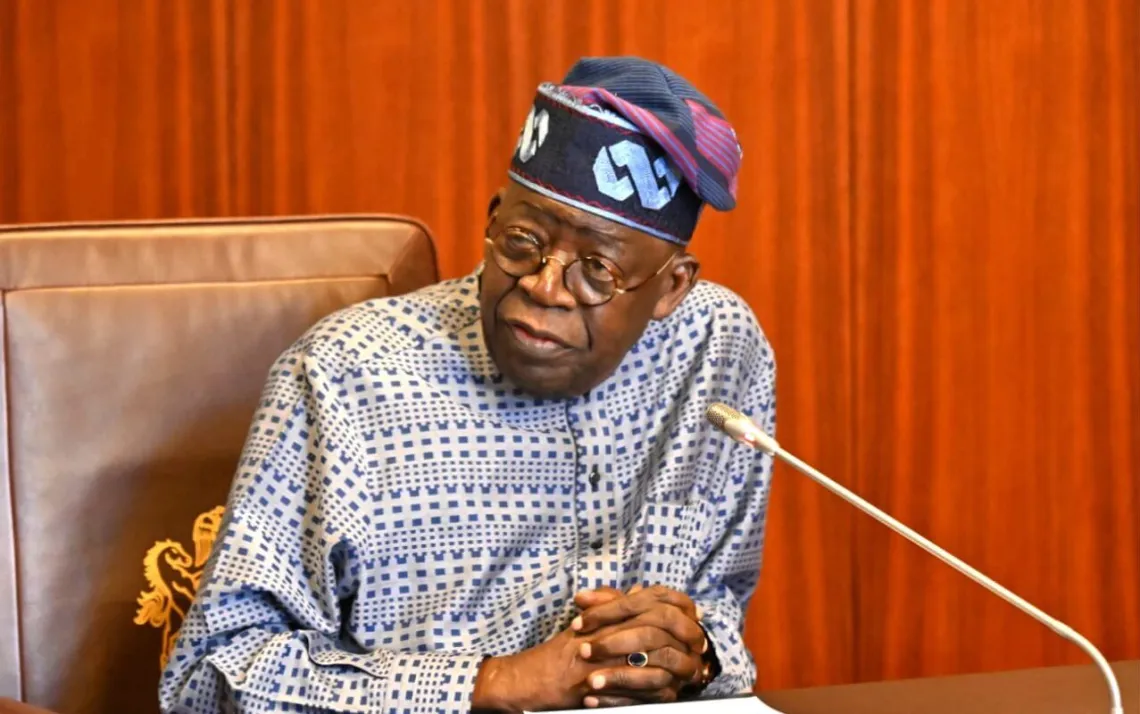
Controversy trails the APC presidential campaign council over the use of the Presidential Villa, the participation of public-sector officials, Tinubu’s proposed campaign strategy and alleged marginalisation within the party.
By Hajia Hadiza Mohammed
ABUJA, Nigeria — The inauguration of the All Progressives Congress (APC) Presidential Campaign Council for the 2027 general election has sparked controversy, with critics questioning the propriety of holding the event at the Presidential Villa, the inclusion of senior public officials in the campaign structure and President Bola Ahmed Tinubu’s reported decision to limit his direct campaign engagements across the country.
In an opinion article, Hajia Hadiza Mohammed, an actress, social activist and politician based in London, argued that the composition and inauguration of the campaign council raised concerns about the separation of party activities from government business, the political neutrality of public institutions and the APC’s internal cohesion ahead of the next general election.
The author also questioned the strategic implications of the campaign council’s composition, including the reported exclusion of some party executives and the designation of governors from other political parties as strategic state coordinators.
The criticisms touch on broader questions about the relationship between political parties and public institutions, the ethical responsibilities of government officials and the importance of direct engagement between presidential candidates and voters during election campaigns.
Timeline: From Campaign Council Formation to Inauguration
According to the account provided by Mohammed, the APC’s preparations for the 2027 presidential election council unfolded in several stages.
August 23, 2026: The APC constituted its Presidential Campaign Council, according to the author.
October 13, 2026: An updated list reportedly comprising approximately 233 members was announced by Felix Morka, the party’s National Publicity Secretary.
October 14, 2026: The council was formally inaugurated at the Presidential Villa in Abuja by Tinubu.
The author argues that the composition of the council and the choice of venue generated concerns beyond the opposition parties, extending to citizens who questioned the relationship between the governing party and the institutions of the Nigerian state.
These dates and details reflect the submitted article and have not been independently verified for this report.
Presidential Villa Venue Raises Questions About State Resources
One of the central criticisms concerns the decision to hold the inauguration of the APC Presidential Campaign Council at the Presidential Villa in Abuja.
Mohammed described the venue as inappropriate for a partisan political event, arguing that it blurred the distinction between the official responsibilities of the presidency and the organisational activities of the governing party.
The author cited criticism attributed to the African Democratic Congress (ADC), whose spokesperson reportedly characterised the use of the venue as a partisan misuse of state infrastructure.
According to Mohammed, the controversy raises questions about whether the facilities and prestige associated with the highest office in the country should be used for activities connected to a political party’s election campaign.
The issue also highlights a broader governance concern: the need for public institutions and government facilities to be administered in ways that maintain public confidence in their neutrality.
However, determining whether the use of the Presidential Villa constituted an actual breach of applicable rules would require examination of the relevant legal provisions, administrative guidelines and circumstances surrounding the event.
Inclusion of Public Officials Sparks Conflict-of-Interest Concerns
Another major issue raised in the article is the reported participation of senior officials from government institutions in the APC campaign structure.
Mohammed specifically mentioned Zacch Adedeji, head of the National Revenue Service (NRS), and the Director-General of the National Identity Management Commission (NIMC).
The author argued that officials responsible for tax administration, national identity management and other sensitive public functions should maintain a clear separation between their official duties and partisan political activities.
The concern, as presented in the article, is that the participation of senior public officials in a governing party’s campaign council could create actual or perceived conflicts of interest.
Public institutions responsible for administering national revenue, managing citizens’ identification records and supporting national security perform functions that affect Nigerians across political, ethnic and regional lines.
Their credibility depends, in part, on public confidence that their responsibilities will be discharged impartially.
Mohammed maintained that the heads of such institutions should prioritise their obligations to the Nigerian state and its citizens rather than participate in partisan electioneering.
The article did not, however, establish whether the officials named had violated any specific law or regulation. Any determination of misconduct would require verification of their actual roles, the applicable rules governing political participation by public officeholders and the circumstances of their reported inclusion.
Proposed Forum of Agency Executives Draws Further Criticism
Mohammed also questioned the reported establishment of the Forum of Chief Executives of Federal Parastatals (FORCEPA).
The forum was described in the submitted article as having been formed to provide technical, strategic and grassroots mobilisation support to the presidential campaign from a complementary standpoint.
The author characterised the arrangement as an administrative aberration, arguing that the involvement of heads of federal agencies in a political campaign could undermine the perceived neutrality of public administration.
The criticism centres on the distinction between the professional responsibilities of government agency executives and the political objectives of a party seeking electoral victory.
According to Mohammed, the loyalty of public-sector leaders should remain with the state and the people, rather than with any political party.
The questions raised include the forum’s precise mandate, the status of its members, the nature of its proposed activities and whether its operations are consistent with the rules governing public service and political participation.
Those details would need to be independently established before any definitive conclusion could be reached about the forum’s legality or administrative status.
Tinubu’s Reported Campaign Strategy Attracts Political Scrutiny
The article also criticised Tinubu’s reported declaration that he would not personally campaign in every state alongside members of his presidential campaign team.
Mohammed argued that presidential candidates should engage directly with voters, explain their policy programmes and defend their records in office.
The author suggested that limiting nationwide campaign appearances could weaken opportunities for direct interaction between the candidate and the electorate.
Mohammed further advanced the view that dissatisfaction with the administration’s performance could make direct voter engagement politically challenging for the president.
The article also raised questions about whether the reported strategy reflected concerns about Tinubu’s health and physical capacity to undertake an extensive nationwide campaign.
These suggestions represent the author’s political interpretations rather than established facts. The submitted material does not provide independent evidence demonstrating that the president’s reported campaign plans are motivated by health concerns or fear of hostile reactions from voters.
Nevertheless, the debate highlights the importance of transparency in presidential campaigning, particularly in an election in which voters will be assessing the incumbent’s record, policy commitments and proposed direction for the country.
A candidate’s decision to adopt a limited campaign itinerary would ordinarily need to be evaluated in light of the campaign’s stated objectives, arrangements for voter engagement and the practical circumstances surrounding the election.
Exclusion of Party Executives Raises Internal Cohesion Questions
Beyond the council’s public composition, Mohammed argued that the exclusion of some key APC executives and party officers could create internal tensions.
The author acknowledged that the campaign council’s membership list might appear broad and inclusive at first glance but maintained that the omission of important party figures could generate resentment within the organisation.
Political campaigns depend not only on the visibility of prominent officeholders but also on coordination among party officials, local structures, candidates and grassroots supporters.
If influential party stakeholders believe they have been marginalised, disagreements over representation, influence and campaign responsibilities could complicate mobilisation efforts.
Mohammed warned that such disaffection could develop into internal disputes capable of affecting the APC’s preparations for the 2027 general election.
The argument raises a strategic question for the governing party: whether its campaign structure adequately balances the participation of prominent national figures with the interests and organisational responsibilities of party executives across the country.
The extent of any actual discontent, however, would require evidence from the affected party officials and other relevant stakeholders.
Opposition Governors’ Appointments Questioned
The author also questioned the reported appointment of governors from other political parties as strategic state coordinators within Tinubu’s campaign structure.
According to Mohammed, such appointments should not automatically be interpreted as evidence of broad political acceptance or the existence of a genuinely pluralistic campaign.
The author argued that the arrangement could prove counterproductive if it failed to reflect the positions of the governors’ parties or the views of their political constituencies.
An example cited in the article was Anambra State, where Mohammed said the All Progressives Grand Alliance (APGA) and the state’s political constituency had rejected the arrangement and distanced themselves from Tinubu’s campaign council.
The allegation raises questions about the authority of individual political officeholders to make campaign-related commitments on behalf of their parties and the extent to which such decisions reflect the positions of their respective political organisations.
Political affiliations and campaign appointments can be complex, particularly where elected officials maintain relationships across party lines. Consequently, the reported Anambra development and the positions attributed to APGA would require independent confirmation before being presented as definitive statements of the party’s official position.
Governance, Electoral Ethics and Political Accountability
Taken together, the concerns raised by Mohammed centre on four major issues: the separation of government and party activities, the political neutrality of public institutions, the accountability of presidential candidates to voters and the management of internal party relationships.
The controversy surrounding the campaign council provides an opportunity to examine the standards expected of political parties and public officials during election preparations.
For the governing party, addressing legitimate questions about the use of public facilities, the participation of government agency heads and the structure of its campaign machinery could help reduce uncertainty and strengthen public confidence.
For opposition parties and civic groups, scrutiny of campaign arrangements is part of the wider democratic process. However, such criticism is most effective when supported by verifiable facts, clearly identified legal standards and evidence that distinguishes political interpretation from demonstrable misconduct.
Similarly, the electorate has an interest in knowing how presidential candidates intend to communicate their programmes, defend their records and engage communities across the federation.
The central challenge is to ensure that campaign activities remain consistent with applicable laws, established administrative standards and the democratic principle that public institutions serve the country as a whole.
Conclusion: Questions Remain Ahead of the 2027 Election
The inauguration and composition of the APC Presidential Campaign Council have prompted a series of questions about governance, political ethics, campaign strategy and internal party cohesion.
In her article, Mohammed contended that the use of the Presidential Villa, the reported inclusion of senior public officials, the proposed role of FORCEPA, Tinubu’s campaign strategy and the composition of the council could create political and administrative challenges for the governing party.
These remain criticisms and assessments advanced by the author, not independently established findings of wrongdoing.
As preparations for the 2027 general election continue, the key issues will be whether the campaign arrangements comply with applicable rules, whether public institutions maintain their impartiality and whether political parties can demonstrate that their electioneering activities are conducted transparently and accountably.
Ultimately, the credibility of the electoral process depends not only on the conduct of voting but also on the standards of fairness, responsibility and public accountability demonstrated by political actors before election day.


Leave a Reply