
Commission moves to digitize complaint processes, enhance access to justice and accountability
By A1News International | Abuja, Nigeria | April 10, 2026
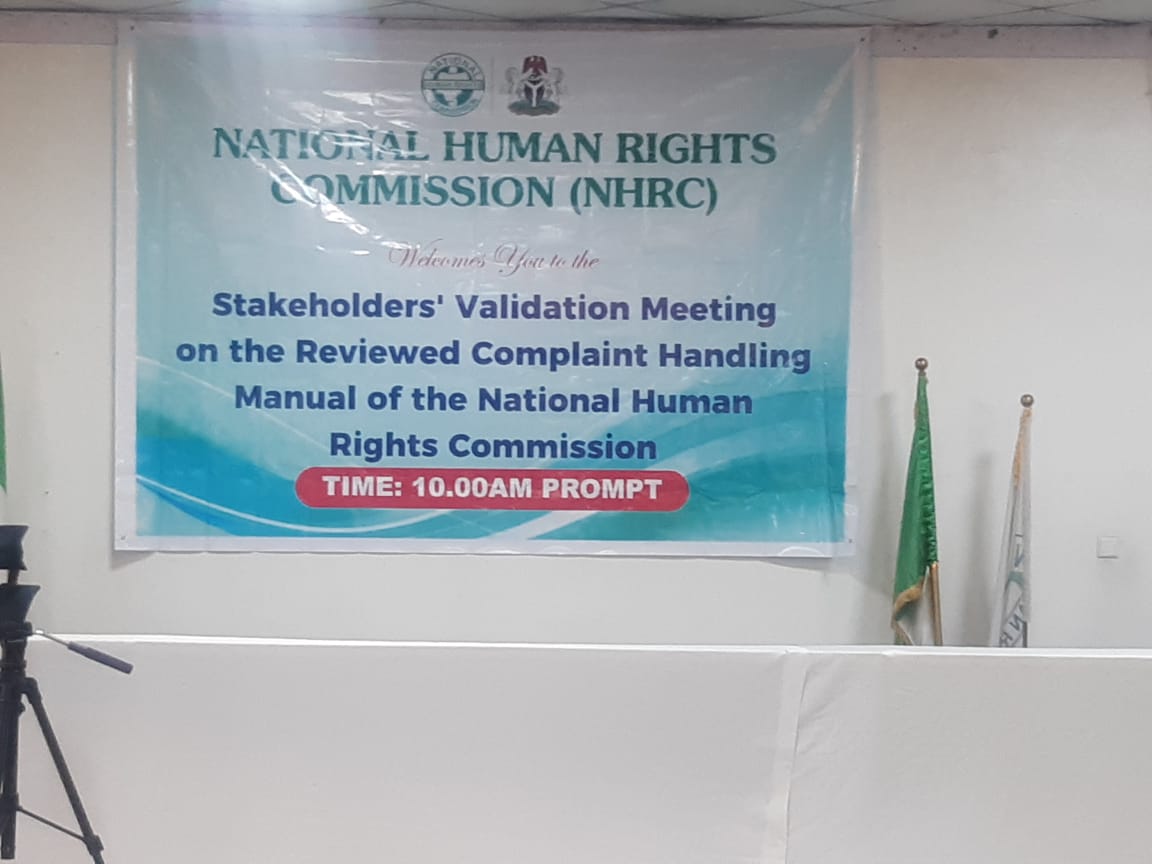
The National Human Rights Commission (NHRC) has validated its Complaint Handling Manual as part of efforts to strengthen the protection of human rights and improve access to justice for victims across Nigeria.
The validation exercise, held in Abuja on Friday, brought together key stakeholders to review and refine the Harmonized Complaints and Redress Manual — a comprehensive administrative guide outlining procedures for handling human rights complaints.
Speaking at the session, the Executive Secretary of the NHRC, Dr. Tony Ojukwu (SAN), described the manual as a document of “immense institutional and human significance,” designed to enhance transparency, accountability, and efficiency in addressing complaints.
He explained that the initiative aligns with the legal principle Ubi jus ibi remedium — meaning where there is a right, there must be a remedy — which, he noted, has often remained unrealised for many victims of human rights violations in Nigeria.
BRIDGING JUSTICE GAP FOR VICTIMS
Ojukwu acknowledged that systemic challenges within the justice system have historically limited access to remedies, particularly for vulnerable groups.
According to him, the NHRC was established to bridge this gap by not only encouraging citizens to report abuses but also creating a safe and effective system that guarantees accountability.
“We must build an architecture that makes reporting safe and accountability effective. We must dismantle the fear of secondary victimisation and ensure that all victims access justice,” he said.
DIGITAL TRANSFORMATION OF COMPLAINT SYSTEM
The NHRC boss disclosed that the Commission is advancing efforts to fully digitize its complaint handling process through the Human Rights Abuse Tracking System (HRAT).
He explained that the platform automates the entire workflow — from online submission of complaints to case sorting, escalation, and resolution — enabling faster and more efficient service delivery.
Ojukwu noted that the integration of digital processes into the existing manual framework marks a critical step in modernising the Commission’s operations.
ENHANCING TRANSPARENCY, CONFIDENTIALITY
He further stated that the validated manual introduces strict confidentiality protocols to protect victims’ identities while clearly defining referral pathways between the NHRC, civil society organisations, and law enforcement agencies.
The document also simplifies complex human rights procedures into practical, step-by-step guidelines for frontline officers, community advocates, and peer educators.
“This document is the product of extensive consultation. It reflects the principle of ‘Nothing about us, without us,’” Ojukwu added.
STAKEHOLDER ENGAGEMENT KEY TO SUCCESS
The Commission emphasised that the validation process allows stakeholders to critically assess the revised document and ensure it accurately reflects current procedures and operational realities.
According to the NHRC, the manual will serve as a critical institutional tool to strengthen trust, improve complaint resolution, and ensure that victims of human rights violations receive timely and effective remedies.
The NHRC reiterated its commitment to building a responsive and inclusive human rights system, stating that the validated manual represents a significant step toward fulfilling the promise that every right must have a remedy.











Leave a Reply