
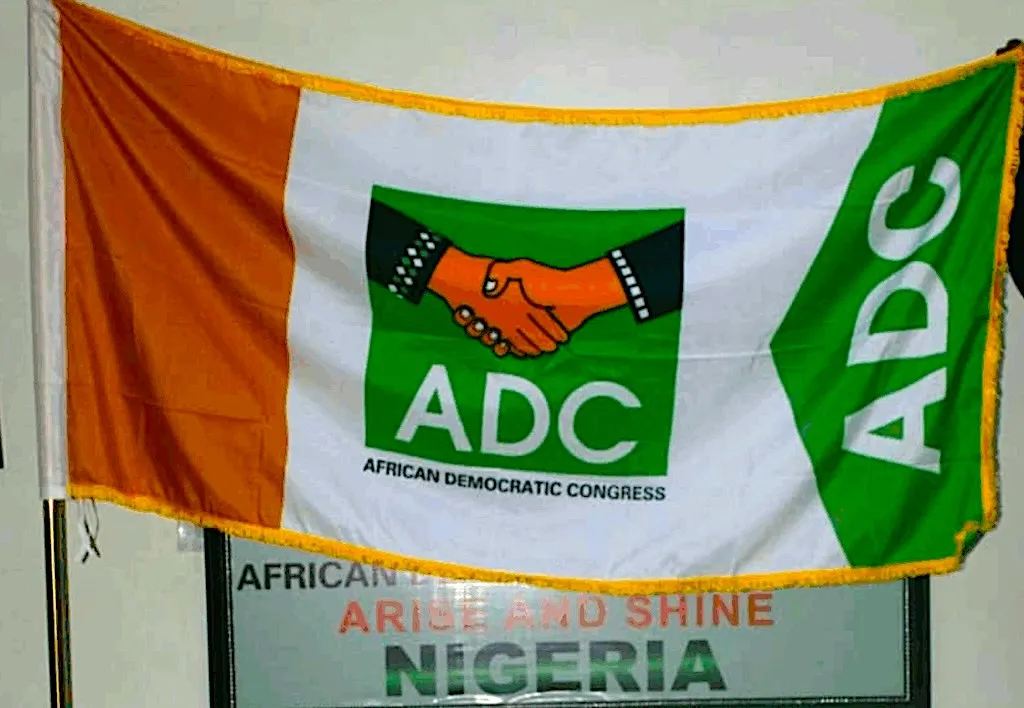
Opposition party launches diplomatic push amid dispute with INEC over leadership recognition.
By Baron Eloagu | Abuja, Nigeria
The African Democratic Congress (ADC) has announced plans to appoint international envoys in 12 major global cities to spotlight what it describes as worsening undemocratic practices in Nigeria. The move follows a deepening leadership dispute within the party and a recent decision by Independent National Electoral Commission (INEC) to withdraw recognition from its factions.
The initiative, unveiled on Saturday, will see the ADC establish a Special Representatives Network (SRN) aimed at strengthening its engagement with the international community.
According to the party’s National Publicity Secretary, Bolaji Abdullahi, the envoys will be deployed to strategic global capitals including Washington DC, London, Brussels, Berlin, Ottawa, Paris, Pretoria, Addis Ababa, Nairobi, Accra, Geneva, and New York.
The development comes amid heightened tensions between the ADC and INEC following the commission’s decision to derecognise both the David Mark-led leadership and the Nafiu Bala faction of the party.
INEC, in a statement issued by its Commissioner for Information and Voter Education, Mohammed Haruna, said it would not engage with either faction pending the resolution of a legal dispute before the Federal High Court. The commission cited a March 12 Court of Appeal judgment as the basis for its position.
The decision has triggered strong reactions within the party, with the Mark-led faction accusing INEC of bias and misinterpreting judicial rulings in a manner that undermines democratic processes.
Under the SRN framework, ADC envoys will engage foreign governments, legislative institutions, international media organisations, and diaspora communities to present the party’s perspective on Nigeria’s political environment.
Abdullahi alleged that since July 2025, there have been coordinated efforts to weaken opposition parties, disrupt leadership structures, and restrict political participation.
He stated that the envoys would provide briefings on governance issues, electoral integrity, and human rights concerns, while also promoting the ADC’s policy positions and reform agenda.
In addition, the party plans to launch a nationwide documentation initiative to track and report incidents affecting political participation, including alleged cases of harassment, arbitrary arrests, and disruptions of political activities.
INEC Decision Deepens Party Crisis
The standoff between the ADC and INEC marks a significant escalation in the party’s internal leadership crisis. By refusing to recognise either faction, the electoral body has effectively frozen official engagement with the party pending judicial resolution.
This has raised concerns within the ADC about its operational capacity ahead of future political activities.
ADC Seeks Global Attention on Nigeria’s Democracy
The creation of the SRN signals a strategic shift by the ADC to internationalise its grievances. By engaging foreign stakeholders, the party aims to build external pressure around issues of governance, electoral processes, and opposition rights in Nigeria.
The move also reflects an attempt to position the party as a credible alternative on the global stage.
The ADC’s decision to escalate its dispute to the international arena introduces a new dimension to Nigeria’s political landscape. It raises questions about electoral credibility, institutional neutrality, and the role of global actors in domestic democratic processes.









Leave a Reply