
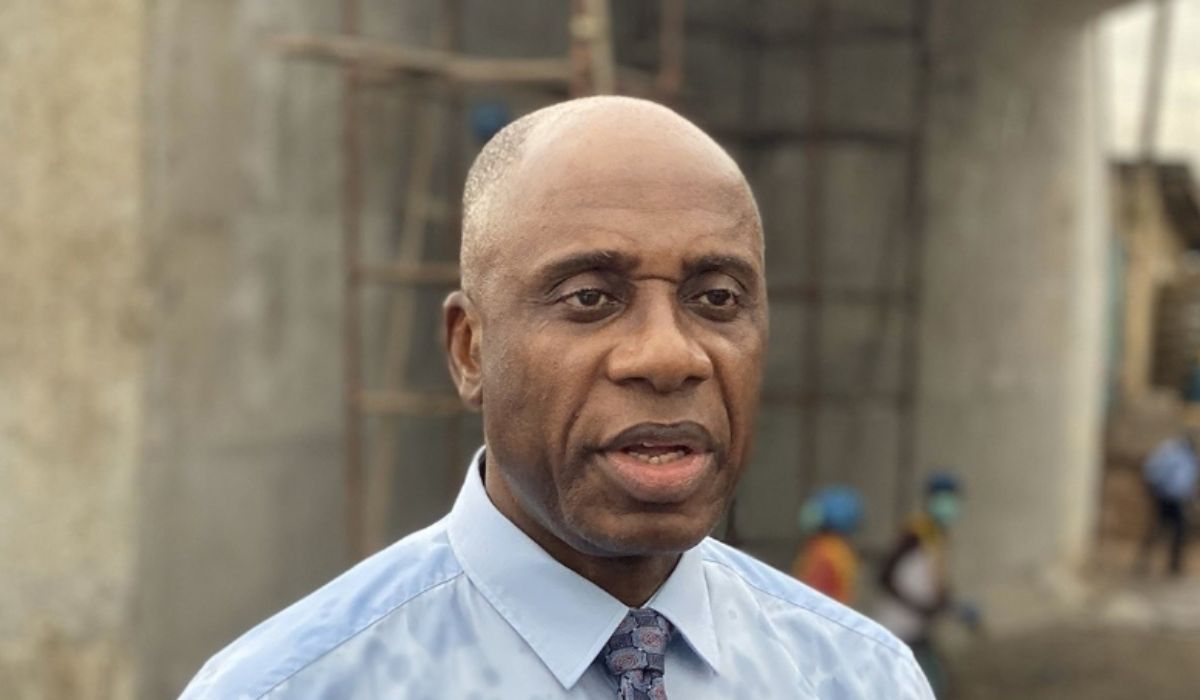
ADC Vice-Presidential Candidate says Catholic cleric spoke out against hardship, poverty and corruption—not politics—as controversy over bishops’ meeting with President Tinubu deepens.
By Jonas Katop
ABUJA, Nigeria — August 5, 2026
Amaechi Alleges Presidency Is Targeting Cardinal Onaiyekan for Speaking Truth to Power
Former Minis ter of Transportation and the African Democratic Congress (ADC) vice-presidential candidate for the 2027 general election, Rotimi Amaechi, has accused the Presidency of attempting to intimidate the Archbishop Emeritus of the Catholic Archdiocese of Abuja, Cardinal John Onaiyekan, following the cleric’s public criticism of President Bola Ahmed Tinubu’s administration.
Amaechi made the allegation during an appearance on Politics Today, a Channels Television programme, where he defended the Catholic prelate against accusations of political bias and insisted that Cardinal Onaiyekan’s comments reflected genuine concern over Nigeria’s worsening socio-economic conditions rather than support for any political movement.
The controversy stems from remarks made by the Cardinal after a closed-door meeting between President Tinubu and members of the Catholic Bishops’ Conference of Nigeria (CBCN), during which the bishops reportedly expressed concern over widespread economic hardship, insecurity and declining living conditions across the country.
“Cardinal Supports Nobody” — Amaechi
Rejecting claims that Cardinal Onaiyekan had become partisan ahead of the 2027 elections, Amaechi described the cleric as an independent moral voice whose primary concern remains the welfare of Nigerians.
According to him, the Cardinal has consistently maintained a non-partisan position despite his outspoken criticism of governance issues.
“He supports nobody. I see Cardinal Onaiyekan regularly; I worship in his private chapel. Cardinal Onaiyekan himself supports nobody.
“I have had several conversations with him. The only thing that pains him is the level of indiscretion, poverty in the country and corruption. He worries about that,” Amaechi said.
The former Rivers State governor argued that attempts to portray the Cardinal as politically aligned were misplaced and failed to acknowledge the Church’s traditional role in speaking on issues affecting society.
Claim of Political Intimidation
Amaechi alleged that the Presidency’s response to the Cardinal’s comments formed part of a broader pattern aimed at discouraging dissenting voices.
According to him, criticism directed at respected religious leaders could create an atmosphere in which citizens become reluctant to express legitimate concerns about governance.
“I just think that they tried to intimidate him because election is very far away, so they are trying to intimidate him the way they are trying to intimidate the population,” Amaechi stated.
He maintained that democratic societies thrive when citizens—including religious leaders—can freely express opinions on matters of public interest without fear of intimidation.
The Bishops’ Meeting That Sparked the Debate
The controversy began after President Tinubu met with members of the Catholic Bishops’ Conference of Nigeria in Abuja.
Following the meeting, Cardinal Onaiyekan disclosed publicly that the bishops had informed the President that many Nigerians were facing severe economic hardship and that the country was “bleeding” under current conditions.
The remarks generated widespread public debate, with many Nigerians viewing them as a candid reflection of prevailing economic realities, while government supporters questioned whether details of the private engagement should have been disclosed.
Presidency Defends Government’s Position
The Presidency subsequently criticised Cardinal Onaiyekan for speaking publicly about discussions held during the closed-door meeting.
Government officials argued that confidential engagements between the President and stakeholders should remain private and defended the administration’s economic reforms, insisting that difficult policy decisions were necessary to stabilise Nigeria’s economy and lay the foundation for long-term growth.
The Presidency maintained that its reforms—including fuel subsidy removal, foreign exchange adjustments and fiscal restructuring—are beginning to produce positive economic outcomes despite the short-term hardship experienced by citizens.
Political Reactions Deepen National Debate
The disagreement has since expanded into a wider political conversation involving prominent national figures.
Minister of the Federal Capital Territory, Nyesom Wike, questioned Cardinal Onaiyekan’s neutrality, suggesting that the cleric’s comments reflected political bias.
Former Vice President Atiku Abubakar, however, defended the Cardinal’s intervention, arguing that religious leaders have both the constitutional right and moral responsibility to speak on issues affecting justice, governance and the welfare of citizens.
Amaechi’s intervention further intensifies the debate, placing the issue at the intersection of politics, governance, religious freedom and democratic accountability as political activities gradually build toward the 2027 general elections.
The Role of Religious Leaders in Democratic Governance
Nigeria’s religious institutions have historically played influential roles in national conversations on governance, corruption, elections, human rights and social justice.
Across successive administrations, Christian and Muslim leaders have frequently called attention to issues affecting ordinary Nigerians, often urging governments to prioritise poverty reduction, security, national unity and accountability.
Political analysts note that while governments may disagree with such interventions, religious leaders remain important stakeholders whose voices often influence public discourse because of their moral authority and broad societal reach.
The latest exchange therefore raises broader questions about the relationship between government and religious institutions in a democratic society, particularly regarding freedom of expression and constructive engagement.
Looking Ahead
As Nigeria approaches another electoral cycle, observers expect public debate over governance, economic reforms and democratic freedoms to intensify.
Whether the current controversy subsides or evolves into a broader national conversation may depend on how political leaders, religious institutions and civil society navigate disagreements while preserving democratic dialogue and mutual respect.
For many Nigerians, however, the underlying issues raised by the Catholic bishops—economic hardship, insecurity, poverty and governance—remain at the centre of public concern regardless of the political exchanges surrounding them.
Amaechi’s allegation that the Presidency sought to intimidate Cardinal John Onaiyekan has added another dimension to an already contentious national debate over governance, freedom of expression and the role of religious leaders in public affairs. While the Presidency maintains it was defending the confidentiality of a private meeting and its reform agenda, critics argue that public officials should focus on addressing citizens’ concerns rather than confronting those who raise them. As Nigeria moves closer to the 2027 elections, the relationship between political authority, religious institutions and democratic accountability is likely to remain under close public scrutiny.


Leave a Reply