
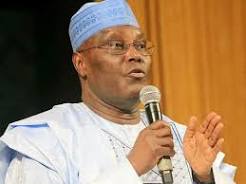
Former Vice President secures landslide victory amid allegations of irregularities, opposition fractures, and growing political realignments ahead of Nigeria’s 2027 presidential election.
By John Ishaku / May 28, 2026
ABUJA, NIGERIA —Former Vice President Atiku Abubakar has emerged as the presidential candidate of the African Democratic Congress (ADC) for the 2027 general election after defeating former Minister of Transportation Rotimi Amaechi and economist Mohammed Hayatu-Deen in a fiercely contested and controversial party primary.
The outcome, officially announced Wednesday night by the ADC leadership, followed days of political tension, accusations of electoral irregularities, and internal disputes that exposed deep fractures within the opposition party.
Atiku’s decisive victory now positions him at the centre of Nigeria’s evolving opposition politics as parties and political blocs intensify preparations for what is expected to be a highly competitive 2027 presidential race.
Atiku Secures Commanding Victory
According to official figures released by the ADC, Atiku Abubakar polled 1,855,787 votes to secure the party’s presidential ticket through the nationwide direct primary election.
His closest challenger, Rotimi Amaechi, recorded 509,397 votes, while Mohammed Hayatu-Deen finished third with 180,903 votes.
The total votes cast stood at 2,546,457 out of the party’s declared membership strength of over 3.1 million members nationwide.
The margin of victory further underscored Atiku’s dominance within the exercise, defeating Amaechi by more than 1.3 million votes.
ADC officials described the outcome as a triumph of internal democracy and grassroots participation.
Primary Election Overshadowed by Allegations
Despite the landslide result, the primary election was heavily overshadowed by allegations of vote manipulation, voter disenfranchisement, and irregular collation procedures.
Before the official announcement, both Rotimi Amaechi and Mohammed Hayatu-Deen publicly distanced themselves from the process and boycotted the results announcement ceremony.
Amaechi accused the party leadership of producing what he described as “concocted results,” alleging that a significant percentage of party members were denied the opportunity to participate in the exercise.
Hayatu-Deen similarly raised concerns over widespread vote rigging and procedural inconsistencies, stating that he personally witnessed some irregularities during the primary.
The allegations have introduced uncertainty over post-primary reconciliation efforts within the party.
ADC’s Direct Primary Strategy and Internal Democracy Debate
The ADC adopted a nationwide direct primary system after internal debates over whether to use consensus arrangements or delegate-based voting.
Some party stakeholders had earlier pushed for a consensus candidate to avoid internal conflict and preserve party unity ahead of the 2027 elections.
However, all three leading aspirants reportedly rejected calls to step down for one another, forcing the party leadership to proceed with a nationwide direct voting process.
Party officials defended the decision, arguing that the process complied with the Electoral Act 2026 and reflected the ADC’s commitment to internal democracy.
Political analysts, however, say the controversy surrounding the exercise may weaken the party’s credibility as it attempts to position itself as a democratic alternative to the ruling establishment.
What Atiku’s Emergence Means for Nigeria’s Opposition Politics
The emergence of Atiku Abubakar is expected to significantly reshape opposition calculations ahead of the 2027 general election.
Having previously contested presidential elections under the Peoples Democratic Party (PDP) in 2019 and 2023, Atiku remains one of the most recognisable opposition figures in Nigerian politics.
His movement into the ADC has intensified speculation about broader coalition-building efforts among opposition parties seeking to challenge the ruling party at the federal level.
Political observers believe Atiku’s victory could trigger fresh alignments, negotiations, defections, and strategic partnerships across Nigeria’s opposition landscape in the coming months.
Amaechi Camp Signals Possible Resistance
Sources close to Rotimi Amaechi suggest the former Rivers State governor may challenge aspects of the primary outcome internally or pursue broader consultations with political allies.
Amaechi had campaigned heavily on institutional reforms, internal democracy, and governance restructuring, positioning himself as a reform-oriented alternative within the ADC.
His rejection of the results now raises questions about whether the party can successfully reconcile competing factions before the 2027 campaign season intensifies.
Growing Pressure on Opposition Unity
The ADC primary crisis comes at a sensitive moment for Nigeria’s opposition movement, which has struggled in recent years with fragmentation, leadership rivalry, and strategic disunity.
Analysts warn that unresolved disputes within the ADC could undermine efforts to build a formidable coalition capable of mounting a serious challenge in the next presidential election.
Others argue that Atiku’s strong political structure and nationwide visibility may still provide the ADC with greater relevance in the national political conversation.
The emergence of Atiku Abubakar as ADC presidential candidate marks a major development in Nigeria’s early 2027 election landscape.
However, the controversies surrounding the primary process, combined with open resistance from rival aspirants, suggest that the battle for opposition unity may only be beginning.
As Nigeria’s political realignments intensify, the ADC now faces the difficult task of balancing victory with reconciliation while positioning itself as a credible alternative ahead of the next presidential election.







Leave a Reply