
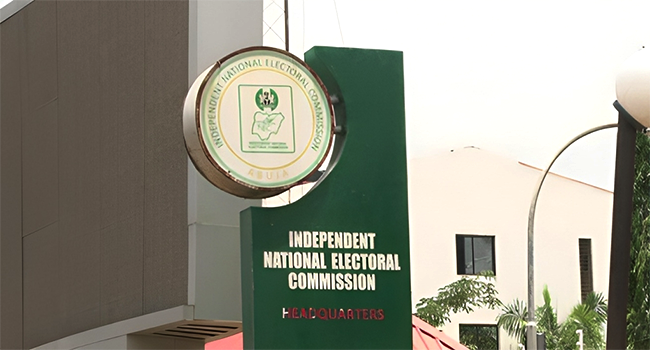
Electoral Commission partners with NIMC to eliminate deceased, duplicate and underage voters, strengthen identity verification and enhance transparency ahead of the 2027 general elections.
By John Ishaku
ABUJA, Nigeria – July 17, 2026
The Independent National Electoral Commission (INEC) has announced a strategic partnership with the National Identity Management Commission (NIMC) to overhaul Nigeria’s voter register, following revelations that the names of individuals who died as far back as 2011 remain on the Commission’s electoral database.
The initiative, which is expected to strengthen identity verification, eliminate duplicate and underage registrations, and improve the integrity of future elections, forms part of broader preparations for the 2027 General Elections.
INEC Chairman Prof. Joash Amupitan disclosed the development during a meeting with the Director-General of NIMC, Engr. Abisoye Coker-Odusote, and her management team at the Commission’s headquarters in Abuja.
The collaboration follows the enactment of the National Identity Management Commission (NIMC) Act, 2026, which expands the Commission’s legal authority over Nigeria’s digital identity infrastructure.
Deceased Voters Still on Electoral Register
In one of the most significant disclosures made during the meeting, the INEC Chairman admitted that the Commission’s voter register still contains the names of Nigerians who died more than a decade ago.
According to Amupitan, the register also contains duplicate records that have continued to inflate the electoral database.
“Entries belonging to Nigerians who died as far back as 2011 remain on INEC’s records, alongside cases of duplication. The Commission looks forward to leveraging NIMC’s data architecture to progressively clean up the register.”
The revelation is likely to reignite public debate over the accuracy of Nigeria’s voter register and long-standing concerns about electoral integrity.
Political analysts have consistently argued that an inaccurate voter register creates opportunities for electoral manipulation and undermines public confidence in democratic processes.
NIMC Database to Drive Identity Verification
Amupitan expressed confidence that the integration of INEC’s systems with NIMC’s expanding identity database would significantly improve the credibility of Nigeria’s electoral process.
According to him, NIMC has already enrolled more than 136 million Nigerians, providing a comprehensive identity database that can be used for continuous verification and auditing of voter records.
He explained that the collaboration would enable both agencies to:
- Remove deceased persons from the register.
- Detect duplicate voter registrations.
- Prevent underage registration.
- Improve identity authentication.
- Strengthen public confidence in elections.
The INEC Chairman described the partnership as the foundation for a modern electoral system built on verified identity and reliable digital records.
NIN Now Central to Online Voter Registration
As part of ongoing electoral reforms, INEC disclosed that its recently introduced Online Continuous Voter Registration (CVR) platform has been integrated with the National Identification Number (NIN).
According to the Commission, every new voter registration will now undergo identity verification using the NIN database before being accepted.
Amupitan described the move as a major milestone in eliminating identity fraud during voter registration.
He noted that the adoption of NIN as a verification protocol is expected to make voter registration more seamless while significantly reducing opportunities for impersonation and multiple registrations.
Reducing the Cost of Elections
The Commission also linked inaccurate voter records to the rising cost of conducting elections in Nigeria.
Amupitan explained that INEC currently prints election materials for more than 100 million registered voters, including contingency quantities to accommodate discrepancies within the voter register.
According to him, a cleaner and more accurate database would substantially reduce election costs.
“A credible, well-quantified voter register would significantly reduce the overall cost of conducting elections.”
📚 Get "Spend Less, Save More" — Click here
He added that INEC plans to undertake a comprehensive voter register quantification exercise after the next general election.
Identity Theft and Voter Impersonation Remain Major Challenges
The INEC Chairman acknowledged that identity-related crimes continue to pose serious challenges to electoral administration.
He noted that voter identities can easily be stolen, duplicated or impersonated under existing systems.
However, he expressed confidence that the legal reforms introduced through the new NIMC Act and enhanced technological integration would make such fraudulent practices easier to detect and prevent.
He recalled raising concerns about identity security during his appearance before the Senate and commended the National Assembly for enacting legislation that provides stronger safeguards for Nigeria’s electoral process.
Replacement PVCs and Printable Voter Cards
Amupitan also disclosed that, in line with Section 18 of the Electoral Act, INEC has expanded provisions for replacing damaged or defaced Permanent Voter Cards (PVCs).
Eligible voters whose cards have been lost, destroyed or become illegible can now apply for replacements.
The Commission also announced provisions for printable PVCs in cases reported at least 90 days before an election, ensuring that eligible citizens are not disenfranchised.
Artificial Intelligence to Play Future Role in Elections
The INEC Chairman revealed that the Commission is also exploring the use of Artificial Intelligence (AI) in electoral operations.
While acknowledging AI’s enormous potential to improve efficiency, he cautioned that the technology requires strict governance frameworks to prevent abuse.
According to him, AI regulation and digital data integrity will form part of ongoing collaboration between INEC and NIMC.
NIMC: New Law Strengthens Nigeria’s Digital Trust Framework
Earlier, NIMC Director-General Engr. Abisoye Coker-Odusote informed the INEC leadership that President Bola Ahmed Tinubu signed the NIMC Act 2026 into law on June 26, 2026, following nearly two decades of legislative reforms.
She explained that the new legislation officially positions NIMC as Nigeria’s Public Key Infrastructure (PKI) authority and the custodian of the country’s digital public infrastructure.
According to her, verified digital identity remains fundamental to effective governance, service delivery and credible elections.
She assured INEC of the Commission’s full cooperation in preparations for the 2027 General Elections, emphasizing that identity management remains the foundation of electoral credibility.
Experts Say Accurate Register Critical to Electoral Credibility
Election observers have repeatedly stressed that maintaining an accurate voter register is one of the most important safeguards against electoral fraud.
Analysts note that integrating national identity databases with voter registration systems could significantly reduce:
- Multiple registrations;
- Ghost voters;
- Identity theft;
- Voter impersonation; and
- Administrative inefficiencies.
However, they also caution that data protection, cybersecurity and privacy safeguards must remain central to any digital electoral reform.
The partnership between INEC and NIMC represents one of Nigeria’s most ambitious efforts to modernize its electoral system through digital identity verification.
With the Commission acknowledging that names of deceased Nigerians and duplicate entries remain on the voter register, the planned integration of NIMC’s identity database could significantly enhance transparency, reduce election costs and restore public confidence ahead of the 2027 General Elections.
Whether the reforms ultimately deliver a cleaner voter register and more credible elections will depend on effective implementation, sustained inter-agency collaboration and continued public trust in Nigeria’s democratic institutions.













Leave a Reply