
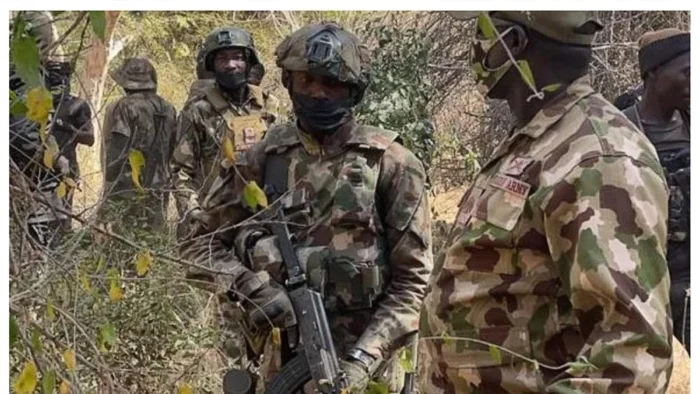
Security realignment between Washington and Abuja is repositioning Africa—particularly the Sahel and Lake Chad Basin—as the new frontline in global counter-terrorism operations. While experts welcome enhanced intelligence and military cooperation, they warn that without governance reforms, state policing, and border control, gains may remain fragile.
By A1NEWS International | June 9, 2026
Abuja, Nigeria – The global counter-terrorism architecture is undergoing a strategic relocation, with Africa now emerging as the primary theatre of operations. Security intelligence and diplomatic signals indicate a deepening United States–Nigeria security alignment aimed at dismantling ISIS and Al-Qaeda-linked networks increasingly concentrated in the Sahel and Lake Chad Basin.
The shift follows years of insurgent migration from the Middle East into West and Central Africa, transforming the region into one of the world’s most complex and volatile security corridors.
Nigeria, long burdened by Boko Haram and ISWAP insurgencies, is now positioned as a key operational partner in Washington’s expanding Africa-focused counter-terror strategy.
SAHEL EMERGES AS NEW GLOBAL TERROR HUB
Security assessments suggest that extremist networks previously dominant in Iraq and Syria have reorganised across Africa’s semi-peripheral regions.
- ISIS-linked cells are reported across Lake Chad islands
- Al-Qaeda affiliates maintain entrenched positions in the Sahel corridor
- Weak state control in Mali, Burkina Faso, and Niger has created operational safe zones
- Cross-border arms trafficking and militant mobility remain largely unchecked
Political instability following coups in the Sahel has further weakened ECOWAS security coordination, creating fragmented counter-terrorism responses across the region.
U.S. STRATEGIC SHIFT AND AFRICA’S RESOURCE DIMENSION
Security analysts argue that Washington’s renewed focus on Africa is driven by dual imperatives:
- Preventing extremist groups from establishing transcontinental attack bases
- Securing strategic access to oil and mineral supply chains in West Africa
- Counterbalancing Chinese and Russian influence in resource corridors
Intelligence sources describe increased U.S. surveillance and air operations targeting suspected terror enclaves around Lake Chad, signalling a more kinetic phase of engagement.
JOINT OPERATIONS SIGNAL NEW MILITARY PHASE
Recent joint operations between Nigerian forces and U.S. Africa Command (AFRICOM) are being described as a turning point in bilateral security cooperation.
Reported engagements include:
- Airstrikes on suspected terrorist positions in Sokoto (2025)
- Operations in Borno State targeting ISWAP logistics nodes
- Neutralisation of high-value extremist commanders in Lake Chad axis
Military analysts compare the emerging strategy to past U.S. campaigns in the Middle East, where sustained air power dismantled entrenched insurgent infrastructure.
ISWAP UNDER PRESSURE AS LOGISTICS CHAINS COLLAPSE
Intelligence reports indicate that ISWAP has restricted movement along its traditional “hijrah” migration corridors due to sustained military pressure.
Key implications include:
- Disruption of foreign fighter inflows
- Reduced weapons and logistics supply routes
- Operational fragmentation across Lake Chad islands
Security experts interpret this as evidence of growing effectiveness in intelligence-led targeting of insurgent supply networks.
EXPERTS WARN: MILITARY GAINS NOT ENOUGH
Pabor: Security Must Go Beyond Airstrikes
Security analyst Austen Pabor described the U.S.–Nigeria cooperation as a “strategic opportunity window,” but warned against over-reliance on kinetic operations.
He argued that:
- Intelligence sharing must be institutionalised
- Border management remains weak
- Terror financing networks remain largely intact
- Governance deficits fuel recruitment pipelines
According to him, insurgency thrives where state presence is weak, not just where firepower is absent.
Calls for State Police and Decentralised Security
Security researcher Matthew Ibadin traced Nigeria’s persistent insecurity to porous borders and a centralised policing system.
He argued:
- Nigeria’s security structure is overstretched
- Federal policing limits rapid local response
- State-controlled policing would improve accountability and coverage
He further noted that even expanded military deployment cannot fully prevent infiltration without border hardening.
ROOT CAUSES: GOVERNANCE AND REGIONAL FRAGILITY
Experts agree that military success alone cannot resolve the structural drivers of insecurity:
- Weak border enforcement across Sahel states
- Collapse of governance in conflict zones
- Arms flows from post-Libya instability
- Youth unemployment and recruitment vulnerability
- Fragmented regional intelligence systems
Some analysts also point to external geopolitical competition in Africa as a contributing destabilising factor.
SECURITY–DEVELOPMENT LINKAGES
Deji Adesogan, a security and digital communications analyst, said the shift in U.S. strategy could improve Nigeria’s security architecture if properly leveraged.
He noted potential benefits:
- Enhanced surveillance and intelligence systems
- Increased military interoperability
- Economic stabilisation through improved security
- Revival of agricultural and investment corridors
However, he warned that extremist groups are likely to adapt and decentralise operations in response to increased pressure.
DEVELOPMENT DEPENDS ON PEACE
Security analyst Abubakar Sadeeq emphasised that economic progress in Nigeria and the Sahel is impossible without stabilised security conditions.
He argued that:
- Persistent conflict blocks investment and infrastructure growth
- Arms proliferation from regional crises continues to fuel instability
- Coordinated international strategy is required to address root causes
The evolving Nigeria–U.S. counter-terrorism partnership signals a significant realignment in global security priorities, with Africa now at the centre of the fight against transnational extremist networks.
While military cooperation is intensifying and insurgent logistics systems appear increasingly disrupted, analysts caution that lasting stability will depend on deeper reforms—particularly in governance, border security, intelligence coordination, and policing structure.
Without these structural interventions, experts warn, tactical victories may not translate into long-term security gains.











Leave a Reply