
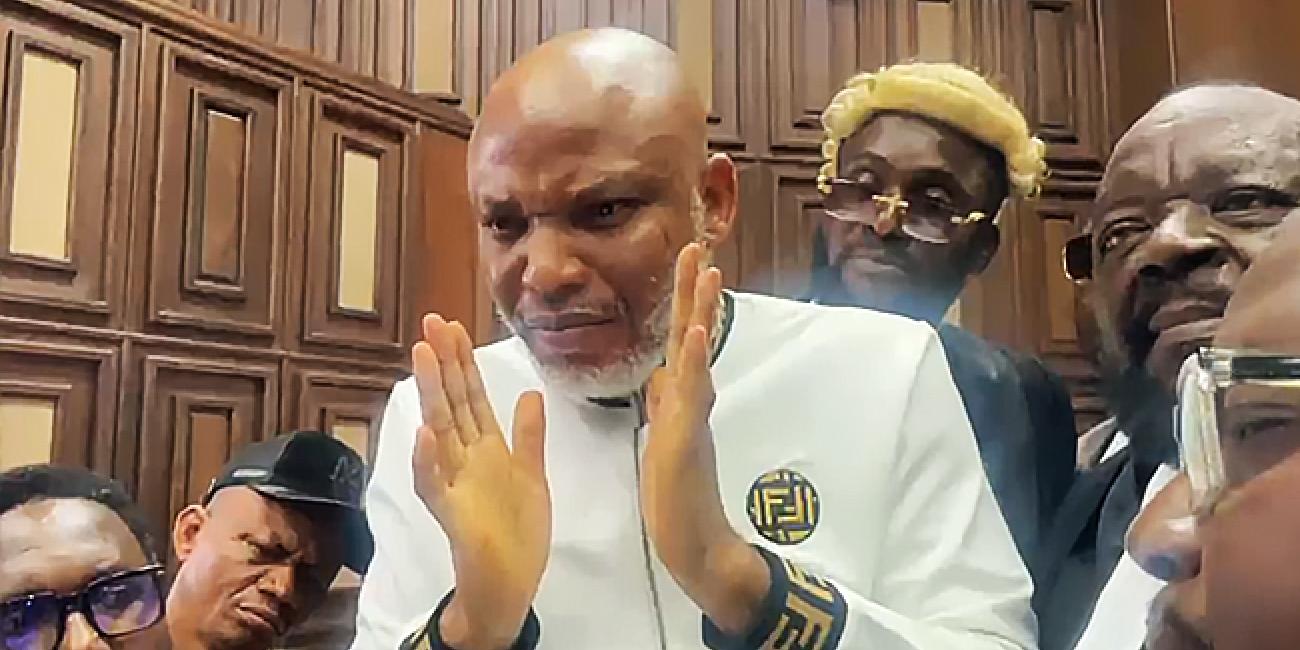
IPOB leader’s counsel accuses critics of spreading deliberate misinformation as controversy deepens over Supreme Court ruling and resumed terrorism trial.
By Baron Eloagu / May 28, 2026
ABUJA, NIGERIA —Fresh controversy has erupted around the ongoing trial of detained Nnamdi Kanu after his Special Counsel, Aloy Ejimakor, publicly accused unnamed critics of spreading “lies” and engaging in “blackmail” over claims that Kanu’s legal team returned the Indigenous People of Biafra (IPOB) leader’s case to court for trial.
In a strongly worded statement released on Thursday, Ejimakor insisted that it was the Nigerian Supreme Court—not Kanu’s legal team—that ordered the continuation of the terrorism case after overturning the earlier judgment of the Court of Appeal.
The renewed war of words highlights deepening divisions within pro-Biafra circles and reflects growing tensions surrounding one of Nigeria’s most politically sensitive legal battles.
Ejimakor Rejects Claims Against Legal Team
Aloy Ejimakor described allegations against him and other members of Kanu’s defence team as “well-orchestrated lies” deliberately designed to mislead the public.
According to him, certain individuals directly involved in the legal proceedings knowingly distorted the facts surrounding the Supreme Court judgment.
The lawyer stated that he had initially remained silent to protect ongoing legal processes and avoid escalating tensions but decided to respond publicly because of what he called persistent misinformation campaigns.
“This update is necessitated by the well-orchestrated lies and blackmail,” Ejimakor stated, insisting that neither he nor Kanu’s lawyers initiated the resumption of the trial.
Supreme Court Ruling at Centre of Dispute
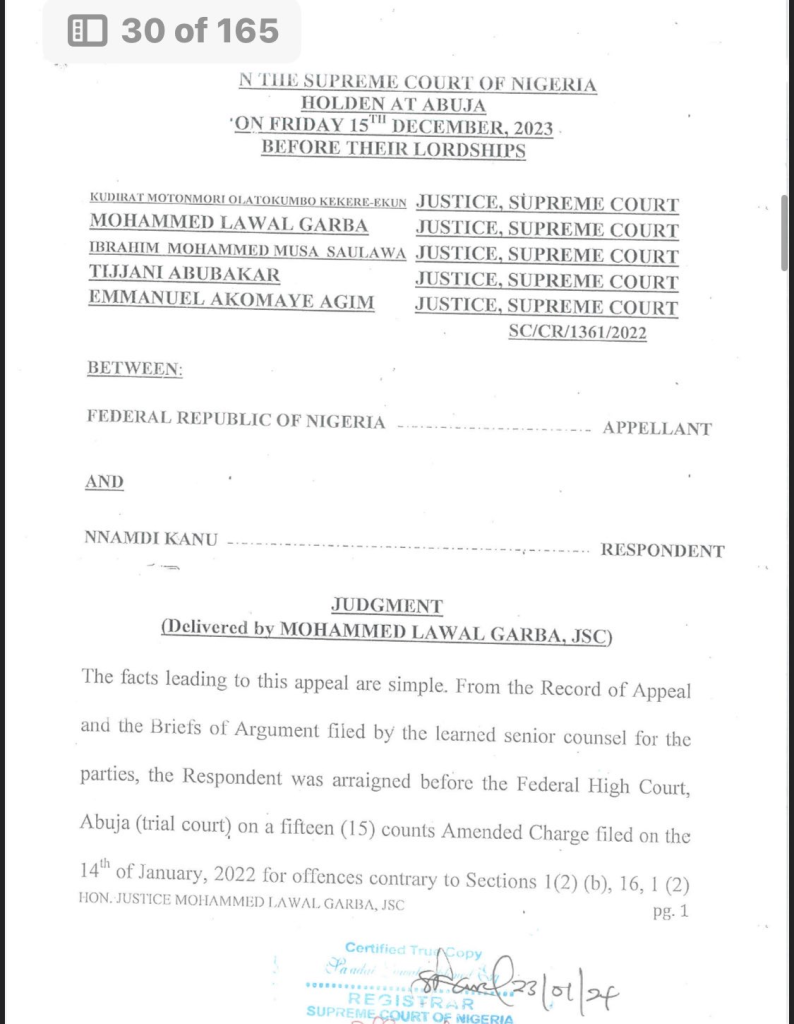
At the heart of the controversy is the interpretation of the Supreme Court’s judgment that overturned the October 2022 ruling of the Court of Appeal.
The Court of Appeal had earlier struck out several charges against Nnamdi Kanu and ordered his discharge following legal arguments surrounding his extraordinary rendition from Kenya to Nigeria.
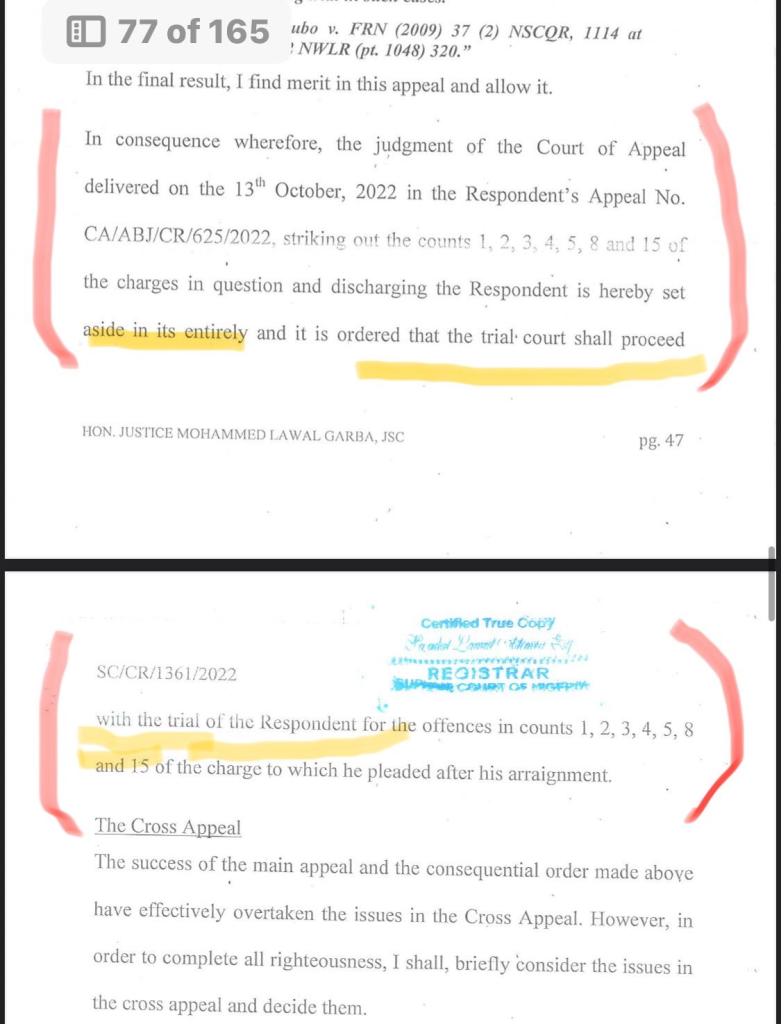
However, the Nigerian Supreme Court later reversed that judgment and ordered the trial court to continue proceedings.
Ejimakor quoted directly from the apex court ruling, emphasizing that the Supreme Court explicitly instructed the trial court to proceed with the terrorism case.
Legal analysts say the dispute reflects broader confusion among sections of the public over the legal distinction between “discharge” and “acquittal.”
‘Discharged’ Does Not Mean ‘Acquitted’ — Ejimakor
One of the central issues raised by Ejimakor concerns public claims that Nnamdi Kanu had been both “discharged and acquitted.”
The lawyer argued that the Court of Appeal only discharged Kanu but did not acquit him of the charges.
According to Ejimakor, the Supreme Court’s wording deliberately referenced only a “discharge,” reinforcing the legal position that the matter remained subject to further judicial determination.
The distinction is significant under Nigerian criminal jurisprudence because an acquittal would ordinarily prevent retrial on the same charges, while a discharge may not necessarily terminate legal proceedings permanently.
Internal Tensions Within Pro-Biafra Movement
Political observers say Ejimakor’s unusually forceful response may indicate growing internal tensions within factions sympathetic to the IPOB cause.
Over the years, divisions have emerged among supporters, activists, and commentators regarding legal strategy, political messaging, and approaches toward Kanu’s prolonged detention.
Some pro-Biafra supporters have increasingly questioned the handling of the case, especially after the Supreme Court ruling paved the way for the continuation of the terrorism trial.
Ejimakor’s remarks suggest mounting frustration within the legal team over accusations that they mishandled the proceedings.
Nigeria’s Most Sensitive Security Trial
The case involving Nnamdi Kanu remains one of Nigeria’s most politically charged and internationally scrutinised security trials.
Kanu has faced terrorism-related charges brought by the Federal Government over his separatist agitation and broadcasts linked to IPOB, an organisation proscribed by Nigerian authorities.
His detention and trial have continued to generate strong reactions across Nigeria and within the international human rights community, especially concerning issues surrounding his arrest, rendition, prolonged detention, and fair trial rights.
The legal proceedings have also intersected with wider security concerns in the South-East region, where separatist agitation, violence, and sit-at-home protests have significantly affected economic and social activities.
Ejimakor Signals More Public Disclosures
In what many analysts interpret as a warning to critics, Aloy Ejimakor suggested that more revelations may emerge in the coming days.
He stated that his previous silence was strategic and intended to protect ongoing legal matters but warned that “the gloves are off.”
The statement has fuelled speculation about possible internal disagreements or undisclosed details surrounding the handling of the case at various judicial levels.
Legal Experts Emphasise Supreme Court Finality
Ejimakor also reiterated the constitutional authority of the Nigerian Supreme Court as the country’s highest judicial body.
Under Nigerian law, decisions of the Supreme Court are final and binding on lower courts and parties involved in litigation.
Legal experts contacted by A1NEWS International noted that once the apex court overturned the Court of Appeal ruling, the trial court became legally obligated to resume proceedings unless fresh constitutional issues emerged.
The renewed controversy surrounding Nnamdi Kanu’s trial underscores the emotional, political, and legal sensitivities surrounding the IPOB leader’s prolonged detention and prosecution.
As accusations, counter-accusations, and public debates intensify, the dispute also highlights growing tensions over legal interpretation, internal accountability, and the future direction of the pro-Biafra movement.
With Ejimakor now publicly breaking his silence, attention is expected to shift once again to the courtroom, where the resumed trial continues to attract both national and international scrutiny.






Leave a Reply