
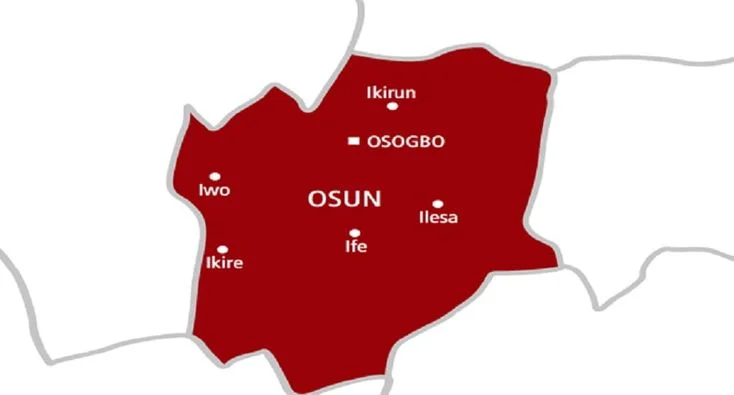
A three-way battle involving Governor Ademola Adeleke, APC candidate Bola Oyebamiji and ADC candidate Najeem Salaam has turned Saturday’s Osun governorship election into a major test of voter turnout, security, INEC’s credibility and the political machinery behind the leading contenders.
By Aderonke Unigbe
OSOGBO, Osun State, Nigeria — August 14, 2026:
Osun State goes to the polls on Saturday, August 15, 2026, in a closely watched governorship election that has evolved into a high-stakes political contest with implications extending beyond the state’s borders.
The Independent National Electoral Commission (INEC) has confirmed August 15 as the date of the election, while 15 candidates are contesting the governorship seat.
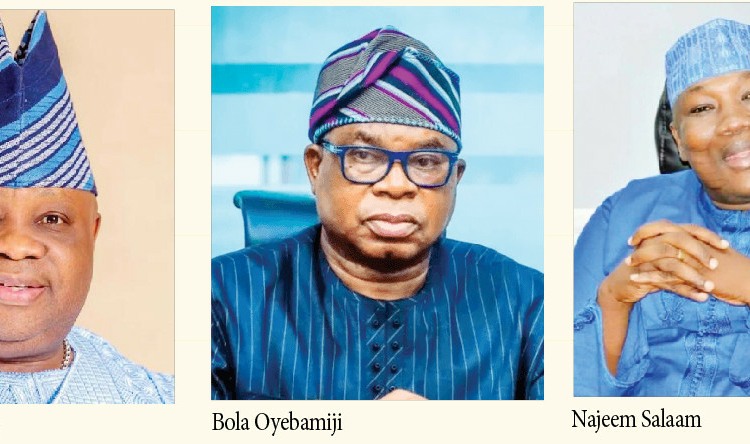
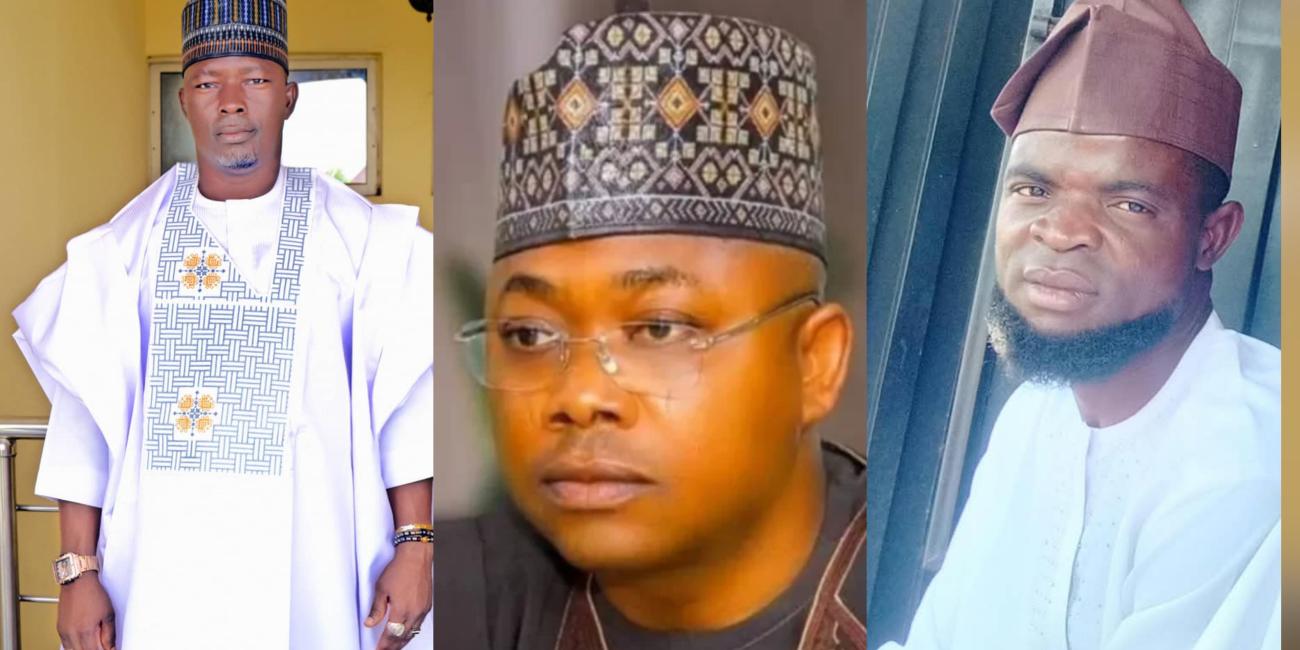
Although several political parties are on the ballot, the race has increasingly centred on three major contenders: incumbent Governor Ademola Adeleke of Accord, Bola Oyebamiji of the All Progressives Congress (APC) and Najeem Salaam of the African Democratic Congress (ADC).
The election comes after months of intense political mobilisation, defections, allegations and counter-allegations over political violence, making security and voter confidence as important to the credibility of the poll as the eventual winner.
For INEC Chairman Prof. Joash Amupitan, SAN, the election is another major opportunity to demonstrate the commission’s operational preparedness after the June 20 Ekiti governorship election.
INEC’s official election calendar lists the Ekiti election on June 20 and the Osun election on August 15, placing Saturday’s contest among the commission’s two major off-cycle governorship tests before the 2027 general elections.
Why Osun Matters Beyond Osun
The importance of Saturday’s election goes beyond who occupies the Osun Government House after the poll.
Osun is politically significant because of its position within the South-West and its history of closely fought elections.
The 2022 governorship election demonstrated just how competitive the state can become. Adeleke defeated then-incumbent APC candidate Gboyega Oyetola in a contest decided by a relatively narrow margin.
Four years later, the political alignments have changed considerably.
Adeleke is seeking another term, while the APC is attempting to reclaim the state. The ADC, meanwhile, is seeking to turn its growing political profile into an electoral breakthrough.
The result could therefore offer political parties an important indication of the strength of their structures and voter mobilisation ahead of 2027.
A Three-Way Contest With Powerful Political Histories
The apparent three-horse race has brought together politicians and political networks whose relationships have shifted significantly across successive election cycles.
Adeleke: Defending Incumbency
Governor Ademola Adeleke is seeking to retain control of the state under the Accord platform.
His campaign is built around incumbency, his record in office and the political structure available to the sitting administration.
But incumbency does not automatically guarantee victory.
The governor must convert his institutional visibility and campaign network into actual votes on election day while overcoming the risks associated with voter apathy and a potentially fragmented opposition landscape.
Oyebamiji: APC’s Bid to Reclaim Osun
The APC is fielding Bola Oyebamiji, popularly known as AMBO, in its attempt to return to power in the state.
The party’s campaign has been backed by former governor Gboyega Oyetola, now Minister of Marine and Blue Economy, who lost the 2022 election to Adeleke.
For the APC, Saturday represents an opportunity not only to defeat the incumbent but also to demonstrate that its political machinery in Osun has recovered from the setbacks that followed the 2022 defeat.
Reports of defections and internal tensions within the party have nevertheless added another layer of uncertainty to the contest.
Salaam: ADC’s South-West Test
The ADC’s Najeem Salaam, a former Speaker of the Osun State House of Assembly, represents another political force attempting to disrupt the established two-party pattern.
His candidacy is significant because the ADC is seeking to build a broader political foothold ahead of 2027.
Former Osun governor Rauf Aregbesola, now associated with the ADC’s national leadership, has also emerged as an important political figure around the party’s Osun campaign.
The election will consequently test whether the ADC can translate its growing political alliances into electoral strength.
Political Alliances Have Shifted
One of the defining features of the Osun contest is the movement of political actors between alliances.
The political relationship between Aregbesola and Adeleke is particularly notable.
Aregbesola’s political network previously aligned against Oyetola and the APC during the 2022 contest. In Saturday’s election, however, the ADC represents a separate political force competing against Adeleke.
The changing alliances illustrate the increasingly fluid nature of Nigerian electoral politics, where former allies can become opponents as political interests and electoral calculations change.
Security: The Most Immediate Concern
Security remains one of the biggest questions hanging over Saturday’s poll.
Osun has experienced politically linked violence during the campaign period, including deadly attacks.
In July, reports emerged of an attack around Owode-Igbona and Egbatedo in Osogbo in which people were killed and others injured. The police confirmed arrests in connection with one of the incidents and said weapons were recovered, while investigations continued.
The political camps have traded accusations over responsibility for violence, with competing claims and denials.
Governor Adeleke has publicly accused political opponents of involvement in violence, while his administration has itself faced allegations that it has rejected. The governor’s office has denied allegations of plans to arm political thugs.
These competing allegations underline why security agencies face a difficult responsibility: ensuring that political disputes do not translate into intimidation, attacks or disruption at polling units.
Voter Safety Could Determine Turnout
The security environment has direct implications for voter turnout.
Where citizens fear violence, they may choose to remain at home rather than risk travelling to polling units.
That could disproportionately affect communities where fear is greatest and potentially distort the relative strength of the candidates’ support bases.
The security agencies therefore face a dual challenge: preventing violence and ensuring that their presence does not itself become intimidating to voters.
A credible election requires citizens to be able to vote freely without threats, coercion or partisan interference.
More Than 2.3 Million Registered Voters
The electorate provides another indication of the scale of Saturday’s contest.
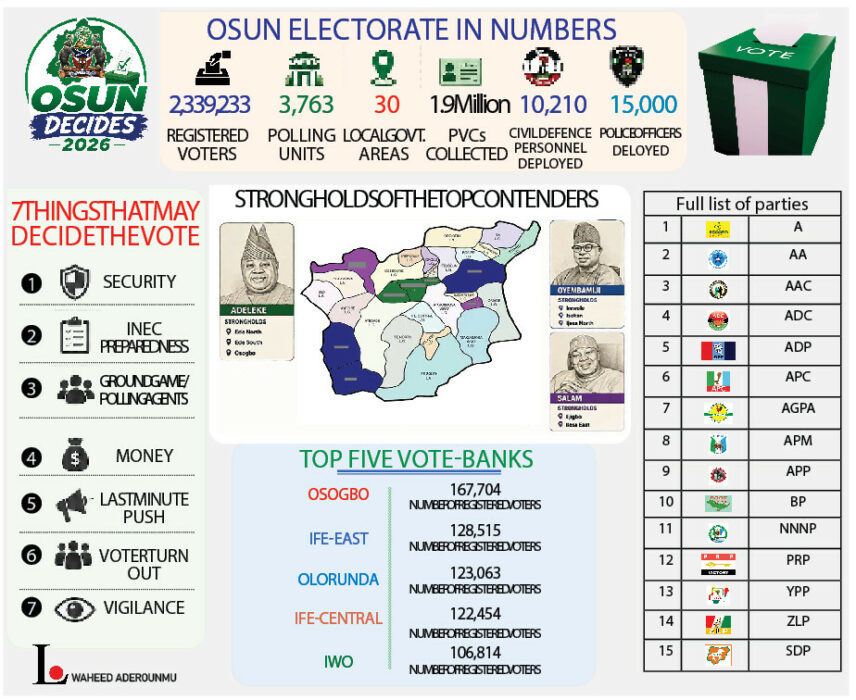
Recent reports citing INEC put the number of registered voters in Osun at more than 2.3 million.
The size of the electorate means that turnout patterns across the state’s 30 local government areas could become decisive.
The candidates will be relying heavily on their traditional strongholds, but the ability to mobilise voters in competitive areas could determine who ultimately crosses the finishing line.
INEC Faces Another Major Test
The Osun election is also a test for the leadership of Prof. Joash Amupitan.
INEC’s official materials show that the commission has been actively preparing for the Osun election, including arrangements for election personnel and other operational requirements.
The commission’s performance will be judged on several fronts:
- Timely deployment of personnel and sensitive materials;
- Functionality of the Bimodal Voter Accreditation System (BVAS);
- Compliance with electoral procedures;
- Management of polling units;
- Effective result collation;
- Transparency in the handling of complaints;
- Protection of election officials and materials.
The stakes are particularly high because the election comes only months before the 2027 general elections.
Seven Factors That Could Decide Osun
1. Security
The ability of security agencies to prevent violence, intimidation and disruption will be fundamental.
If voters believe polling units are unsafe, turnout could suffer.
2. INEC’s Operational Performance
INEC must ensure that electoral materials and personnel arrive on time and that accreditation, voting and result management proceed according to established procedures.
Any widespread logistical failure could damage confidence in the outcome.
3. Ground Game and Polling Agents
Political parties will need strong and properly trained polling agents capable of monitoring voting and collation.
In a close election, the ability to document events at polling units and follow the results through the collation chain can become critical.
4. Money and Vote Mobilisation
Campaign financing and mobilisation capacity can influence turnout and political organisation.
However, money alone cannot guarantee victory. The decisive question is whether financial resources translate into legitimate voter mobilisation rather than inducement or other forms of electoral malpractice.
5. Last-Minute Alliances
In a three-way contest, last-minute political understandings could influence voting patterns.
Candidates who can consolidate support from smaller parties, former allies and influential local political actors may gain an advantage.
6. Voter Turnout
Turnout could be one of the most decisive variables.
A candidate does not necessarily need overwhelming statewide popularity to win a first-past-the-post contest. Mobilising supporters in strategic local government areas could prove more important than simply having broad but weak support.
7. Result-Management Vigilance
The integrity of the election does not end when voting stops.
Political parties, observers and journalists will need to pay close attention to the movement of results from polling units through the ward and local government collation stages to the state collation centre.
In a close contest, discrepancies or unexplained changes in figures can rapidly become a source of controversy.
The 2027 Connection
The Osun election is likely to be closely watched by political parties preparing for the 2027 general elections.
For the APC, victory would strengthen its claim that it can reclaim significant political territory in the South-West.
For Accord and Adeleke, retaining Osun would reinforce the governor’s political standing and demonstrate that the incumbent administration can withstand a coordinated challenge.
For the ADC, a strong performance—or outright victory—would provide evidence that the party can challenge established political structures and expand beyond its emerging alliances.
The election therefore carries implications for the political calculations already taking shape ahead of 2027.
What a Credible Election Would Require
A peaceful Osun election requires more than a quiet polling day.
It requires an electoral process in which voters can make choices without intimidation, candidates can compete without violence, officials can perform their duties independently, and results can be traced transparently from polling units to final declaration.
INEC has a responsibility to administer the process impartially.
Security agencies must protect citizens and electoral infrastructure without becoming partisan actors.
Political parties and candidates must equally accept that electoral competition cannot justify violence or intimidation.
Osun Decides 2026 is more than a contest for the Government House in Osogbo.
It is a test of whether a politically competitive state can conduct a high-stakes election without allowing violence, money politics, misinformation or institutional weaknesses to overwhelm the democratic process.
For Adeleke, the immediate objective is to defend his hold on power.
For Oyebamiji and the APC, the mission is to reclaim a state lost in 2022.
For Salaam and the ADC, the election presents an opportunity to demonstrate that the party can break into a political space traditionally dominated by established forces.
For INEC, Saturday represents another opportunity to prove that the lessons from Ekiti and the commission’s preparations can translate into a credible election.
And for the voters of Osun, the most important question is ultimately simpler:
Will their votes be protected from the polling unit to the final declaration?
That is the real test of Osun Decides 2026—and one that will be watched closely across Nigeria as the country moves towards the 2027 general elections.



Leave a Reply