
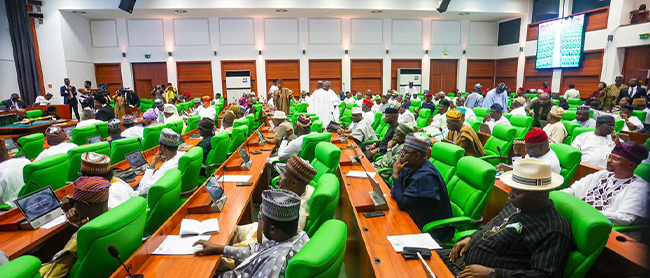
Constitutional Review Advances as Lawmakers Consider Sweeping Reforms on Security, Electoral System, Governance and Devolution of Powers
By Umar Baba
ABUJA, NIGERIA – June 11, 2026
The House of Representatives is poised to take a significant step in Nigeria’s constitutional reform process as lawmakers prepare to deliberate and vote on a series of Constitution Alteration Bills, including the highly anticipated proposal for the establishment of state police across the federation.
The release of the final print of the Constitution Amendment Bills marks a major milestone in the National Assembly’s ongoing efforts to reshape key aspects of governance, security, judicial administration, electoral processes, and federal-state relations under the 1999 Constitution (as amended).
At the center of today’s legislative agenda is the controversial yet widely discussed State Police Bill, which seeks to provide a constitutional framework for decentralized policing in response to Nigeria’s growing security challenges.
State Police Proposal Takes Centre Stage
The proposal for state police has emerged as one of the most debated constitutional reforms in recent years, drawing strong reactions from security experts, traditional rulers, civil society groups, state governments, and citizens across the country.
Supporters argue that Nigeria’s centralized policing structure has become overstretched and inadequate in addressing increasingly localized security threats, including terrorism, banditry, kidnapping, communal conflicts, and violent crimes.
The proposed legislation seeks to create a complementary policing system that would operate alongside the existing federal police structure.
According to details contained in the amendment bill, state police formations would function under clearly defined constitutional safeguards designed to prevent abuse, political manipulation, and jurisdictional conflicts.
The framework also outlines operational guidelines, oversight mechanisms, recruitment standards, accountability structures, and the relationship between federal and state policing authorities.
Security analysts have consistently argued that community-based policing models could significantly improve intelligence gathering, rapid response capabilities, and local security management.
Months of Nationwide Consultations
The House Committee on Constitution Review disclosed that the amendment bills are the product of extensive nationwide consultations involving a broad spectrum of stakeholders.
The review process included:
- Zonal public hearings across the six geopolitical zones;
- National stakeholder consultations;
- Town hall meetings;
- Expert policy sessions;
- Engagements with civil society organisations;
- Submissions from professional bodies;
- Contributions from traditional institutions;
- Inputs from government agencies and citizens.
The exercise was designed to ensure that constitutional reforms reflect the aspirations and concerns of Nigerians from diverse backgrounds and regions.
Legislative officials described the process as one of the most participatory constitutional review exercises since the return of democratic governance in 1999.
Beyond State Police: Other Critical Reforms
The Constitution Alteration Bills extend beyond security reforms and cover several strategic sectors of national governance.
Among the thematic areas slated for consideration are:
Electoral Reforms
Proposals aimed at strengthening electoral credibility, improving transparency, and enhancing voter confidence in the democratic process.
Judicial Reforms
Measures intended to improve judicial independence, efficiency, and access to justice.
Devolution of Powers
Amendments designed to transfer certain responsibilities from the Exclusive Legislative List to states, promoting greater federalism and local autonomy.
Local Government Administration
Provisions aimed at strengthening local government structures and improving grassroots governance.
Fiscal Reforms
Measures targeted at enhancing revenue generation, financial accountability, and fiscal sustainability.
Human Rights and Inclusive Governance
Proposals seeking greater inclusion, protection of fundamental rights, and broader citizen participation in governance.
Traditional Institutions
Recommendations aimed at defining and strengthening the constitutional role of traditional rulers within Nigeria’s governance framework.
State and Local Government Creation
Constitutional requests relating to the creation of additional states and local government areas are also among the proposals under consideration.
Benjamin Kalu Highlights Significance of Reforms
Deputy Speaker of the House of Representatives and Chairman of the House Committee on Constitution Review, Rt. Hon. Benjamin Okezie Kalu, described the release of the final legislative draft as a landmark achievement in Nigeria’s democratic evolution.
According to him, the amendment process reflects extensive bipartisan collaboration and broad national engagement.
“The release of the final print of these Constitution Alteration Bills reflects the extensive consultations, scrutiny, and bipartisan collaboration that have characterised this reform process.
“These proposals embody the aspirations, concerns, and recommendations expressed by Nigerians from all walks of life,” Kalu stated.
The Deputy Speaker noted that the State Police proposal remains particularly significant because it responds directly to growing demands for more effective security arrangements across the country.
He emphasized that lawmakers remain committed to strengthening democratic governance, promoting inclusion, deepening federalism, and building institutions capable of addressing modern governance challenges.
Security Challenges Driving Calls for Reform
Nigeria’s worsening security situation has intensified calls for constitutional reforms that would empower states to play a more active role in maintaining law and order.
Several governors, security experts, and policy analysts have argued that the current centralized policing structure limits the ability of state governments to respond effectively to local security threats despite being designated as chief security officers of their respective states.
Advocates of state policing contend that localized security agencies would possess superior knowledge of terrain, language, culture, and community dynamics, thereby improving crime prevention and response capabilities.
However, critics continue to express concerns over the potential misuse of state police by political leaders and the possibility of partisan enforcement activities.
These concerns have informed the inclusion of constitutional safeguards and oversight mechanisms within the proposed framework.
Crucial Vote Ahead
The House of Representatives is expected to consider and vote on the amendment bills during plenary today.
Legislative procedure requires that the constitutionally prescribed quorum be attained before voting can proceed.
Should attendance fall below the required threshold, deliberations and voting will be deferred to the next legislative day in accordance with constitutional provisions and House Standing Orders.
Political observers believe the outcome of today’s proceedings could significantly influence the future direction of governance, security management, and federalism in Nigeria.
As lawmakers prepare for one of the most consequential constitutional votes in recent years, the proposed State Police Bill has emerged as a defining test of Nigeria’s willingness to reform its security architecture amid mounting national challenges.
Whether approved or rejected, the debate reflects a broader national conversation about governance, accountability, federalism, and the search for sustainable solutions to Nigeria’s complex security concerns.
The outcome of the House deliberations is expected to shape the next phase of constitutional amendments and potentially redefine the balance of power between the federal and state governments.












Leave a Reply