
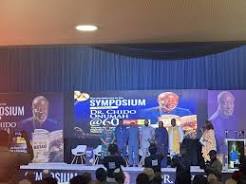
Leaders call for accountability, civic action, and structural reforms to strengthen democracy
By Jumai Musa | Abuja, Nigeria
Nigeria’s top political and civic leaders have warned that the country’s nation-building process remains unfinished, urging citizens to take active ownership of governance and demand accountability.
The call was made at a symposium in Abuja held in honour of veteran journalist and activist, Dr Chido Onumah, where speakers highlighted deep structural and democratic challenges confronting the country.
National Security Adviser, Nuhu Ribadu, said Nigeria still faces significant governance and security challenges, stressing that progress depends on sustained contributions from committed citizens.
Ribadu noted that nation-building is a continuous process that requires dedication beyond government institutions, adding that individuals like Onumah exemplify civic responsibility and national service.
Former Ekiti State Governor, Dr Kayode Fayemi, said Nigeria’s future must not be left solely in the hands of politicians, insisting that citizens play a decisive role in shaping governance outcomes.
He argued that democratic consolidation depends on active civic participation and sustained pressure on leaders to act in the public interest.
Former Minister of Education, Dr Obiageli Ezekwesili, took a structural view of Nigeria’s governance challenges, stating that the imbalance between the “state” and the “citizens” has weakened accountability.
According to her, governance failures persist because citizens have not fully assumed ownership of the country or enforced shared national values.
Ezekwesili also questioned the idea of a reform-driven elite, describing Nigeria’s political class as largely transactional.
Civic Pressure Key to Democratic Survival
Executive Director of Yiaga Africa, Samson Itodo, warned that Nigeria risks normalising impunity if citizens fail to push back against abuse of power.
He raised concerns about judicial integrity and electoral credibility, particularly ahead of the 2027 elections, stressing that democracy requires sustained civic engagement beyond voting cycles.
Structural Fault Lines Date Back to Independence
In his keynote address, Professor Yakubu Ochefu traced Nigeria’s governance instability to unresolved post-independence tensions.
He described the country’s system as structurally misaligned, likening it to an outdated framework struggling to meet modern expectations.
Ochefu warned that without honest national conversations, generational disconnect and institutional weaknesses could deepen existing crises.
The remarks reflect growing concern among policymakers and civil society leaders about Nigeria’s democratic trajectory.
With rising political tension ahead of 2027, the emphasis on citizen participation signals a shift from elite-driven governance to a model that demands accountability from below.





Leave a Reply