
Exclusive findings reveal uneven implementation of landmark Supreme Court ruling as local government workers, officials and civil society groups allege governors continue to control council finances despite constitutional directive.
By Amarachi Odenigbo
ABUJA, Nigeria – July 17, 2026
Nearly two years after the Supreme Court of Nigeria delivered its landmark judgment granting financial autonomy to the country’s 774 Local Government Areas (LGAs), investigations indicate that implementation of the ruling remains inconsistent across the federation, despite ₦10.48 trillion being allocated to councils through the Federation Account Allocation Committee (FAAC) during the period.
Findings based on analyses of FAAC disbursement records, reports from the National Bureau of Statistics (NBS), the Office of the Accountant-General of the Federation (OAGF), and interviews with officials across several states suggest that many state governments continue to exercise substantial control over local government finances through the State Joint Local Government Account.
The findings have reignited concerns about constitutional compliance, fiscal transparency, grassroots development and the effectiveness of one of Nigeria’s most consequential judicial decisions on local government administration.
Supreme Court Judgment Sought to End State Control
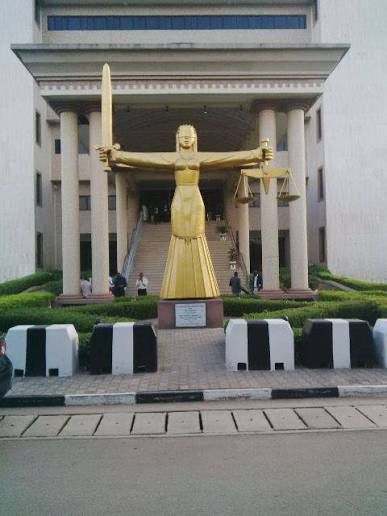
On July 11, 2024, the Supreme Court, in the case Attorney-General of the Federation v. Attorney-General of Abia State & 35 Others (SC/CV/343/2024), ordered that allocations due to local government councils be paid directly into their respective accounts.
The apex court also ruled that:
- State governments should no longer retain or spend local government allocations;
- Only democratically elected local government councils are constitutionally recognised; and
- The operation of unelected caretaker committees violates the Constitution.
The judgment was widely hailed as a historic step toward strengthening grassroots governance and accountability.
₦10.48 Trillion Allocated, But Questions Persist
Financial records show that between July 2024 and June 2026, local governments received ₦10.479 trillion from FAAC.
The allocations increased significantly during the second year following the judgment.
- July 2024 – June 2025: ₦4.496 trillion
- July 2025 – June 2026: ₦5.984 trillion
This represents:
- ₦1.488 trillion increase
- 33.1 percent year-on-year growth
Average monthly allocations also rose from approximately ₦374.65 billion to ₦498.67 billion.
However, investigations indicate that increased allocations have not necessarily translated into greater financial independence or visible improvements in grassroots infrastructure and service delivery.
NULGE: ‘Nothing Has Changed’
The National Union of Local Government Employees (NULGE) says implementation of the Supreme Court judgment remains largely stalled.
Speaking in Abuja, NULGE National President Aliyu Kankara said the Federal Government has yet to commence direct payment of statutory allocations to local government councils.
“Up till now, they have not started the implementation of the financial autonomy.”
According to him, the union has repeatedly written to the Federal Government requesting compliance with the Supreme Court ruling.
“Nothing has changed. Until the allocations go directly to the local governments as ordered by the Supreme Court, we cannot say financial autonomy has been implemented.”
NULGE maintains that direct access to funds is essential for improving service delivery and strengthening local governance.
States Allegedly Continue Operating Joint Accounts
Interviews with local government officials in several states suggest that the State Joint Local Government Account remains operational despite the court judgment.
Officials in:
- Kaduna
- Kano
- Benue
- Plateau
- Sokoto
- Abia
reported that councils continue to depend largely on state governments for the release or approval of funds.
Some officials, who requested anonymity because they were not authorised to speak publicly, alleged that allocations announced during FAAC meetings differ significantly from amounts eventually made available to local governments.
One official stated:
“When you hear that a local government received ₦800 million, what eventually gets to the council may be as little as ₦50 million.”
📚 Get "Spend Less, Save More" — Click here
A1NEWS International could not independently verify this specific claim.
Federal Government Established Implementation Committee
Following the Supreme Court judgment, President Bola Ahmed Tinubu directed relevant Ministries, Departments and Agencies (MDAs) to facilitate implementation.
An inter-ministerial committee comprising representatives of:
- Office of the Secretary to the Government of the Federation;
- Ministry of Finance;
- Office of the Accountant-General;
- Central Bank of Nigeria (CBN); and
- Office of the Attorney-General of the Federation
was established to develop procedures for direct payments and resolve legal and administrative challenges.
However, findings indicate that implementation has progressed unevenly across the federation.
Jigawa Emerges as an Exception
Among the states surveyed, Jigawa State stands out as one of the few claiming full compliance with the Supreme Court ruling.
ALGON Chairman and Chairman of Dutse Local Government Area, Sibu Abdullahi, said all 27 local government councils now receive allocations directly from the Federal Government.
According to him:
- Councils operate independent bank accounts;
- No deductions are made at the state level;
- Financial transparency has improved; and
- Councils are responding more effectively to community needs.
He also disclosed that Jigawa intends to share its implementation model with other states.
Communities Question Impact of Rising Allocations
The autonomy debate has also intensified at the grassroots.
Residents in Oriire Local Government Area of Oyo State, following recent security incidents involving schoolchildren, questioned why communities continue to experience:
- Poor roads;
- Inadequate healthcare facilities;
- Weak telecommunications coverage;
- Insufficient security infrastructure; and
- Underdeveloped schools
despite years of increasing FAAC allocations.
Community leaders argue that genuine financial autonomy should result in measurable improvements in public services.
FAAC Shared ₦42.7 Trillion Across All Tiers
FAAC records further show that between July 2024 and June 2026, a total of ₦42.709 trillion was distributed among the three tiers of government and oil-producing states.
Breakdown includes:
- Federal Government: ₦14.620 trillion (34.23%)
- State Governments: ₦14.506 trillion (33.96%)
- Local Governments: ₦10.480 trillion (24.54%)
- 13% Derivation to Oil-Producing States: ₦3.103 trillion (7.27%)
The data also indicate significant increases in allocations across all categories during the review period.
Experts Call for Constitutional and Administrative Reforms
Constitutional lawyers and governance experts argue that judicial pronouncements alone cannot guarantee local government autonomy.
They advocate:
- Full implementation of the Supreme Court judgment;
- Stronger financial oversight;
- Constitutional amendments where necessary;
- Greater transparency in FAAC disbursements;
- Public accountability mechanisms; and
- Enhanced monitoring by anti-corruption agencies and civil society organisations.
Analysts also stress that local government autonomy should be accompanied by prudent financial management to ensure improved grassroots development.
Federal Government Yet to Respond
As of the time of filing this report, the Office of the Accountant-General of the Federation and the Federal Ministry of Finance had not issued substantive responses to media enquiries regarding the implementation status of the Supreme Court judgment.
Similarly, there has been no official nationwide update on whether all 774 local governments are currently receiving allocations directly from the Federation Account.
Nearly two years after Nigeria’s Supreme Court sought to redefine the financial relationship between states and local governments, implementation remains uneven across the country.
While billions of naira continue to flow into local government allocations, questions persist over whether councils have truly gained financial independence or whether longstanding structures of state control remain largely intact.
With only a handful of states claiming full compliance, the autonomy envisioned by the apex court may remain more of a constitutional aspiration than an operational reality until all stakeholders fully implement the judgment and strengthen accountability at the grassroots.





Leave a Reply