
Hajia Hadiza Mohammed questions the timing and implications of Professor Joash Amupitan’s warning on election-result announcements, alleging political interference and urging Nigerians to defend electoral transparency ahead of the 2027 general elections.
By A1NEWS International
ABUJA, Nigeria — October 24, 2026
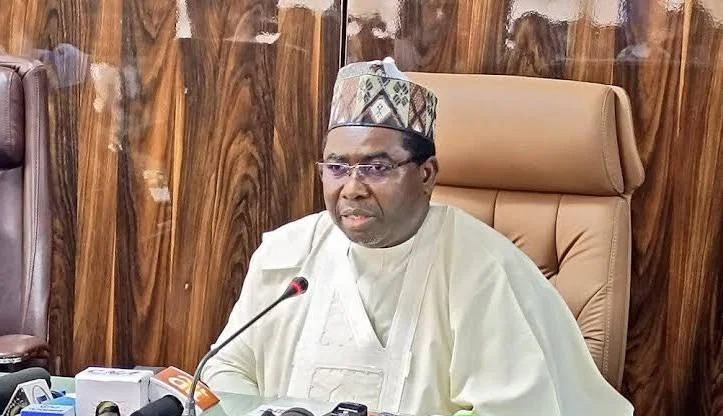
The warning by the Chairman of the Independent National Electoral Commission (INEC), Professor Joash Ojo Amupitan, that the commission remains the legally authorised body to declare election results has triggered questions about electoral transparency, political neutrality and the role of the media ahead of Nigeria’s 2027 general elections.
In an opinion article titled “The Matters Arising from the INEC Chairman’s Warning and Segun Sowunmi’s Threats to Nigerians,” social activist and politician Hajia Hadiza Mohammed argues that the chairman’s remarks, alongside statements she attributes to political commentator Segun Sowunmi, raise concerns about public confidence in the electoral process.
Mohammed questions whether the emphasis on INEC’s exclusive authority to announce election results could discourage independent scrutiny and the publication of results independently collated by political parties and their agents.
She also alleges that political considerations could influence electoral administration. However, the claims in her article remain allegations and require independent verification.
INEC Reiterates Its Authority to Declare Election Results
According to Mohammed, Amupitan reiterated INEC’s authority to declare election results during a press conference at the International Conference Centre in Abuja on October 6, 2026.
The event reportedly formed part of a national stakeholders’ meeting marking 100 days to the 2027 general elections.
She also refers to an earlier three-day strategic workshop organised by INEC in collaboration with the Nigerian Guild of Editors. The workshop, held at BON Hotel Octagon in Jahi District, Abuja, was themed “Strengthening Democracy Through Partnership Among Editors, Civil Society and Electoral Institutions.”
At the meetings, the INEC chairman reportedly urged media organisations to refrain from publishing privately collated election figures and to respect the commission’s constitutional mandate to declare results.
Mohammed questions the emphasis placed on INEC’s exclusive authority, arguing that the commission should also prioritise voter education, public engagement and measures capable of strengthening confidence in the electoral process.
Her criticism reflects a broader question confronting election administrators: how to uphold the legal authority of the electoral commission while ensuring that citizens, political parties, election observers and the media can scrutinise the process and independently assess the credibility of announced results.
Questions Over INEC’s Independence and Political Neutrality
Mohammed raises concerns about Amupitan’s political neutrality, arguing that questions surrounding his appointment and subsequent administrative decisions have contributed to public scepticism.
She alleges that the chairman’s actions suggest political alignment with the ruling All Progressives Congress (APC) and President Bola Ahmed Tinubu.
The article, however, does not provide documentary evidence establishing that Amupitan has acted on behalf of the APC or the Presidency.
The allegations underscore the importance of transparent electoral administration, particularly in a politically competitive environment where public confidence in the neutrality of election officials is essential.
For INEC, the challenge is not merely to conduct elections within the law but also to demonstrate impartiality through its decisions, procedures and communication with stakeholders.
Any allegation of political interference should be assessed against verifiable records, official explanations and independently established facts.
INEC Personnel Redeployment Raises Further Questions
Mohammed also questions the reported redeployment of Mrs Oluyemi Titilayo Adeyemi-Showunmi from INEC’s Lagos office, where she served as administrative secretary, to the commission’s headquarters in Abuja to head the Electoral Operations Department ahead of the 2027 elections.
The author identifies Adeyemi-Showunmi as the wife of Segun Sowunmi, whom she describes as an APC presidential campaign council spokesperson.
She argues that the appointment raises concerns about possible conflicts of interest, given the electoral responsibilities of the department and the political affiliations she attributes to the individuals involved.
However, a marital relationship or an administrative appointment, by itself, does not establish wrongdoing, political interference or an intention to manipulate election results.
Determining whether the redeployment followed established procedures would require confirmation of the appointment, the applicable personnel rules, the department’s responsibilities and any relevant conflict-of-interest safeguards.
INEC’s explanation of the decision would help address the questions raised and establish whether the redeployment was an ordinary administrative measure or one requiring further scrutiny.
Debate Over Party Agents’ Independent Collation of Results
A central issue in Mohammed’s article is the distinction between the official declaration of election results and the independent collation of figures by political parties and their agents.
She argues that political parties and their agents should be able to collate results recorded at polling units and wards to assess their electoral performance and compare their records with officially announced figures.
The author maintains that such independent collation is essential to electoral accountability and should not be confused with the authority to make an official declaration on behalf of INEC.
The distinction is important in public discussions about election transparency. Independent verification can contribute to confidence in an electoral outcome, particularly when party agents, observers and journalists have access to relevant polling-unit records.
At the same time, any disagreement over results must be assessed using the applicable electoral laws, prescribed procedures and verifiable records.
Mohammed warns that attempts to alter authentic results would undermine the will of voters. She predicts that Nigerians will resist any effort to manipulate the outcome of the 2027 elections.
Her predictions about possible electoral misconduct or public resistance, however, should be understood as political opinion rather than established evidence of a planned electoral offence.
Segun Sowunmi’s Statements and Public Confidence
Mohammed also criticises statements she attributes to Sowunmi, arguing that they could be interpreted as intimidating to Nigerians concerned about the credibility of the 2027 elections.
She questions why a political figure should comment in terms she considers threatening on matters relating to INEC’s authority and electoral outcomes.
The author interprets the statements as part of a broader political atmosphere in which she believes opposition parties and voters may be discouraged from challenging official results.
However, the article does not reproduce the complete statements attributed to Sowunmi or provide sufficient context to independently establish their precise meaning.
A conclusive assessment would require the original remarks, their full context and an opportunity for Sowunmi to explain his position.
In a politically sensitive environment, accurate quotation and contextual reporting are essential to distinguishing legitimate political commentary from statements that could reasonably be interpreted as intimidation.
June 12 and Nigeria’s Electoral History
Mohammed invokes the annulled June 12, 1993 presidential election, widely associated with the candidacy of the late Chief Moshood Kashimawo Olawale Abiola, to illustrate her concerns about the consequences of disputes over electoral legitimacy.
She argues that Nigeria’s electoral history demonstrates the dangers of undermining credible election results and disregarding the expressed preferences of voters.
The author also refers to disputed electoral outcomes involving political figures in the former Imo State and the old Ondo State during the Second Republic.
Her historical references serve as a warning that controversies surrounding electoral administration can have consequences extending beyond election day, affecting democratic legitimacy and public confidence in government.
The June 12 election remains a significant episode in Nigeria’s democratic history, particularly because of its annulment and the prolonged political consequences that followed.
Mohammed contends that political leaders should therefore approach the 2027 elections with a commitment to transparency, accountability and respect for the electorate.
Economic Hardship and the Politics of the 2027 Elections
The article also links the controversy surrounding INEC’s warning to public dissatisfaction with economic conditions and the political prospects of the ruling APC.
Mohammed alleges that the governing party is concerned about the possibility of electoral defeat and suggests that political intimidation could discourage participation.
She further alleges that political actors may attempt to influence voters through financial inducements or other improper means.
The article, however, does not provide documentary evidence substantiating these specific allegations or establishing that such activities are being organised in preparation for the 2027 elections.
Nevertheless, her argument highlights the relationship between public confidence in electoral institutions, the performance of elected officials and citizens’ willingness to participate in democratic processes.
For the 2027 elections, the credibility of the process will depend on the conduct of political parties, the impartiality of election officials, the effectiveness of safeguards against electoral malpractice and the ability of voters to exercise their rights without intimidation.
Media Responsibility and the Publication of Election Results
Another major concern raised by Mohammed is the role of the media in reporting election results.
She argues that journalists and media organisations should not be prevented from examining independently obtained results or reporting discrepancies between polling-unit records and official announcements.
Her position places the debate within the wider question of how journalists can fulfil their public-interest responsibilities while avoiding the publication of inaccurate, misleading or unverified election figures.
The distinction between reporting independently verified information and making an official declaration of results is central to this debate.
Media organisations must exercise professional care by identifying the sources of their figures, explaining the methodology used to verify them and distinguishing provisional assessments from officially declared outcomes.
Where discrepancies arise, journalists should seek clarification from INEC, examine available records and give relevant parties an opportunity to respond.
Such an approach can strengthen public accountability without presenting unverified claims as established facts.
Call for Transparency Ahead of 2027
Mohammed concludes that Nigerians should remain vigilant and insist on credible election results in 2027.
She maintains that independently collated polling-unit records will remain important in assessing the accuracy of official declarations and argues that the media should not abandon its responsibility to report verifiable electoral information.
Her article also warns against any attempt to undermine voters’ choices and draws on previous electoral controversies to emphasise the potential consequences of disputed results.
The issues she raises place the spotlight on INEC’s responsibility to communicate clearly with stakeholders, explain administrative decisions and demonstrate that its procedures are applied consistently and impartially.
They also place a responsibility on political parties, public commentators and the media to ensure that their statements are supported by evidence and do not unnecessarily undermine confidence in the electoral process.
Credible Elections Require Transparency and Accountability
The controversy surrounding INEC’s reported warning highlights the delicate balance between the commission’s authority to declare election results and the public’s interest in independently verifying the electoral process.
While Mohammed’s article expresses strong suspicions about political interference and the intentions of named individuals, those allegations should not be treated as proven without supporting evidence and responses from the parties concerned.
As Nigeria approaches the 2027 general elections, the central test will be whether INEC can conduct a transparent, impartial and credible process, communicate its decisions effectively and provide stakeholders with confidence in the integrity of its procedures.
Political parties must respect the law, media organisations must report responsibly, and voters must be able to exercise their democratic rights without intimidation.
Ultimately, public confidence in an election depends not only on who announces the results but also on whether the process leading to those results is transparent, verifiable and consistent with the law.
.


Leave a Reply