
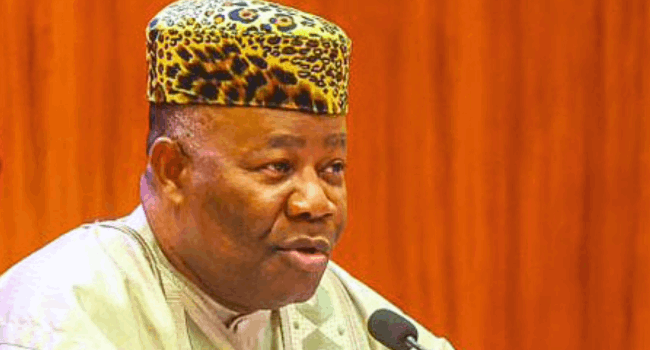
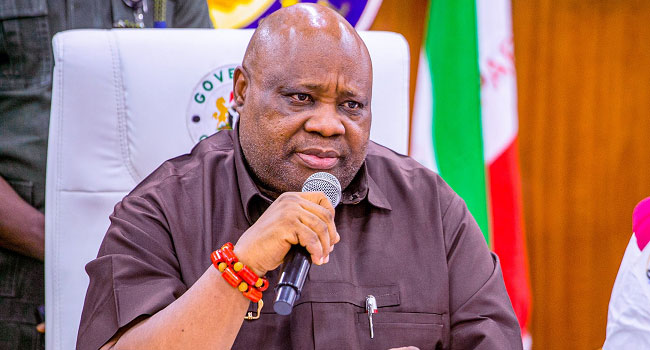
Senate President Godswill Akpabio has urged Nigerians to intensify prayers and national unity, insisting that sponsors of terrorism and violent crimes must be exposed. Speaking at a Democracy Day interdenominational service in Abuja, he linked insecurity to spiritual warfare while acknowledging worsening abductions, killings and nationwide instability.
By Umar Baba | June 8, 2026
Abuja, Nigeria – Nigeria’s Senate President, Godswill Akpabio, has called for the exposure of individuals allegedly sponsoring terrorism and violent crimes across the country, describing insecurity as both a national and spiritual challenge requiring collective response.
Akpabio made the remarks during an interdenominational church service held at the National Christian Centre in Abuja as part of activities marking Democracy Day.
The service, themed “God of Hope, Actualise Our Dreams,” brought together top government officials, clergy and citizens to reflect on Nigeria’s 27 years of uninterrupted democratic governance amid rising insecurity concerns.
PRAYER AS A SECURITY STRATEGY
Akpabio told worshippers that during his tenure as Governor of Akwa Ibom State, he introduced monthly prayer sessions as part of efforts to respond to rising cases of kidnapping, militancy and violent killings.
He said the initiative was born out of frustration with worsening insecurity at the time and a belief that spiritual intervention was necessary alongside governance actions.
According to him, Nigeria must continue to seek divine intervention to confront those behind insecurity.
He stated that individuals sponsoring violence—whether inside or outside government—must be exposed and held accountable.
ALLEGATIONS OF UNDERLYING SPONSOR NETWORKS
The Senate President argued that insecurity in Nigeria cannot be fully understood without addressing the issue of alleged sponsors of violent groups.
He insisted that such actors, regardless of political or social status, would not escape accountability.
Akpabio’s comments reflect a recurring narrative within government circles that links organised violence to coordinated financial and political backing, although specific individuals or networks were not named.
Security analysts, however, often caution that while sponsorship networks exist in conflict environments globally, addressing insecurity requires intelligence-led policing, judicial prosecution and institutional reform.
DEMOCRACY DAY UNDER SECURITY SHADOW
The Democracy Day service highlighted Nigeria’s democratic journey since 1999, with speakers reflecting on progress made alongside persistent challenges.
Akpabio acknowledged that insecurity remains one of the country’s most pressing problems, affecting rural communities, farmers and travellers.
He noted that families continue to suffer from kidnappings and violent attacks, describing the situation as deeply painful and emotionally distressing.
The Senate President also referenced President Bola Ahmed Tinubu’s directive that this year’s Democracy Day be observed in a low-key manner due to prevailing national conditions.
PRESIDENTIAL ADMINISTRATION’S POSITION
Akpabio reiterated that the administration of President Bola Ahmed Tinubu remains committed to tackling insecurity and restoring stability across the country.
He said government efforts include ongoing operations aimed at rescuing abducted persons and strengthening national security frameworks.
According to him, Nigeria has endured past crises including pandemics, insurgencies and political instability, yet continues to survive as a democratic state.
NATIONAL SUFFERING AND HUMAN IMPACT
The Senate President also spoke emotionally about the impact of insecurity on families, particularly parents with abducted children.
He described the psychological trauma experienced by victims’ families as a national wound that requires urgent attention.
Akpabio referenced personal reflections from his childhood experiences during the Nigerian civil war, stating that today’s insecurity presents a different but equally painful reality.
He assured Nigerians that despite current challenges, there remains hope for improved security outcomes.
GOVERNMENT ASSURES ACTION ON SECURITY AND ECONOMY
Also speaking at the service, Secretary to the Government of the Federation, George Akume, stated that the federal government is intensifying efforts to address both economic hardship and insecurity.
He said authorities are working to improve living conditions while strengthening security operations aimed at rescuing abducted citizens and reducing violent crime across the country.
Akume emphasized that government interventions are ongoing and require collective national support.
ANALYSIS: PRAYER, POLICY AND SECURITY REALITIES
Akpabio’s remarks reflect a recurring intersection between religion, governance and security discourse in Nigeria.
While faith-based appeals remain influential in public communication, security experts argue that addressing terrorism and violent crime requires sustained investment in intelligence, law enforcement capacity, judicial efficiency and socio-economic reforms.
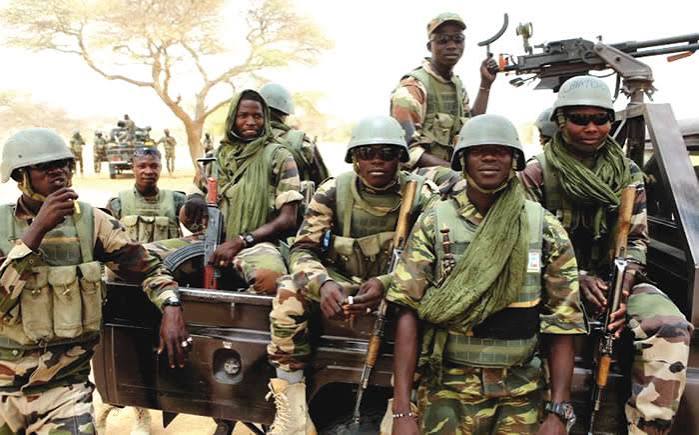
Nigeria continues to face complex security challenges, including kidnapping networks, insurgency in the North-East, banditry in the North-West and communal violence in several regions.
The effectiveness of combining spiritual appeals with institutional security strategies remains a subject of national debate.
The call by Senate President Godswill Akpabio for the exposure of terrorism sponsors underscores growing concern within Nigeria’s leadership over persistent insecurity.
While his appeal emphasizes prayer, unity and resilience, the broader challenge remains rooted in intelligence gathering, governance capacity and accountability mechanisms.
As Nigeria marks another Democracy Day under security strain, the balance between spiritual appeals and practical policy responses continues to shape national conversations on safety, governance and public trust.




Leave a Reply