

NHRC Executive Secretary Anthony Ojukwu says Nigeria’s overstretched centralised policing system cannot adequately respond to insecurity, but warns that state-controlled policing must be backed by independent oversight, accountability and enforceable human rights protections.
By A1NEWS International
PORT HARCOURT, Nigeria — August 25, 2026
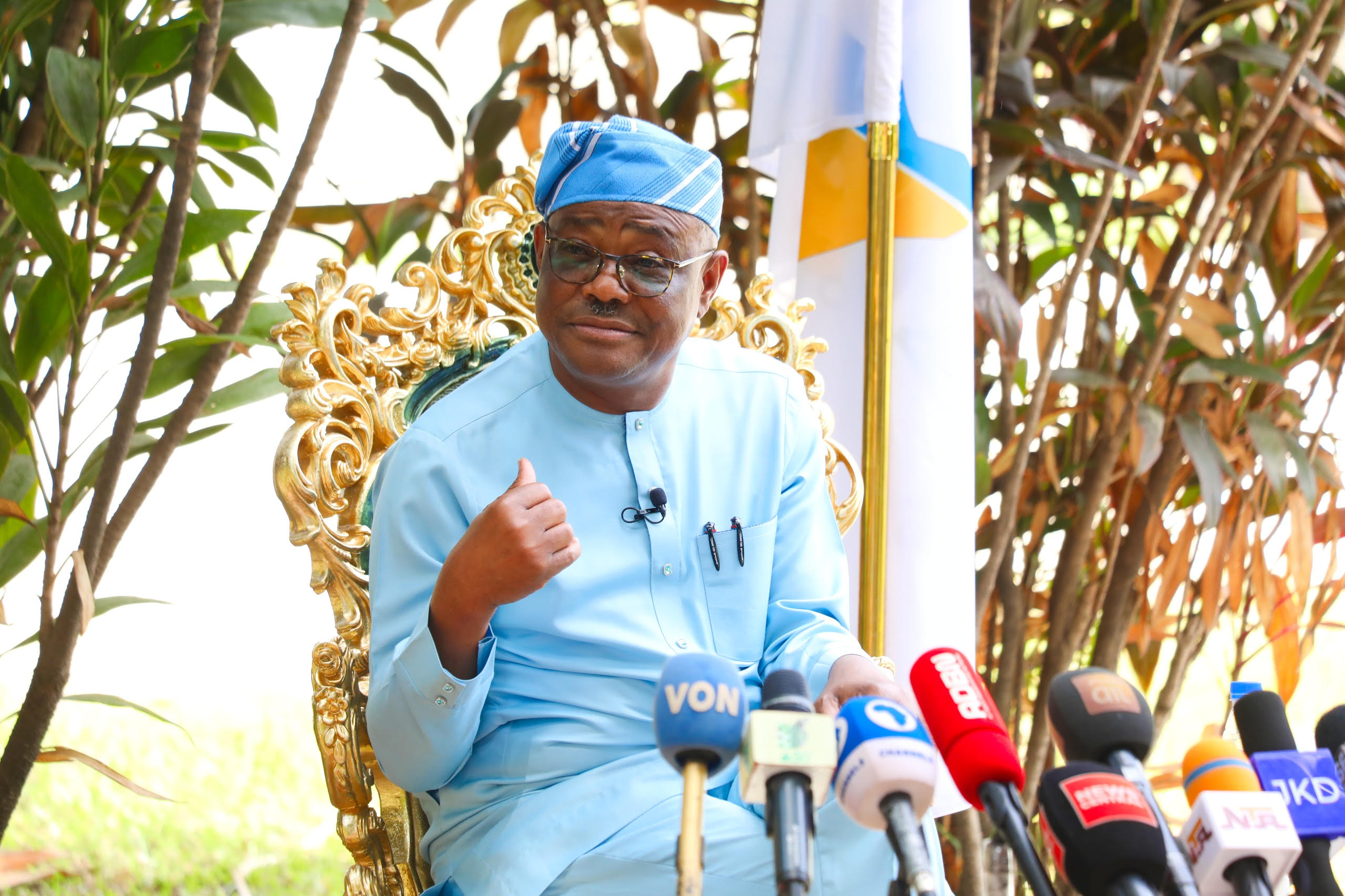
The Executive Secretary of the National Human Rights Commission (NHRC), Chief Anthony Ojukwu, OFR, SAN, has renewed calls for the establishment of State Police in Nigeria, arguing that the country’s centralised policing structure has become too overstretched and slow to respond effectively to the security realities confronting citizens.
Ojukwu, however, warned that decentralising policing without establishing strong institutional safeguards could create a new security crisis of its own, particularly if state-controlled police formations are exposed to political interference, arbitrary arrests, intimidation, torture or other abuses.
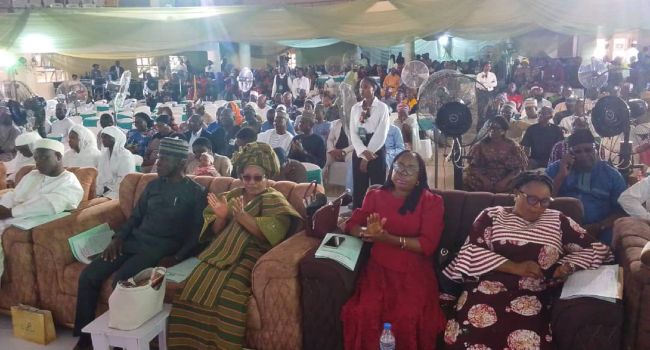
He made the remarks in Port Harcourt on Tuesday during a panel session at the 66th Annual General Conference of the Nigerian Bar Association (NBA), themed “Beyond Limits.”
The intervention places two competing concerns at the centre of Nigeria’s long-running State Police debate: the need for faster and locally responsive security operations, and the constitutional obligation to protect citizens from abuse of police power.
Centralised Policing System Struggling With Nigeria’s Security Burden
According to Ojukwu, Nigeria’s current policing architecture is unable to provide an adequate security response for a population exceeding 200 million people.
He identified response time as one of the most significant weaknesses of the existing system, arguing that threats can develop faster than federal security structures can mobilise.
“If you don’t have State Police, you can never have adequate security. We have over 200 million people in Nigeria with far less number of policemen to police them. The response time is so long that we only live by God’s grace,” he said.
The argument goes beyond police numbers.
A centralised command structure requires security personnel and resources to be coordinated across vast geographical areas, while local communities often possess information about criminal networks, conflict triggers and vulnerable locations that may not immediately be available to federal authorities.
Ojukwu believes a decentralised structure could reduce that information and response gap.
State Police Could Improve Intelligence and Response Time
The NHRC boss said State Police would place law-enforcement personnel closer to the communities they are expected to protect.
He argued that officers operating within states and local communities would have greater familiarity with local geography, residents and security threats.
“With State Police, the governors will have the wherewithal to respond quickly. The police will be more effective because they know the terrain; they know the people,” he stated.
That proposition is at the heart of the argument advanced by proponents of State Police.
Under Nigeria’s present system, the Nigeria Police Force is constitutionally structured as a federal institution. State governments have historically complained that they bear significant responsibility for maintaining public safety while lacking direct operational control over the police.
Supporters of decentralisation contend that allowing states to establish and manage their own police formations could produce quicker responses to kidnapping, banditry, communal violence, cult-related crime, robbery and other locally concentrated security threats.
But decentralisation would also transfer significant coercive power closer to political authorities.
That is where Ojukwu’s human-rights warning becomes critical.
The Political Abuse Question
Ojukwu did not present State Police as an automatic solution to Nigeria’s security crisis.
Instead, he warned that the creation of additional police structures without effective checks and balances could simply decentralise abuse.
His concern is particularly significant in a country where security institutions have repeatedly faced allegations of unlawful detention, excessive use of force, torture and other human-rights violations.
The NHRC Executive Secretary said any legislation establishing or restructuring policing institutions must contain mechanisms capable of preventing political capture.
“We must insist that when the National Policing Bill comes, it must be well drafted. There must be a board that runs it. There must be oversight. Otherwise, it will become another problem,” he cautioned.
The warning raises a fundamental institutional question:
Who polices the State Police?
If state governors or other political authorities exercise extensive operational influence over state police commanders, critics could argue that the new system might expose police institutions to manipulation during elections, political disputes and conflicts between government officials and opponents.
A credible State Police framework would therefore need to answer questions surrounding command, appointments, funding, disciplinary procedures, complaints mechanisms and independent investigation of alleged abuses.
Oversight Must Not Be an Afterthought
Ojukwu’s intervention suggests that human-rights protections cannot be treated as supplementary provisions to be added after State Police has been established.
Rather, safeguards must be embedded in the architecture of the institution from the beginning.
Such safeguards could include:
- Independent civilian oversight bodies;
- Transparent appointment and removal procedures;
- Clearly defined operational powers;
- Judicial oversight of detention and arrest;
- Effective complaints and disciplinary mechanisms;
- Independent investigation of alleged police misconduct;
- Mandatory human-rights and professional training;
- Public reporting and accountability requirements;
- Protection against political interference;
- Sanctions for unlawful use of force and abuse of authority.
Without such mechanisms, decentralisation could produce a policing system that is geographically closer to citizens but potentially more vulnerable to local political pressure.
Faster Policing Must Not Mean Fewer Legal Protections
The debate over State Police is frequently framed around speed.
But Ojukwu’s argument introduces another measurement of policing effectiveness: legality.
A police force cannot be considered effective simply because it can arrest suspects quickly or deploy personnel rapidly.
Effective policing must also comply with constitutional rights, due process and the rule of law.
This means that a state police officer who reaches the scene of a crime within minutes but unlawfully arrests, tortures or detains a suspect would not represent an improvement in democratic policing.
The challenge, therefore, is to achieve both objectives simultaneously: speed and accountability.
Lawyers Have a Critical Role, Ojukwu Says
Ojukwu specifically urged lawyers to become more active in defending citizens against unlawful police practices.
He said members of the legal profession should insist that security agencies follow established procedures whenever citizens are arrested or detained.
“Lawyers should be the people to insist on the right thing to do. If the police is going to arrest anybody, insist on the right procedure. Don’t let them abuse power. We have to watch them,” he said.
📚 Get "Spend Less, Save More" — Click here
His call places the legal profession at the centre of the accountability mechanism.
Lawyers, according to the NHRC boss, should not wait until alleged violations become major constitutional disputes before intervening.
Early legal intervention can help ensure that arrest, detention, interrogation and prosecution processes remain within the boundaries of the law.
Security and Human Rights Are Not Opposing Goals
One of Ojukwu’s central arguments was that Nigeria should reject the assumption that stronger security necessarily requires weaker human-rights protections.
He argued instead that sustainable security depends on public confidence in law-enforcement institutions.
Where citizens fear the police as much as they fear criminals, cooperation with law enforcement can deteriorate.
Communities may become reluctant to provide intelligence, report crimes or assist investigations if they believe that interacting with security agencies exposes them to arbitrary treatment.
Professionalism and respect for rights can therefore become operational assets rather than obstacles to effective policing.
The Deeper Problem: Public Confidence
Nigeria’s insecurity crisis has increasingly become a crisis of institutional confidence.
When citizens repeatedly experience delayed emergency responses, unresolved criminal cases or inadequate protection, confidence in government security institutions declines.
Ojukwu described the situation in stark terms:
“Our people live by God’s grace because the system is not working. That must change.”
His statement captures the frustration behind the State Police debate.
For many Nigerians, the issue is not simply whether police officers are present. It is whether they can arrive on time, possess the resources to act, understand the local environment, operate professionally and remain accountable for their actions.
State Police Debate Enters a Critical Phase
The renewed call from the NHRC comes as Nigeria continues to debate fundamental reforms to its security architecture.
Advocates of State Police see decentralisation as a way to address the structural limitations of a single federal police system attempting to police a vast and diverse country.
Opponents and sceptics, however, have historically raised concerns about the possibility of governors using state police to intimidate political opponents, manipulate elections or suppress dissent.
Both concerns are legitimate.
Nigeria therefore faces a policy choice that cannot be resolved simply by answering whether State Police should be created.
The more consequential question is what kind of State Police Nigeria should create.
What a Credible State Police Framework Would Require
For the proposal to strengthen rather than weaken Nigeria’s democracy, any legislation establishing State Police should provide clear answers to several institutional questions.
1. Who Controls State Police?
The law must define the relationship between governors, police authorities and independent oversight institutions.
2. Who Appoints the Police Leadership?
Appointments should be structured to prevent a state police command from becoming an extension of the governing party.
3. Who Investigates Police Misconduct?
Complaints against police officers should not be investigated exclusively by the same institution accused of wrongdoing.
4. Who Controls Funding?
Financial dependence can create political leverage. Transparent and predictable funding mechanisms would therefore be essential.
5. What Happens During Elections?
The legislation must establish safeguards against the use of state security structures to intimidate candidates, voters, journalists, activists or opposition parties.
6. What Human-Rights Standards Apply?
Arrest, detention, interrogation and use-of-force rules must be clearly defined and enforceable.
7. What Happens When Officers Violate the Law?
Accountability mechanisms must provide meaningful sanctions rather than merely administrative reprimands.
NHRC’s Position: Decentralise, But Do Not Deregulate
Ojukwu’s position can ultimately be reduced to a two-part proposition.
First, Nigeria needs a policing system capable of responding more rapidly to threats within local communities.
Second, decentralisation must not become an excuse for weakening constitutional protections.
The distinction is crucial.
State Police without accountability could deepen Nigeria’s governance problems. Centralised policing without adequate capacity could continue leaving citizens exposed to insecurity.
The policy challenge is to design an institution capable of avoiding both failures.
The renewed State Police debate is no longer simply about whether Nigeria’s security architecture should be decentralised. It is increasingly about how to reconcile local policing, operational efficiency, democratic accountability and human rights.
Chief Anthony Ojukwu’s intervention provides a significant warning to policymakers: creating State Police without independent oversight could replace one institutional weakness with another.
Nigeria needs police officers who can respond quickly to emergencies and understand the communities they serve. But Nigerians also need protection from unlawful arrest, torture, political intimidation, excessive force and arbitrary detention.
The test of any future State Police legislation will therefore not be the number of state police commands created.
It will be whether the new system can deliver faster security without sacrificing freedom, stronger policing without unchecked power, and local accountability without political capture.
As Nigeria considers the next stage of its policing reforms, Ojukwu’s message to lawmakers, lawyers and citizens is clear: decentralise policing if necessary, but never decentralise accountability.









Leave a Reply