
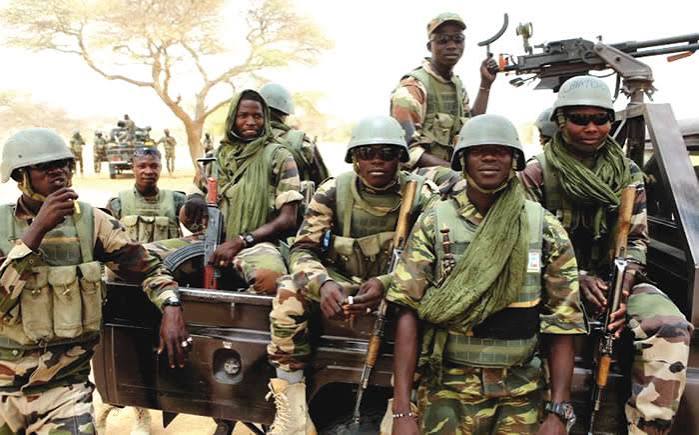
Multiple travellers and young Nigerians allege that security operatives along the Aba–Owerri corridor forced them off the highway, searched their phones and demanded access to bank accounts, with one student alleging he was beaten and forced to transfer N500,000.
By Anokwuru Njonku
OWERRI, Imo State, Nigeria — August 29, 2026
A1NEWS International has uncovered a series of allegations by travellers and young Nigerians who claim that personnel operating as a Joint Task Force (JTF) along parts of the Aba–Owerri Expressway in Imo State have subjected them to prolonged roadside searches, phone inspections, threats, physical assault and demands for money.
Several individuals who spoke about their experiences alleged that the operatives stopped public and private vehicles, ordered passengers out, searched their bags and mobile phones, accessed banking and financial applications and, in some cases, demanded transfers of money after seeing account balances.
The accounts reviewed by A1NEWS International point to an alleged pattern concentrated around the Ngor Okpala axis and other locations in Imo State.
The allegations could not independently establish that all the personnel involved belong to a single formally constituted unit or that every incident was carried out by authorised security personnel. However, the consistency of several victim accounts raises questions about the identity, mandate, operational procedures and oversight of the individuals involved.
Some victims alleged that personnel wore a mixture of security-style uniforms and civilian clothing, while others reportedly concealed their identities with face coverings and lacked visible name tags.
A source familiar with the alleged operations claimed that some operatives wore “Special Force” tags while covering their faces.
The allegations raise fundamental questions about the limits of roadside security searches, access to citizens’ private financial information and the safeguards in place to prevent abuse of security powers.
Alleged Pattern: From Roadside Stop to Bank Account
According to accounts obtained from victims, some encounters allegedly followed a similar sequence.
Travellers were reportedly stopped on the highway before being ordered out of vehicles. Operatives allegedly searched their bags and phones and, where money was discovered in bank or digital-finance applications, demanded explanations for the balances.
Some victims said they were subsequently taken away from the highway towards bushes, abandoned buildings or other isolated locations.
The alleged movement away from public view is particularly concerning because victims said it increased their vulnerability to intimidation and physical abuse.
One source alleged that personnel deliberately avoided identifiable uniforms or name tags, making subsequent complaints and identification difficult.
The claims could not independently establish whether such conduct was officially authorised by any security command.
Video Appears to Show Phone and Financial Account Search
A video reviewed in connection with the allegations reportedly shows an encounter between security personnel and a traveller along the Aba–Owerri Expressway around the Ngor Okpala area.
According to the account accompanying the footage, the operatives searched the traveller’s mobile phone and discovered that money was available in one of his financial accounts.
The traveller allegedly told the officers that he did not have money available for personal expenses and would struggle to afford food at his destination.
One officer was reportedly heard responding to the discovery of the account balance by questioning why the traveller claimed not to have money.
Another individual in the same encounter was allegedly pressured to transfer funds.
The second traveller reportedly explained that the money in his account belonged to his employer and had been provided for the purchase of business materials.
The allegations raise a critical question: Under what circumstances can roadside security personnel lawfully compel a traveller to disclose banking information or transfer money from a personal or business account?
Student Alleges N500,000 Was Taken After Account Search
Among the most detailed allegations is the account of a student who said he was stopped while returning from Imo State University after writing an examination.
The student said a large group of security personnel stopped the vehicle and ordered passengers to disembark.
He estimated that there were at least 10 operatives, some dressed in police- and military-style uniforms.
According to his account, two officers directed him and two other passengers towards a security vehicle positioned near a bush.
His bag was reportedly searched repeatedly, but he said nothing incriminating was found.
The student told investigators that he explained he was returning from an examination.
He alleged that the officers nevertheless searched his mobile phone, including WhatsApp conversations and other applications.
According to the student, the search produced no evidence of criminal activity.
The encounter allegedly escalated when the officers demanded access to his financial accounts.
He said he questioned why he should be required to disclose his private banking information.
The student alleged that the operatives nevertheless gained access to his financial applications using the phone’s facial-recognition function.
N1.8 Million Balance Allegedly Triggers Extortion Demand
The student claimed that an initial check of his MoneyPoint account showed no significant balance.
He said the operatives then instructed him to open his OPay account.
According to his account, the officers discovered approximately N1.8 million in the account and questioned how a young student could possess that amount.
The student said he explained that the funds were intended for school-related expenses.
He alleged that the officers accused him of money laundering and subsequently demanded a substantial portion of the balance.
According to the victim, an officer struck him and ordered him to remain silent.
He further alleged that the officers initially demanded approximately half of the money.
The student said he offered N100,000 in an attempt to resolve the encounter but was allegedly subjected to further threats and physical assault.
He claimed that the operatives struck him on the back with a stick, handcuffed him and threatened to take him into an abandoned building in the bush.
After what he described as prolonged intimidation and pressure, the student alleged that the officers eventually accepted N500,000.
He said the money was transferred through a MoniePoint POS operator identified as Ngozi Nwalozie.
The student is seeking the return of the money and an investigation into the alleged conduct.
“I need justice,” he said, according to the account obtained for this report. “I want my money back because this thing is not proper.”
Romania Returnee Alleges Detention and N50,000 Payment
Another traveller, who said he had recently returned to Nigeria from Romania, alleged that he was stopped while travelling with his wife along the Ngor Okpala axis.
He claimed that other passengers and the driver were ordered away while he was detained by the operatives.
According to his account, officers searched his phone and questioned photographs showing him with foreign acquaintances.
He alleged that the operatives associated his international connections with financial crime and subsequently demanded money after discovering funds in his account.
The man also claimed that an officer seized his Romanian residence permit and demanded N100,000 for its return.
He alleged that after prolonged pleading, he eventually paid N50,000.
The traveller said such encounters are difficult to report because victims allegedly fear retaliation, particularly when security personnel photograph identification documents or make threats during the encounters.
Lagos Traveller Alleges N400,000 Extortion
A separate young man who identified himself as a Lagos-based traveller also alleged that he was stopped while travelling from Aba to Owerri.
He said he initially believed the personnel were soldiers.
According to his account, the operatives took him towards their vehicle and searched his phone, including private conversations, applications and a cryptocurrency wallet.
He alleged that the officers discovered approximately N800,000 in one of his accounts and demanded N500,000.
After negotiations, he claimed they eventually accepted N400,000.
The traveller said he transferred the money through a POS operator identified as Judith Ogochukwu Echebiri.
He alleged that he was held for almost two hours during the encounter.
The account could not independently establish the identities of the personnel involved or whether the alleged payment was officially receipted or authorised.
Alleged Bush Detention and N515,000 Payment
A further allegation concerns an incident reportedly occurring on July 26, 2026, along the Ngor Okpala axis.
A source familiar with the incident alleged that a young man was stopped by the operatives and taken away from the road into a bush area.
The source claimed the man was beaten and held against his will before being compelled to make a payment of N500,000, alongside an additional N15,000 POS charge.
The allegation amounts to a reported total payment of N515,000.
A1NEWS International has not independently verified the circumstances of that incident, the identities of the alleged perpetrators or the recipient of the funds.
However, the account forms part of a broader set of allegations from individuals who claim to have experienced similar encounters along the corridor.
Identity of Operatives Remains a Critical Question
One of the most significant unresolved issues is the precise identity and command structure of the personnel accused by the victims.
The descriptions supplied by different witnesses include mixed uniforms, civilian clothing, face coverings and “Special Force” markings.
If the individuals are serving security personnel, questions arise over which agency authorised their deployment, what their operational mandate is and who exercises supervisory responsibility.
If some individuals are impersonating security personnel, that would create an entirely different but equally serious security concern.
Establishing the identities of those involved is therefore central to any credible investigation.
Phone Searches and Financial Privacy Under Scrutiny
The allegations also raise questions about the treatment of citizens’ personal information during security operations.
Victims said operatives allegedly examined WhatsApp conversations, text messages, photographs, banking applications, cryptocurrency wallets and other private data.
The reported access to financial applications is particularly significant because banking information can reveal sensitive details about a person’s income, savings, employment and business transactions.
Where such searches occur without transparent legal authority or documented investigative procedures, they raise serious concerns about privacy, due process and potential abuse of power.
The victims’ allegations therefore go beyond ordinary roadside security checks.
They concern the alleged use of security encounters to obtain access to private financial information and, subsequently, demand money.
Why the Ngor Okpala Corridor Matters
The Aba–Owerri Expressway is an important transport corridor linking communities and commercial centres across Abia and Imo states.
Regular security operations along major roads are not unusual given Nigeria’s broader security challenges.
However, allegations that travellers are being taken away from public roads into isolated areas and subjected to demands for money warrant scrutiny precisely because legitimate security operations require accountability and clear lines of authority.
For motorists and passengers, the distinction between a lawful security checkpoint and an abusive encounter can become blurred when officers are masked, unidentified or operating in mixed uniforms.
That uncertainty can also make it difficult for victims to know where to lodge complaints.
Calls for Investigation and Possible Dissolution
The allegations have triggered calls for authorities to investigate the composition, mandate and conduct of the JTF personnel operating along the Aba–Owerri corridor.
Victims and activists are calling for authorities to:
- Identify the personnel involved in the alleged incidents.
- Establish which agency or command they report to.
- Determine whether their deployments and searches were authorised.
- Investigate allegations of assault, unlawful detention and extortion.
- Trace the alleged financial transfers and identify recipients.
- Review available video footage and digital evidence.
- Examine whether similar complaints have previously been made.
- Prosecute any personnel found to have committed criminal offences.
- Establish mechanisms for motorists and residents to safely report abuse.
There are also calls for a review of the use of face coverings, mixed uniforms and the absence of visible identification during roadside operations.
What Authorities Need to Establish
A credible investigation should answer several fundamental questions.
Who are the operatives?
Authorities need to establish their identities, agencies, ranks and command structure.
What is their mandate?
Security personnel operating on public roads should have clearly defined responsibilities and lawful procedures governing searches, detention and interrogation.
Who authorised the alleged financial searches?
The reported examination of banking and digital-finance applications requires particular scrutiny.
Where did the alleged payments go?
Bank and POS transaction records could potentially establish whether the alleged transfers occurred and identify recipients.
Are there more victims?
The number of accounts emerging from the corridor suggests that authorities should establish whether the reported incidents are isolated or part of a wider pattern.
Police Response Not Immediately Obtained
Attempts to obtain a response from the Imo State Police Command were reportedly unsuccessful at the time of the original reporting.
The command’s Public Relations Officer, identified as DSP Okoye Henry, was reportedly contacted but did not answer calls.
A1NEWS International considers a response from the police, the relevant JTF command and any other agency whose personnel may be implicated essential to establishing the facts.
The allegations remain allegations unless and until independently established through evidence and due process.
The allegations emerging from the Aba–Owerri corridor present a troubling picture that demands independent scrutiny.
If verified, claims that security personnel stopped travellers, searched their private communications, accessed bank accounts, assaulted suspects and compelled them to transfer money would represent serious violations of public trust and potentially criminal conduct.
But the investigation must also establish the identity and mandate of the personnel involved before conclusions are reached.
The most important next step is therefore not speculation, but evidence: identifying the operatives, examining video footage, tracing alleged financial transfers, reviewing complaint records and obtaining official responses from the relevant security authorities.
For the travellers who say they were subjected to these encounters, the issue is straightforward: security operations should protect citizens, not become a source of fear or financial vulnerability.
The responsibility now rests with the appropriate authorities to determine what happened along the Ngor Okpala corridor, who was responsible and whether anyone abused the powers entrusted to them.
A1NEWS International will continue to monitor the allegations and any official investigation or response.









Leave a Reply