

EBID Moves Closer to Financing Trans-Sahara Super Highway as Federal Government Unveils Ambitious National Infrastructure Network
By A1NEWS International / June 10, 2026
ABUJA, Nigeria — The Federal Government has intensified efforts to reshape Nigeria’s transportation landscape through a network of mega road projects designed to connect all six geopolitical zones, stimulate economic growth, strengthen food security, and drive regional integration across the country.
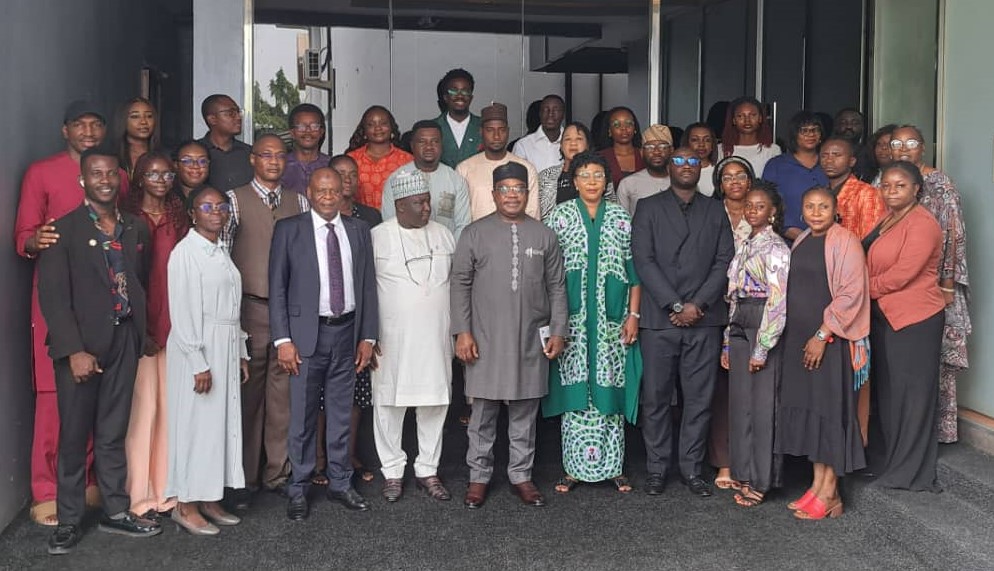
Minister of Works, David Umahi, disclosed this while receiving a high-level delegation from the ECOWAS Bank for Investment and Development (EBID) at the Ministry’s headquarters in Abuja.
The delegation, led by Maimouna Sidibe, is currently conducting appraisal activities ahead of the proposed financing approval for Section One of the Trans-Sahara Super Highway, one of President Bola Ahmed Tinubu’s flagship infrastructure initiatives.
The development marks another significant milestone in the administration’s ambitious plan to modernize Nigeria’s road network and position the country as a major transportation and trade hub in West Africa.
A National Infrastructure Loop Designed for Integration
Speaking during the meeting, Umahi revealed that the President’s four legacy road projects were conceived as interconnected infrastructure corridors forming a continuous transportation loop across Nigeria.
According to the Minister, the projects are strategically designed to improve connectivity between economic zones, agricultural belts, industrial hubs, and major population centres.
“Let me say that the entire four Legacy Projects of Mr. President are interconnected in a loop,” Umahi stated.
He explained that the ongoing 750-kilometre Lagos-Calabar Coastal Highway forms a critical component of the broader network and links directly with the proposed Trans-Sahara Super Highway through Ndibe Beach in Cross River State.
Infrastructure analysts say the integrated model reflects a shift from isolated road projects toward a national transportation strategy aimed at maximizing economic returns and improving logistics efficiency.
Trans-Sahara Super Highway to Unlock Agricultural Corridors
Umahi disclosed that Section One of the Trans-Sahara Super Highway stretches approximately 123.64 kilometres from Ndibe Beach in Cross River State to the Benue border.
He added that subsequent sections traversing Benue, Kogi, and Nasarawa States have already been awarded for construction.
The Minister emphasized the strategic significance of the route, describing it as one of Nigeria’s most important agricultural corridors.
Historically, the route has served as a major transportation artery linking farming communities and facilitating the movement of agricultural produce across regions.
“It has long existed and remains a major food corridor. It is critical to food sufficiency in our country,” Umahi said.
The highway is expected to connect key agricultural states including Cross River, Ebonyi, and Benue, helping reduce transportation costs, minimize post-harvest losses, and improve market access for farmers.
Calabar-to-Abuja Travel Time to Drop Significantly
One of the major projected benefits highlighted by the Minister is the reduction in travel time between southern and northern parts of the country.
According to Umahi, the completed corridor could reduce travel time between Calabar and Abuja to approximately four hours, creating significant economic and logistical advantages.
“This route will shorten travel time from Calabar to Abuja to about four hours. It is therefore a very important corridor,” he explained.
Transportation experts believe reduced travel times could boost interstate commerce, encourage tourism, and facilitate faster movement of goods and services.
Beyond Roads: Power, Irrigation and Industrial Development
The Federal Government also plans to leverage infrastructure along the highway corridor to support broader economic development objectives.
Umahi revealed that existing dams located along the route would be integrated into plans for irrigation projects and renewable energy generation.
The strategy is expected to support year-round agricultural production, attract industrial investments, and create new employment opportunities.
“There are many benefits to this project. Beyond tolling and corridor development for investment returns, it will generate numerous jobs, both direct and indirect,” Umahi said.
“There will be factories along the corridor, power projects, and significant traffic volumes on the road.”
Industry observers note that corridor development models have successfully transformed regional economies in countries such as China, India, and Brazil by creating industrial clusters linked to major transport infrastructure.
Connecting North, South, East and West
The Works Minister further outlined how the Trans-Sahara Super Highway integrates with other legacy projects across the federation.
He explained that the network extends through the Abuja-Akwanga corridor and continues toward Jos, Bauchi, Gombe, Biu, and Maiduguri.
According to him, the recently inaugurated Gombe-Biu segment covers approximately 125 kilometres and is being developed as a six-lane highway.
Procurement processes are also ongoing for the Bauchi-Gombe section.
Umahi additionally disclosed plans to connect the Lagos-Calabar Coastal Highway to the proposed Sokoto-Badagry Super Highway through a new route originating from Victoria Island in Lagos.
The route will reportedly include a 3.5-kilometre tunnel and pass through Ogogoro Island and Snake Island before connecting to Badagry.
“When you look at all of this on a map, you see a loop. All the geopolitical zones are included,” he stated.
The Minister argued that the integrated design demonstrates the administration’s commitment to ensuring equitable infrastructure distribution across the country.
EBID Advances Financing Process
The visit by EBID officials signals growing confidence among regional development financiers regarding the viability of the project.
Speaking during the meeting, Maimouna Sidibe confirmed that the bank had already completed initial reviews and moved the project to the appraisal stage.
“We are very honoured to contribute to the financing of this very important project, which has been submitted last week to our first credit committee,” Sidibe stated.
She disclosed that the bank’s first credit committee had responded positively to the proposal and encouraged further evaluation ahead of final approval.
According to Sidibe, the appraisal mission includes consultations with government agencies, technical assessments, environmental evaluations, and reviews of social safeguard measures.
The project is expected to proceed to the second credit committee before being presented to EBID’s Board of Executive Directors in early July for final consideration.
Federal Government Commended for Commitment
Sidibe praised the Federal Government’s commitment to the project, particularly its fulfillment of counterpart funding obligations.
She disclosed that approximately 30 percent of the required counterpart contribution had already been provided by the administration.
“The project is of a very top priority for the administration, and that’s why the administration has paid 30 per cent of the counterpart money,” she said.
The EBID official also commended the construction technology being deployed on the projects, describing it as durable and cost-effective.
According to her, assessments conducted by the bank indicate that the road infrastructure could have a lifespan of up to 50 years.
“The members of the credit committees said that this technology is very, very good and already experienced on Lagos-Calabar, and the road duration will be at least for 50 years,” she added.
Strategic Infrastructure at the Centre of Tinubu’s Economic Agenda
The Tinubu administration has consistently identified infrastructure development as a key pillar of its economic transformation agenda.
Officials argue that improved transportation networks will lower logistics costs, enhance competitiveness, attract foreign investment, support industrialization, and strengthen food security.
However, analysts note that the success of these projects will ultimately depend on timely execution, sustainable financing, transparency in procurement processes, and effective maintenance mechanisms.
With regional financiers moving closer to approving funding for the Trans-Sahara Super Highway, the Federal Government appears to be advancing one of the most ambitious road infrastructure programmes in Nigeria’s recent history.
If completed as envisioned, the interconnected legacy road network could significantly alter the country’s economic geography by linking all six geopolitical zones, improving trade flows, expanding agricultural productivity, reducing travel times, and creating new opportunities for investment and job creation.
For now, attention remains focused on the outcome of EBID’s financing appraisal and the pace of implementation of what the government describes as a transformative national infrastructure blueprint.










Leave a Reply