
NOIPolls 2026 Survey Exposes Widening Trust Deficit, Security Concerns, and Voter Disillusionment as Nigerians Assess 27 Years of Democratic Rule
By Baron Eloagu / June 11, 2026
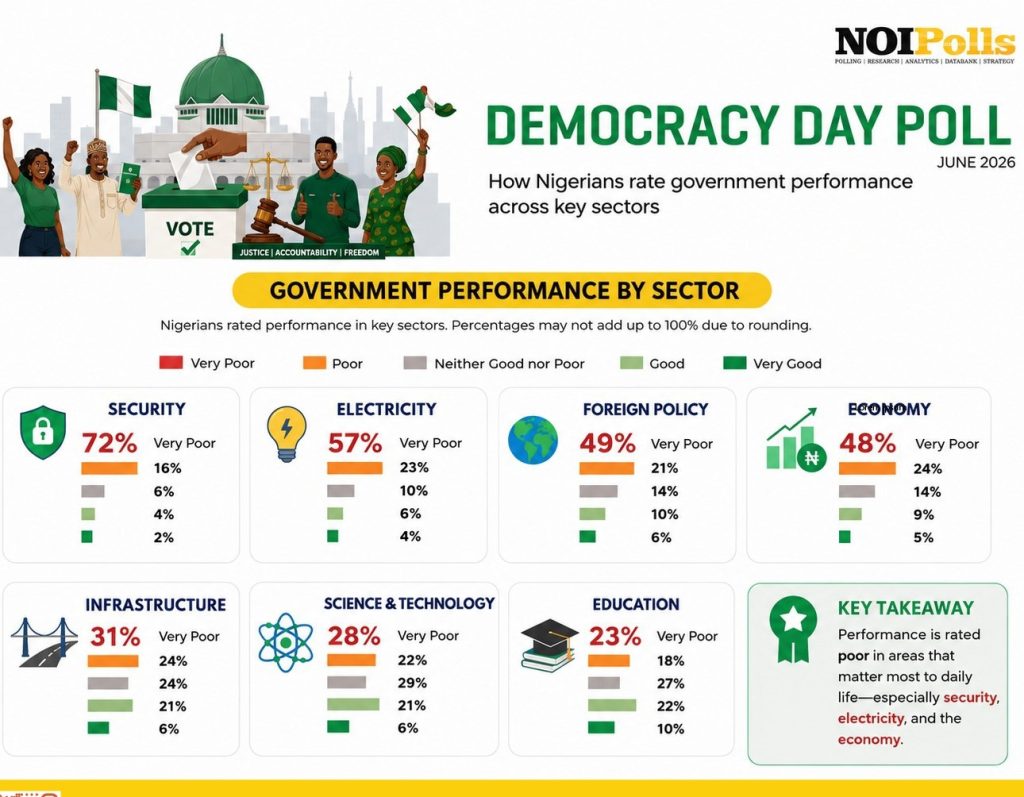
ABUJA, Nigeria – As Nigeria marks another Democracy Day on June 12, a newly released 2026 Democracy Poll by NOIPolls paints a complex portrait of the nation’s democratic journey—one characterized by widespread dissatisfaction with governance outcomes but sustained optimism about the future of democratic rule.
The survey, released on the eve of the national celebration, offers one of the most comprehensive snapshots of public opinion on the state of democracy in Nigeria. It examines citizen perceptions across key areas including government performance, public trust in institutions, voter participation, and expectations for the future.
Its findings reveal a striking contradiction at the heart of Nigeria’s democratic experience: while nearly three-quarters of citizens are unhappy with how democracy currently functions, an almost equal number still believe it can deliver a better future.
The results raise critical questions about governance, accountability, electoral credibility, security, and citizen engagement as Africa’s most populous nation approaches three decades of uninterrupted democratic rule.
The Paradox of Hope: Why Nigerians Still Believe
Perhaps the most remarkable finding of the survey is what analysts describe as the “Hope-Dissatisfaction Paradox.”
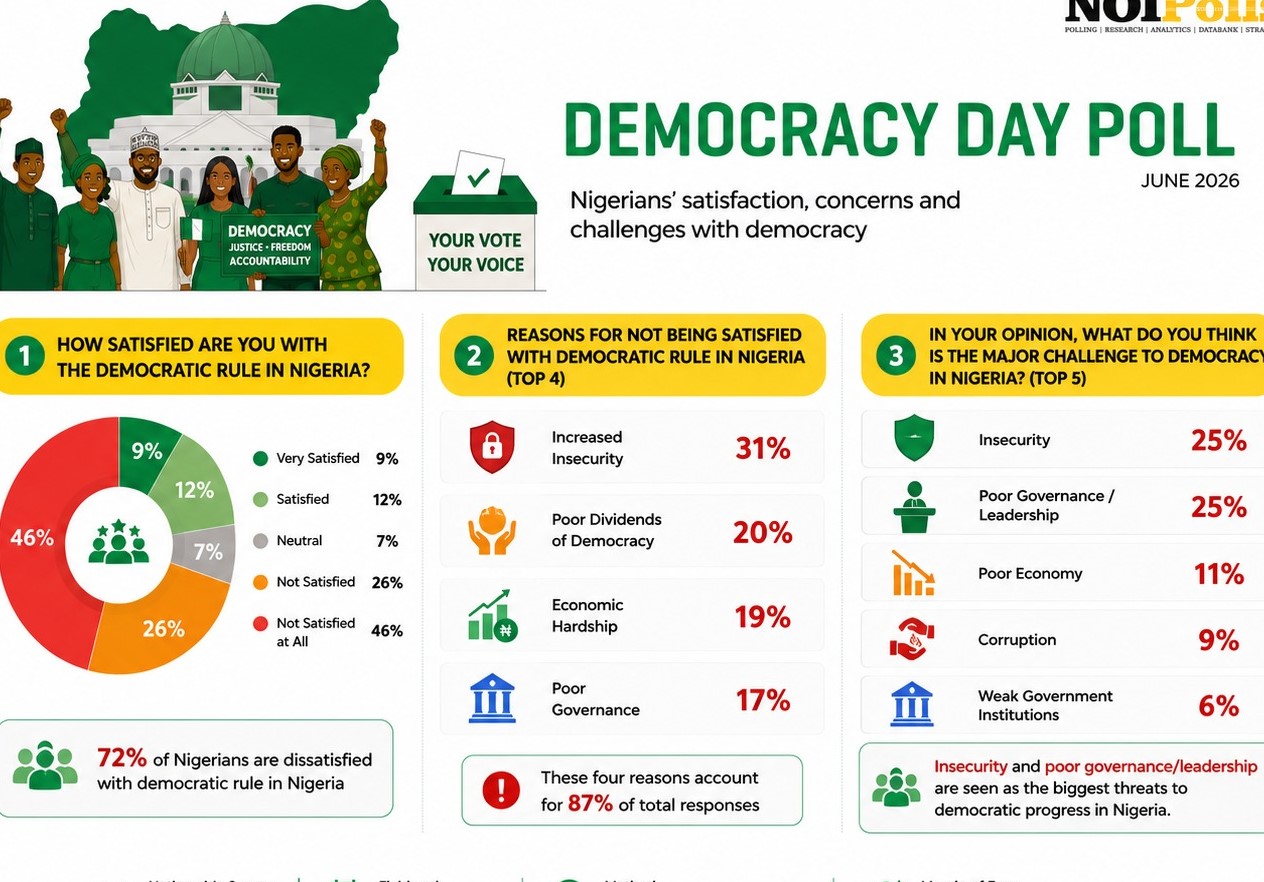
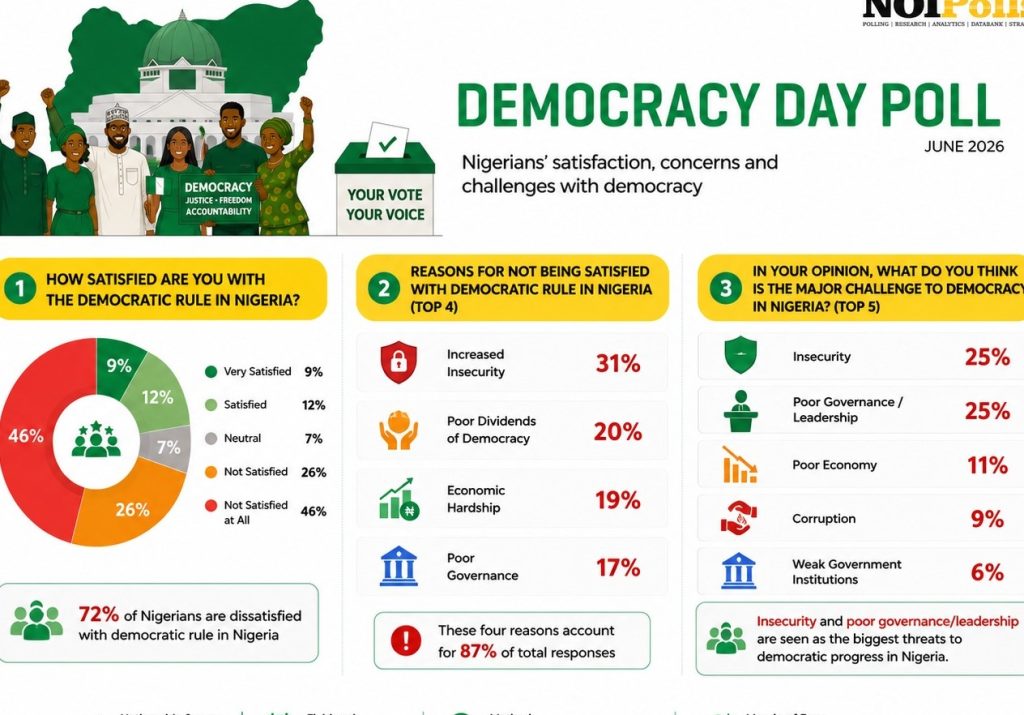
According to the poll, 72 percent of Nigerians are dissatisfied with the way democracy is currently working, yet 71 percent remain optimistic about its future.
The figures suggest that while citizens are deeply frustrated with present realities, they have not abandoned faith in democratic governance itself.
Political analysts argue that the distinction is significant.
Rather than rejecting democracy as a system, many Nigerians appear to be rejecting the quality of governance being delivered under democratic administrations.
This resilience reflects a collective belief that democracy remains preferable to authoritarian alternatives, despite persistent economic hardship, insecurity, and governance challenges.
The finding also underscores the enduring legacy of the June 12 democratic struggle and the sacrifices made by pro-democracy activists whose efforts paved the way for Nigeria’s current democratic dispensation.
For many citizens, democracy remains an unfinished project rather than a failed experiment.
The Legitimacy Deficit: Citizens Demand More Than Elections
The survey highlights what governance experts describe as a growing legitimacy crisis.
While elections continue to be conducted regularly, many citizens increasingly evaluate democracy through the lens of tangible outcomes rather than procedural milestones.
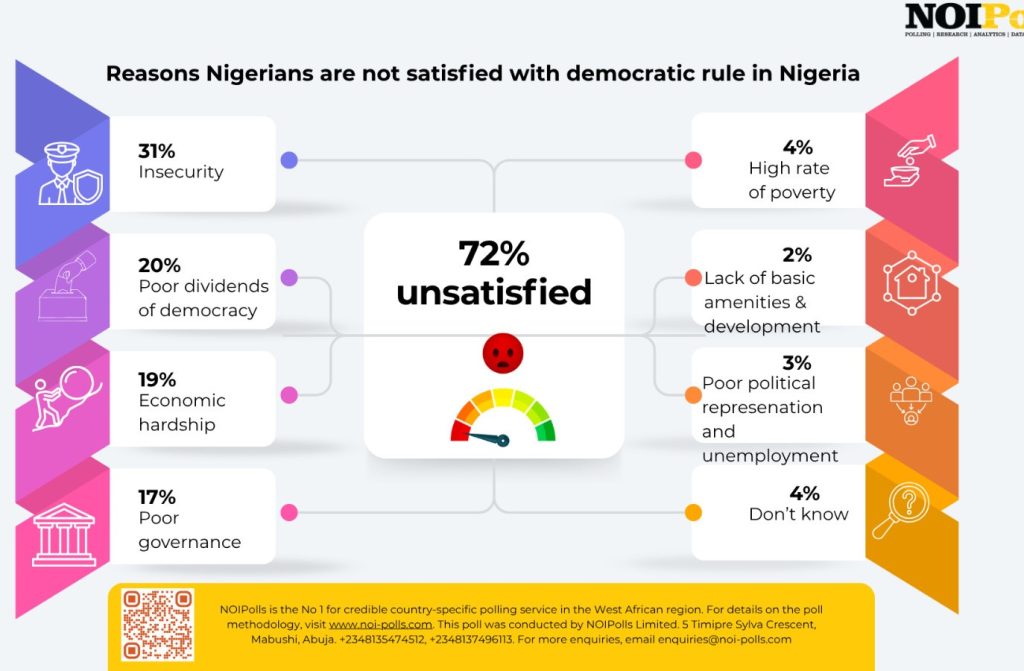
The poll identifies four major drivers of dissatisfaction:
1. Rising Insecurity (31%)
Security concerns emerged as the single biggest source of public frustration.
From insurgency and banditry to kidnappings and communal violence, Nigerians across different regions continue to face threats that directly affect their lives and livelihoods.
For many respondents, democracy is judged by the state’s ability to provide safety and protect lives.
When that expectation is unmet, confidence in democratic governance suffers.
2. Poor Dividends of Democracy (20%)
A significant proportion of respondents believe democracy has failed to deliver meaningful improvements in living standards.
Many citizens continue to struggle with inadequate infrastructure, unemployment, poverty, poor healthcare services, and limited access to quality education.
The perception that democratic governance has not translated into socioeconomic progress remains a major source of public dissatisfaction.
3. Economic Hardship (19%)
The ongoing cost-of-living crisis continues to shape public opinion.
Inflation, rising food prices, currency instability, fuel costs, and declining purchasing power have placed enormous pressure on households.
For millions of Nigerians, economic realities have become the primary measure of government performance.
4. Poor Governance (17%)
Concerns about transparency, accountability, corruption, policy implementation, and leadership effectiveness also feature prominently among citizens’ grievances.
Many respondents indicated that democratic institutions have not consistently met public expectations regarding service delivery and responsive governance.
Security and Democracy: The Emerging Threat
The poll’s findings reinforce growing concerns among political observers that insecurity has become one of the greatest threats to democratic consolidation in Nigeria.
Historically, democratic stability depends heavily on the state’s capacity to guarantee public safety.
When citizens feel vulnerable or abandoned, trust in institutions weakens.
Security challenges can also discourage political participation, reduce voter turnout, and create conditions that undermine electoral integrity.
Experts warn that unless security conditions improve significantly, public confidence in democratic governance may continue to erode despite the population’s current optimism.
The data suggest that citizens increasingly view security not merely as a policy issue but as a fundamental democratic obligation.
The Trust Deficit: Public Confidence in Institutions Declines
One of the most concerning findings in the NOIPolls survey relates to public trust in democratic institutions.
The poll reveals deep skepticism toward bodies that are central to democratic governance.
INEC Faces Credibility Questions
The Independent National Electoral Commission (INEC) recorded the highest level of distrust among institutions surveyed.
According to the poll, 47 percent of respondents stated that INEC “cannot be trusted at all.”
For an institution responsible for organizing elections and safeguarding electoral integrity, such figures raise serious concerns.
Public confidence in election management bodies is widely regarded as essential for democratic legitimacy.
When citizens doubt the neutrality or effectiveness of electoral institutions, confidence in election outcomes may be affected.
Legislature Also Faces Public Skepticism
Legislators followed closely behind, with 43 percent of respondents indicating they do not trust elected lawmakers.
The finding reflects longstanding concerns regarding representation, accountability, transparency, and the perceived disconnect between elected officials and ordinary citizens.
The trust gap between citizens and their representatives remains one of the most significant challenges confronting Nigeria’s democratic system.
The Turnout Crisis: Do Nigerians Still Believe Their Votes Matter?
Another critical issue highlighted by the survey is voter confidence.
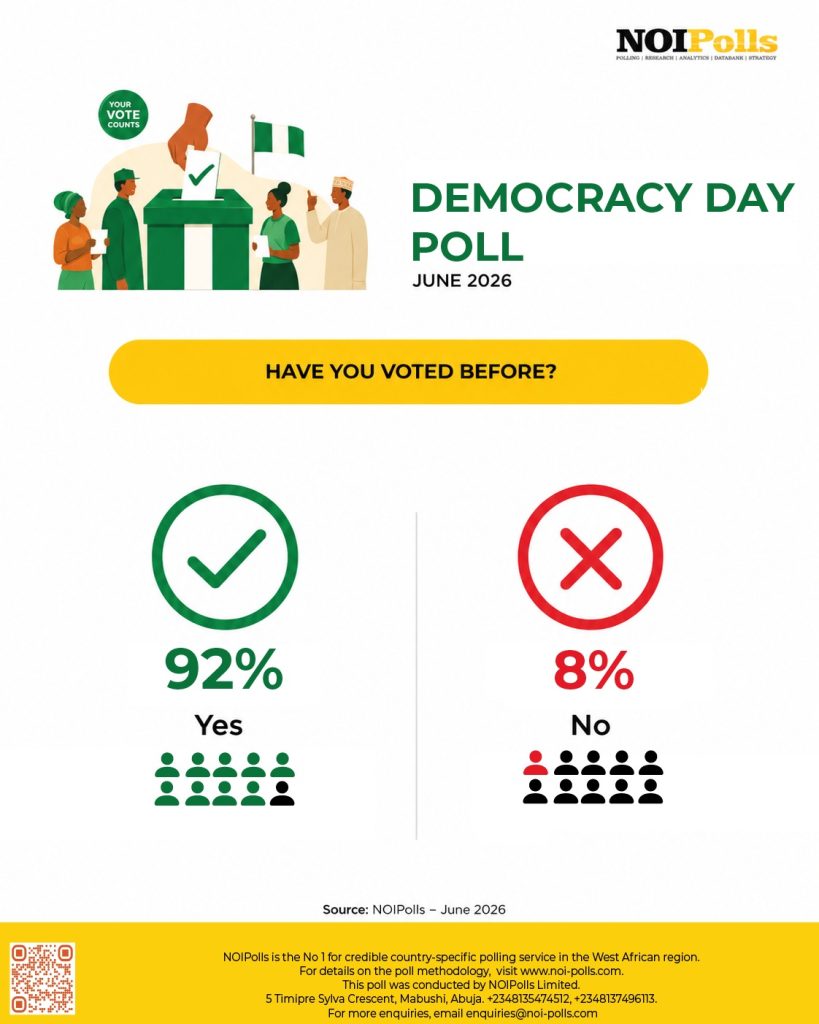
According to the findings, 39 percent of Nigerians believe their votes do not count.
This perception poses a direct challenge to democratic participation.
When citizens lose confidence in the effectiveness of voting, voter turnout tends to decline.
Lower participation can weaken electoral legitimacy and create a cycle of disengagement that further distances citizens from governance processes.
Analysts note that rebuilding confidence in elections requires greater transparency, stronger electoral accountability mechanisms, and improved public communication by democratic institutions.
The challenge extends beyond election day management to broader questions of trust, representation, and responsiveness.
Democracy Beyond the Ballot Box
The survey also highlights an evolving understanding of democracy among Nigerians.
Citizens increasingly measure democratic success not solely by the conduct of elections but by outcomes such as:
- Security and safety
- Economic opportunities
- Rule of law
- Social justice
- Government accountability
- Effective public service delivery
This shift reflects a growing democratic maturity among the electorate.
Rather than viewing elections as the end goal, many Nigerians now see them as a means toward achieving broader developmental objectives.
The implication is clear: democratic institutions must deliver concrete results if public confidence is to be sustained.
June 12 and Nigeria’s Democratic Future
As Nigeria commemorates Democracy Day, the NOIPolls findings offer both a warning and an opportunity.
The warning lies in the widespread dissatisfaction with governance performance, institutional credibility, and electoral confidence.
The opportunity lies in the resilience of public belief in democracy itself.
Despite economic hardship, insecurity, and institutional distrust, Nigerians have not abandoned hope.
Instead, the survey suggests that citizens continue to see democracy as the best framework for addressing national challenges—provided it becomes more responsive, accountable, and effective.
A Democracy Under Pressure, But Not Without Promise
Twenty-seven years after the restoration of civilian rule, Nigeria’s democracy stands at a critical juncture.
The 2026 NOIPolls Democracy Survey reveals a nation wrestling with disappointment but refusing to surrender hope.
The findings expose a widening gap between democratic ideals and citizens’ lived experiences. Yet they also demonstrate an enduring faith that democratic institutions can evolve and improve.
As the country marks another June 12 anniversary, the central challenge for political leaders, institutions, and civil society is clear: transform democratic optimism into democratic performance.
The future of Nigeria’s democracy may ultimately depend not on whether citizens believe in democracy, but on whether democracy can prove worthy of their belief.







Leave a Reply