
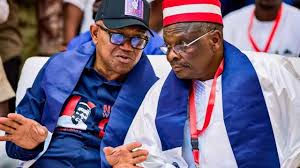
Former Kano Governor Confirms Vice-Presidential Bid, Backs Single-Term Presidency for Obi as Opposition Coalition Takes Shape
By Baron Eloagu
ABUJA, Nigeria — June 14, 2026
Nigeria’s political landscape ahead of the 2027 general elections took a dramatic turn as former Kano State Governor and leader of the Kwankwasiyya Movement, Dr. Rabiu Musa Kwankwaso, publicly disclosed details of his political alliance with Labour-backed opposition figure Peter Obi, while predicting a steady decline in the fortunes of the ruling All Progressives Congress (APC).
In a wide-ranging interview with the BBC Hausa Service monitored by A1NEWS International, Kwankwaso confirmed that he had accepted the position of vice-presidential candidate of the Nigeria Democratic Congress (NDC), declaring that both leaders had entered into a carefully negotiated political arrangement aimed at providing what he described as a credible alternative to the APC-led Federal Government.
The revelation offers the clearest insight yet into the opposition’s strategy to challenge President Bola Tinubu and the APC in what is expected to be one of Nigeria’s most fiercely contested elections since the return to democratic rule in 1999.
Why Kwankwaso Left Previous Opposition Alliances
Addressing speculation surrounding his departure from earlier opposition arrangements, including alliances that involved former Vice President Atiku Abubakar, Kwankwaso insisted his decision was driven by ideology rather than personal ambition.
According to him, the NDC provided a platform that was easier to organize and build compared to older political parties burdened by internal conflicts and structural challenges.
“We wanted a political party whose principles align with our beliefs and vision for Nigeria,” he explained.
Political analysts note that Kwankwaso’s migration to the NDC effectively consolidated two of Nigeria’s most influential grassroots political movements—the Obidient Movement and the Kwankwasiyya Movement—creating a potentially formidable electoral coalition.
The Obi-Kwankwaso Alliance
At the heart of the emerging coalition is a strategic partnership between Peter Obi and Rabiu Musa Kwankwaso, both of whom command significant support among Nigerian youths and urban voters.
Kwankwaso disclosed that extensive consultations were held before the alliance was finalized.
He said both camps were working to harmonize policy positions and governance priorities to prevent ideological conflicts if elected into office.
According to him, the alliance is designed to ensure that government policies would reflect the aspirations of ordinary Nigerians rather than elite political interests.
Observers believe the merger of the Obidient and Kwankwasiyya political structures could significantly alter voting patterns across several regions, particularly in the North-West, North-Central and South-East geopolitical zones.
A Single-Term Agreement?
One of the most politically sensitive revelations from the interview was Kwankwaso’s confirmation that the alliance was built around an understanding that Peter Obi would serve only one four-year term if elected president.
According to Kwankwaso, the arrangement was based on Nigeria’s informal power rotation principle between the North and South.
He argued that since the presidency is currently held by a southerner, the South should complete its turn before power returns to the North.
Kwankwaso expressed confidence that Obi would honor the agreement.
“I believe he will keep his word because this commitment was made publicly and is based on trust and accountability,” he stated.
The disclosure is likely to generate fresh debate among constitutional scholars and political stakeholders regarding the legality and enforceability of informal zoning agreements within Nigeria’s democratic framework.
APC Facing Growing Discontent, Kwankwaso Claims
The former Kano governor also launched a direct political attack on the ruling APC, describing the party as one experiencing declining public confidence.
According to him, many Nigerians have become disillusioned with the APC due to worsening economic conditions and persistent insecurity.
He alleged that dissatisfaction extends beyond ordinary citizens to include many APC members who may eventually support opposition candidates from within the party structure.
“The APC is on a downward trajectory. Every day, more people are becoming disillusioned and moving toward alternative political platforms,” he claimed.
While the APC has repeatedly dismissed similar claims from opposition figures, recent internal disputes over party primaries and candidate selection have fueled speculation about growing divisions within the ruling party.
Security Crisis Remains Central Campaign Issue
Kwankwaso devoted a significant portion of the interview to Nigeria’s worsening security challenges.
He argued that insecurity has expanded beyond traditional flashpoints in the North-East to affect virtually every region of the country.
The former governor pointed to increasing incidents of banditry, terrorism, kidnappings and attacks on schools and communities as evidence that the nation faces a deepening security emergency.
He referenced recent abductions involving students, teachers and even senior military officers as indicators of the scale of the crisis.
According to him, unless urgent action is taken, insecurity could further undermine education, economic development and national stability.
Security experts acknowledge that criminal violence remains one of the most significant issues likely to shape voter behavior ahead of the 2027 elections.
Managing Opposition Rivalries
The formation of the Obi-Kwankwaso alliance has also triggered friction among supporters of other opposition figures, particularly allies of former Vice President Atiku Abubakar.
Responding to reports of disagreements between his supporters and Atiku’s political camp, Kwankwaso downplayed the tensions.
He maintained that political disagreements are normal in a democracy and emphasized the importance of discipline among supporters.
“We do not encourage insults, attacks or personal abuse. Politics should focus on policies and solutions, not hostility,” he said.
Political observers suggest that maintaining unity among opposition forces may prove crucial if they hope to mount a serious challenge against the APC in 2027.
Reconciliation with Governor Abba Yusuf
Kwankwaso also addressed ongoing speculation about his relationship with Kano State Governor Abba Kabir Yusuf.
Despite reports of political disagreements, the former governor dismissed suggestions that ties had been permanently severed.
He stated that he still holds no personal grievances against the governor and remains open to reconciliation.
“If he comes seeking reconciliation, he will be welcomed,” Kwankwaso said.
The remarks are seen as an attempt to calm tensions within Kano’s political landscape, where divisions among former allies have attracted considerable public attention.
The Battle for Nigeria’s Youth Vote
Perhaps the most significant aspect of Kwankwaso’s political calculations is the alliance’s appeal to younger voters.
Both the Obidient and Kwankwasiyya movements derive much of their strength from young Nigerians frustrated by unemployment, economic hardship and governance challenges.
Analysts believe the youth vote could become one of the decisive factors in determining the outcome of the 2027 election.
By combining their support bases, Obi and Kwankwaso may be positioning themselves to capitalize on growing demands for political change.
With less than a year to the 2027 general elections, Rabiu Musa Kwankwaso’s confirmation of his alliance with Peter Obi marks a significant development in Nigeria’s evolving political contest. The disclosure of a single-term presidency arrangement, criticism of the APC, and promises of a youth-driven reform agenda are likely to intensify political debates in the months ahead.
Whether the Obi-Kwankwaso partnership can translate growing public dissatisfaction into electoral victory remains uncertain. However, the alliance has undoubtedly emerged as one of the most closely watched political developments shaping Nigeria’s march toward 2027.




Leave a Reply