
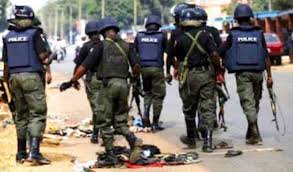
As kidnappings, terrorism and banditry continue to spread across Nigeria, the swift arrest of a suspect linked to an alleged fake audio of President Bola Tinubu has triggered public debate over law enforcement priorities, intelligence capabilities and the government’s response to worsening insecurity.
By A1NEWS International
ABUJA, NIGERIA —From highways and communities to farmlands, schools and places of worship, fear has steadily replaced normalcy in many parts of the country. Hardly a day passes without reports of abductions, killings or communities being displaced by armed groups.
Against this backdrop, a recent controversy surrounding an alleged leaked voice note attributed to President Bola Ahmed Tinubu has generated intense public discussion.
The Presidency swiftly dismissed the viral audio as fake and misleading. Shortly afterward, authorities announced that a special police unit under the Inspector-General of Police had tracked and apprehended an individual allegedly responsible for creating and circulating the audio.
While government officials presented the arrest as evidence of improved technological capabilities within Nigeria’s security architecture, many citizens viewed the development through a different lens.
For many Nigerians, the incident has revived an uncomfortable question: If security agencies possess the technology and intelligence resources required to quickly identify and arrest the creator of an alleged fake audio recording, why has similar success remained elusive against kidnappers, bandits and terrorist networks that openly communicate, negotiate ransoms and publicize their activities online?
The Rise of Nigeria’s Ransom Economy
Kidnapping for ransom has evolved into one of Nigeria’s most profitable criminal enterprises.
Across various regions of the country, victims are abducted from roads, schools, farms, homes and places of worship. Families often endure weeks or months of negotiations with abductors before paying substantial sums for the release of loved ones.
These negotiations are frequently conducted through mobile phones and digital communication platforms.
In many instances, criminal groups record and distribute videos of captives pleading for assistance. Some groups openly showcase weapons, camps and operational activities.
The visibility of these communications has fueled public frustration.
Citizens increasingly wonder why individuals who regularly use telecommunication networks to coordinate criminal activities remain difficult to apprehend despite advances in digital surveillance and intelligence gathering.
Social Media as a Window Into Criminal Operations
Beyond ransom negotiations, numerous videos have surfaced over the years showing armed groups displaying cash allegedly obtained through criminal activities.
Some videos depict terrorists and bandits celebrating successful operations. Others contain disturbing footage of violence, including attacks on communities, destruction of property and abuses against victims.
Similarly, videos showing armed herders grazing cattle on cultivated farmlands and destroying crops have frequently circulated across social media platforms.
Many of these recordings go viral and attract national attention.
The recurring question from affected communities remains simple: If security agencies can successfully track online creators of controversial political content, why do criminal actors who publicly display evidence of their activities appear to evade capture for extended periods?
The Bigger Security Challenge
Security experts caution against simplistic comparisons.
Tracking an individual who uploads digital content from a fixed location is significantly different from dismantling heavily armed criminal networks operating across forests, remote territories and international borders.
Nigeria’s security threats are no longer limited to conventional crime.
Over the years, terrorist groups operating within and around the country have developed sophisticated structures, recruitment systems and logistical networks.
Many analysts note that these organizations have demonstrated capabilities consistent with transnational extremist movements operating elsewhere in the world.
Their members often receive specialized training, access advanced weaponry and exploit weak border controls across the Lake Chad Basin and other vulnerable regions.
This reality has transformed insecurity from a domestic law-enforcement challenge into a broader national security emergency.
A Warning That Predated the Crisis
Concerns about Nigeria’s vulnerability to terrorism are not new.
In the mid-2000s, international intelligence assessments raised alarms about the potential growth of extremist violence in the country.
A decade later, Boko Haram emerged as one of the world’s deadliest terrorist organizations, carrying out attacks that claimed thousands of lives and displaced millions of people across northeastern Nigeria and neighboring countries.
The rise of Boko Haram demonstrated how quickly extremist movements can evolve when underlying security vulnerabilities remain unresolved.
Today, despite military operations and counterterrorism campaigns, armed groups continue to adapt, fragment and re-emerge in different forms.
The result is a security landscape that remains volatile and unpredictable.
Public Confidence and Questions of Priority
Beyond the operational challenges facing security agencies lies another issue: public confidence.
Many Nigerians believe the government’s response to insecurity lacks the urgency demanded by the scale of the crisis.
Critics argue that political calculations and preparations for future elections often appear to dominate national discourse while communities continue to suffer attacks, abductions and displacement.
This perception, whether accurate or not, has contributed to growing distrust between citizens and institutions.
For affected families, the debate is no longer merely about statistics or political narratives. It is about survival.
Parents want their children safe in schools. Farmers want access to their lands. Worshippers want security in churches and mosques. Travelers want to move freely without fear of abduction.
These expectations represent the fundamental responsibilities of any government.
Calls for Greater Transparency
The controversy surrounding the alleged Tinubu audio and the subsequent arrest of a suspect has therefore become more than a dispute about misinformation.
It has evolved into a symbol of broader frustrations regarding security, accountability and governance.
Many Nigerians are demanding greater transparency regarding the technological capabilities available to security agencies and how those capabilities are being deployed.
They want assurance that every available resource is being utilized against those responsible for terrorism, banditry, kidnapping and violent crime.
The demand is not merely for arrests after crimes occur but for proactive intelligence operations capable of preventing attacks before they happen.
Nigeria stands at a critical crossroads.
The country’s security challenges are complex, deeply entrenched and increasingly transnational. Yet citizens continue to ask a legitimate question: If sophisticated intelligence tools can be deployed swiftly in politically sensitive investigations, can the same urgency, technology and determination not be directed toward dismantling the networks terrorizing communities across the nation?
As kidnappings, terrorist attacks and violent criminality continue to threaten national stability, Nigerians are demanding answers—not only about what security agencies can do, but about what they choose to prioritize.
Ultimately, restoring public confidence will require more than official statements. It will require visible results, sustained security reforms and a demonstrable commitment to protecting lives above politics.
For millions of Nigerians living under the shadow of fear, that commitment cannot come soon enough.









Leave a Reply