

Despite legal safeguards and institutional reforms, the National Human Rights Commission says torture, arbitrary detention, excessive use of force and degrading treatment remain major threats to justice and human dignity in Nigeria, urging security agencies to embrace accountability and uphold constitutional protections.
By A1NEWS International – June 26, 2026
ABUJA, Nigeria – The National Human Rights Commission (NHRC) has reaffirmed its unwavering commitment to preventing torture, protecting the dignity of persons deprived of their liberty, and ensuring justice for victims, warning that persistent allegations of torture, arbitrary arrests, unlawful detention and excessive use of force continue to undermine Nigeria’s democratic credentials and human rights obligations.
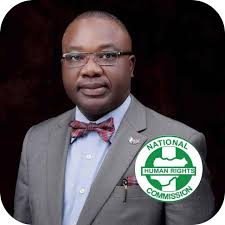
Marking the 2026 International Day in Support of Victims of Torture, the Executive Secretary of the NHRC, Chief Tony Ojukwu, OFR, SAN, called on security agencies, correctional authorities and other custodial institutions to strengthen compliance with both domestic and international human rights standards while ensuring perpetrators of torture are held accountable.
Torture Remains a Grave Assault on Human Dignity
In a statement commemorating the international observance, Chief Ojukwu joined the global community in honouring victims and survivors of torture and other forms of cruel, inhuman or degrading treatment.
He paid tribute to the courage and resilience of survivors who continue to pursue justice despite enduring severe physical, emotional and psychological trauma.
According to him, torture remains one of the gravest violations of fundamental human rights, stressing that its prohibition is absolute under international human rights law, Nigeria’s Constitution and the Anti-Torture Act 2017.
He emphasized that no situation—including national security emergencies, crime prevention operations, anti-terrorism campaigns or public emergencies—can legally justify torture or other forms of ill-treatment.
“There are no exceptional circumstances that permit torture. Human dignity must remain inviolable regardless of the security situation,” he stressed.
Nigeria’s Legal Framework Strengthened, But Challenges Persist
While acknowledging significant progress in Nigeria’s anti-torture framework, the NHRC boss noted that the enactment of the Anti-Torture Act 2017 and the designation of the Commission as Nigeria’s National Preventive Mechanism (NPM) under the 2024 Order have strengthened institutional safeguards against abuse.
He explained that under its preventive mandate, the Commission now carries out routine and unannounced inspections of detention centres, correctional facilities, police cells, psychiatric institutions and other places where individuals are deprived of their liberty.
According to him, these independent monitoring visits are designed to detect risks early, prevent torture before it occurs and ensure that detainees are treated in accordance with both national laws and international human rights standards.
Persistent Reports Raise Fresh Concerns
Despite these reforms, Chief Ojukwu expressed deep concern over continuing reports of human rights violations within Nigeria’s criminal justice and security systems.
Among the recurring concerns identified by the Commission are:
- Excessive use of force by law enforcement personnel.
- Arbitrary arrests and unlawful detention.
- Prolonged pre-trial detention.
- Overcrowded and poor detention conditions.
- Denial of timely legal representation.
- Allegations of torture and other forms of degrading treatment.
He warned that such practices not only violate constitutional guarantees but also weaken public confidence in justice institutions and undermine the rule of law.
According to him, eliminating torture requires more than legislation—it demands institutional accountability, professional conduct and respect for human dignity at every stage of law enforcement.
NHRC Demands Accountability for Perpetrators
The Commission urged all security agencies, law enforcement institutions, correctional authorities and custodial bodies to fully comply with constitutional safeguards and international conventions governing the treatment of detainees.
Chief Ojukwu stressed the importance of conducting prompt, independent and impartial investigations into all allegations of torture.
He further called for effective prosecution of offenders while ensuring that victims receive comprehensive remedies, including:
- Compensation;
- Medical and psychological rehabilitation;
- Restitution;
- Public acknowledgement where appropriate; and
- Guarantees against future violations.
According to him, accountability remains one of the strongest deterrents against torture and abuse of power.
NHRC Reaffirms National Preventive Role
Reaffirming the Commission’s constitutional mandate, Chief Ojukwu said the NHRC would continue strengthening preventive mechanisms, promoting transparency within custodial institutions and advocating reforms that protect vulnerable persons.
He emphasized that every individual, irrespective of social status, criminal allegation or circumstance of detention, deserves humane treatment and full respect for their inherent dignity.
“As Nigeria’s National Human Rights Institution and National Preventive Mechanism, we remain committed to strengthening preventive safeguards, promoting accountability and ensuring that every person is treated with dignity and respect,” he stated.
A Collective Responsibility to End Torture
The NHRC Executive Secretary called on governments, civil society organisations, development partners, legal practitioners, the media and citizens to renew their commitment toward eliminating torture in all its forms.
He described the fight against torture as both a constitutional responsibility and a moral obligation that requires sustained collaboration among all stakeholders.
“The eradication of torture is not only a legal obligation but a moral imperative. Together, we must ensure that no person is subjected to torture, no victim is denied justice, and no violation of human dignity goes unanswered,” he declared.

As Nigeria joins the rest of the world to commemorate the International Day in Support of Victims of Torture, the NHRC’s message serves as a reminder that the country’s commitment to democracy and the rule of law will ultimately be measured not only by the strength of its laws but by how faithfully those laws protect the dignity, rights and freedoms of every individual.
With continued reports of custodial abuses and allegations of torture, rights advocates say sustained institutional reforms, independent oversight and accountability remain essential to ensuring that torture has no place in Nigeria’s justice system.









Leave a Reply