
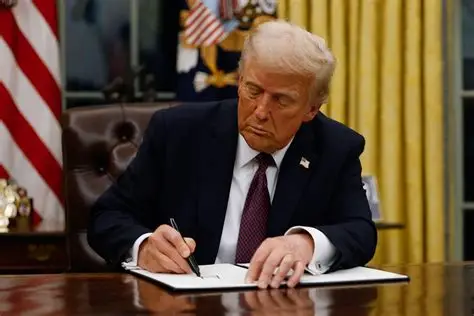
Washington cites Nigeria’s failure to enforce a ban on imports linked to forced labour as it imposes new Section 301 tariffs on 60 trading partners, raising concerns over the future of bilateral trade.
By A1NEWS International
ABUJA, Nigeria | July 24, 202
The United States has imposed a 12.5 per cent tariff on imports from Nigeria, citing the country’s failure to establish and effectively enforce a prohibition on the importation of goods produced through forced labour, in a move expected to heighten trade tensions and potentially affect Nigeria’s export competitiveness in the American market.
The new tariff forms part of a broader trade enforcement policy targeting 60 economies investigated under Section 301 of the U.S. Trade Act, with Washington arguing that stronger measures are needed globally to eliminate forced labour from international supply chains.
The decision, announced by the Office of the United States Trade Representative (USTR), places Nigeria among countries facing the higher tariff bracket, while nations that have enacted or committed to implementing forced labour import bans will pay a reduced 10 per cent tariff.
The measure is the latest development in the evolving U.S. trade policy under President Donald Trump’s administration and is likely to generate debate over its implications for Nigeria’s non-oil exports, trade relations and investment climate.
Why Nigeria Was Targeted
According to the USTR, Nigeria was subjected to the 12.5 per cent tariff after an extensive investigation concluded that the country had not established an effective legal and enforcement framework prohibiting imports produced with forced labour.
The agency stated that the decision followed investigations launched in May 2026 into the trade practices of 60 of America’s largest trading partners.
The review process included:
- More than 1,600 written submissions;
- Public hearings involving over 100 witnesses;
- Consultations with 45 governments; and
- Recommendations from advisory committees and the Section 301 Committee.
Following the investigation, the Trade Representative concluded that higher tariffs were appropriate for countries yet to adopt comprehensive forced labour import prohibitions.
Countries Receiving Lower Tariffs
The United States granted a lower 10 per cent tariff to countries that have either implemented or formally committed to enforcing restrictions on goods produced through forced labour.
These countries include:
- India
- Indonesia
- Malaysia
- Mexico
- United Kingdom
- Canada
- Bangladesh
- Pakistan
- Sri Lanka
- Argentina
- Cambodia
- Ecuador
- El Salvador
- Guatemala
- Honduras
- Jordan
- Trinidad and Tobago
According to the USTR, these countries demonstrated sufficient commitments through domestic legislation or reciprocal trade agreements.
Nigeria, however, was not included in that category.
Federal Register Explains Nigeria’s Tariff
A Federal Register notice issued by the USTR stated that all Nigerian products would attract the 12.5 per cent tariff, except products specifically exempted under Annexes I and II of the directive.
The agency explained that the tariff level was determined after reviewing evidence presented during the investigation.
According to the notice, the measure is intended to encourage Nigeria to eliminate practices considered inconsistent with international efforts to prevent forced labour within global supply chains.
The USTR further stated that the tariff scope and exemptions were carefully designed to achieve compliance while limiting unintended disruptions to American consumers and manufacturers.
Trump Administration’s New Trade Strategy
The latest tariff policy follows President Donald Trump’s decision to invoke Section 122 of the Trade Act of 1974 after the U.S. Supreme Court blocked aspects of his administration’s wider tariff programme under the International Emergency Economic Powers Act (IEEPA).
Rather than relying on emergency economic powers, the administration shifted to statutory trade mechanisms under the Trade Act.
U.S. Trade Representative Jamieson Greer defended the policy, arguing that decades of diplomatic engagement had failed to eradicate forced labour from international commerce.
He stated that the United States has maintained a ban on imports made with forced labour for nearly a century and expects its trading partners to adopt similar standards.
Products Exempted From the Tariff
Despite the broad application of the tariffs, the United States announced exemptions for several categories of products.
These include:
- Critical raw materials likely to create domestic shortages;
- Products capable of causing significant economic disruption within the United States;
- Goods unavailable in sufficient quantities from American manufacturers or alternative suppliers;
- Selected products originating from countries that have already adopted or committed to forced labour import bans; and
- Certain products where tariffs are unlikely to influence the trade practices under investigation.
The exemptions are intended to reduce supply chain disruptions while maintaining pressure on targeted countries.
Potential Impact on Nigeria’s Economy
Trade analysts say the decision could affect Nigeria’s exports to the United States, particularly sectors seeking to diversify beyond crude oil under the African Growth and Opportunity Act (AGOA) and other bilateral trade arrangements.
Manufacturers and exporters may face increased costs, making Nigerian products less competitive in the U.S. market.
Industries potentially affected include:
- Agricultural exports;
- Manufactured goods;
- Solid minerals;
- Leather products;
- Textiles; and
- Selected processed commodities.
Economists also note that the tariffs could influence foreign investment decisions if exporters perceive increased regulatory risks in accessing the U.S. market.
Pressure for Labour and Trade Reforms
The development may place additional pressure on Nigerian authorities to strengthen labour standards, enhance supply chain monitoring and review import regulations to align with evolving international trade expectations.
Policy experts argue that improving enforcement against forced labour could not only help address the current dispute but also enhance Nigeria’s reputation in global markets increasingly driven by environmental, social and governance (ESG) standards.
Whether Nigeria seeks diplomatic engagement with Washington or implements new legislative reforms remains to be seen.
The United States’ decision to impose a 12.5 per cent tariff on Nigerian imports marks a significant shift in bilateral trade relations and signals Washington’s increasing willingness to use trade measures to enforce labour rights standards.
While the policy is aimed at combating forced labour globally, its economic consequences could extend to Nigeria’s export sector, investment environment and broader trade diplomacy.
As businesses assess the impact of the new tariffs, attention is expected to focus on whether Nigeria will introduce reforms capable of addressing U.S. concerns and restoring more favourable trading conditions.





Leave a Reply