
Human rights watchdog demands investigations into killings, prosecution of alleged inciters and stronger protection of civic space ahead of the 2027 elections
By A1NEWS International
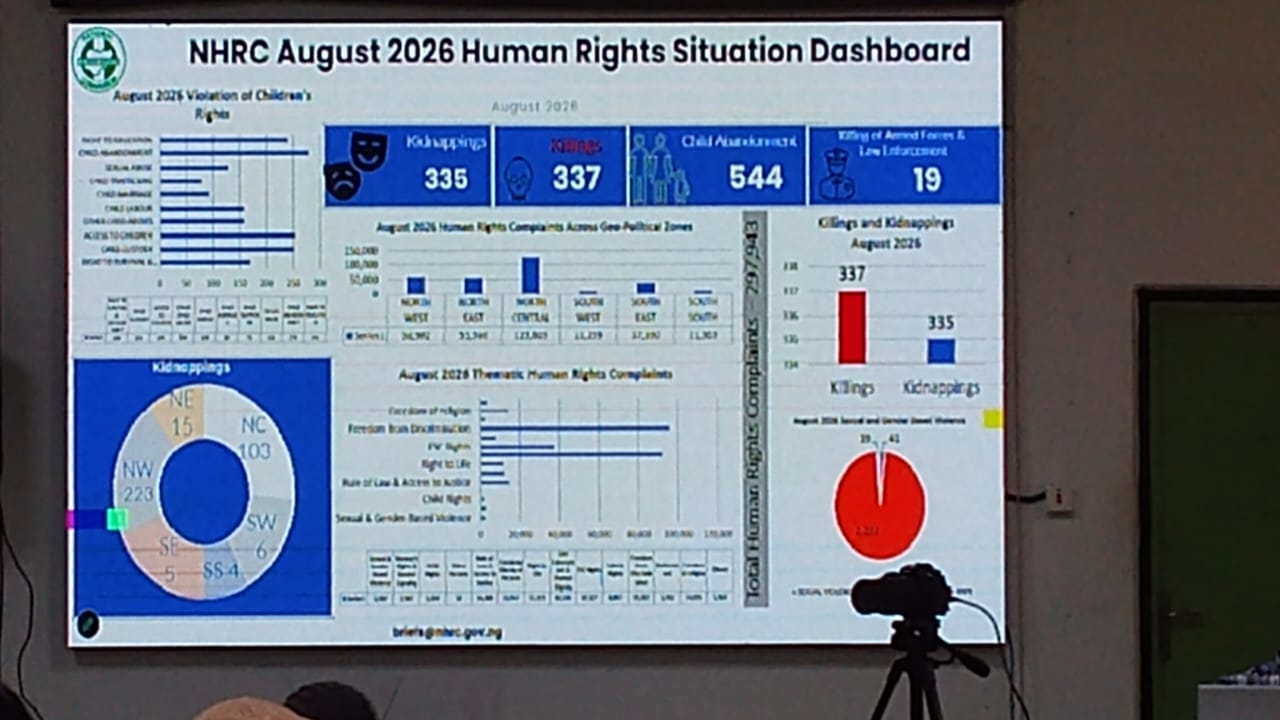
ABUJA, NIGERIA — September 14, 2026: The National Human Rights Commission (NHRC) has recorded 297,943 complaints across Nigeria in August 2026, painting a troubling picture of the country’s human rights environment amid renewed insecurity, attacks on rural communities, abductions, hate speech and political violence.
The figure was disclosed by the Executive Secretary of the NHRC, Dr. Tony Ojukwu, OFR, SAN, FICMC, during the presentation of the Commission’s August 2026 Human Rights Situation Dashboard on Monday.
According to Ojukwu, the monthly dashboard is part of the Commission’s continuing commitment to transparency, accountability and evidence-based monitoring of human rights conditions across the country.
The Commission’s assessment, however, was not entirely negative. It also highlighted several successful security interventions, including the rescue of hundreds of abducted Nigerians and the release of 15 National Youth Service Corps (NYSC) members abducted in Kogi State.
INSECURITY REMAINS MAJOR HUMAN RIGHTS CONCERN
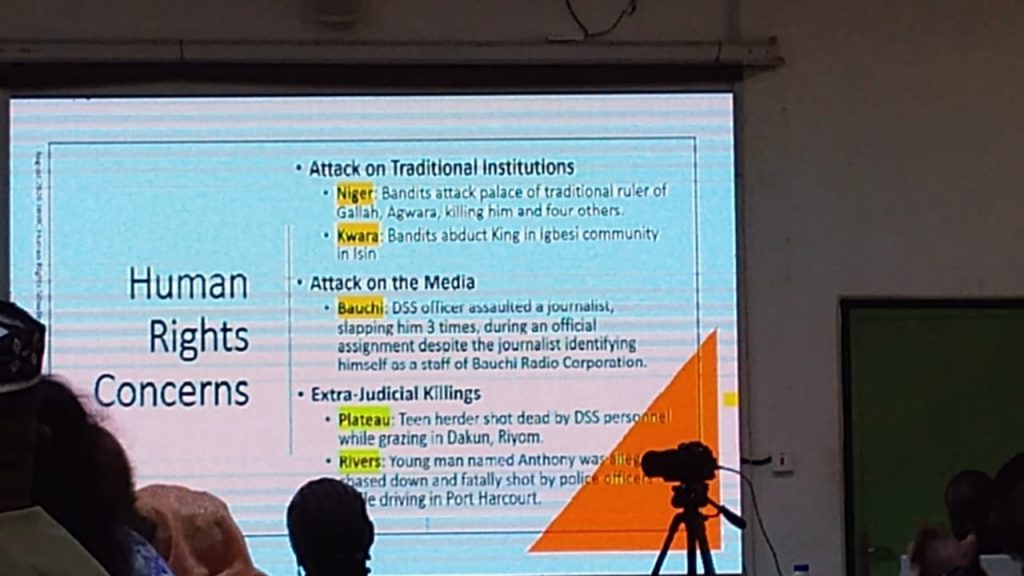
The NHRC said insecurity once again dominated Nigeria’s human rights landscape during August, with Benue and Niger States particularly affected by renewed attacks on rural communities.
Ojukwu called for thorough and transparent investigations into the killings, insisting that perpetrators of the attacks must be brought to justice.
The Commission’s position places accountability at the centre of the security response, rather than treating attacks merely as security incidents.
“The Commission reiterates its call for a thorough, transparent investigation into these killings,” Ojukwu said, stressing the need for perpetrators to be brought to justice without further delay.
The concern is particularly significant because attacks on rural communities can simultaneously affect the rights to life, personal security, dignity, property and livelihood.
308 ABDUCTED NIGERIANS RESCUED IN COORDINATED OPERATION
Amid the grim security picture, the NHRC acknowledged what it described as positive outcomes from coordinated security operations.
The Commission highlighted the August 5 rescue of 308 Nigerians abducted across Niger and Kwara States in what it described as a single, coordinated and intelligence-led operation.
Ojukwu also noted that security operations in Benue State resulted in the release of many other persons held in captivity during the month.
The NHRC said these operations demonstrated the potential of intelligence sharing, political will and inter-agency coordination when effectively deployed.
But the Commission warned that successful rescue operations should not mark the end of government responsibility toward survivors.
According to Ojukwu, rescued victims require medical care, psychosocial support, family reunification and other forms of assistance necessary for recovery and reintegration into society.
15 NYSC CORPS MEMBERS RELEASED
The NHRC also commended the security agencies involved in the rescue of 15 NYSC corps members abducted in Kogi State while travelling from Abuja after completing their orientation programme at the Bayelsa State Orientation Camp.
The Commission described the operation as another example of what can be achieved through coordinated security action.
For the NHRC, however, the broader challenge is institutionalising such outcomes rather than allowing effective coordination to occur only in isolated cases.
“The standard” should be seen consistently rather than occasionally, the Executive Secretary said.
HATE SPEECH, POLITICAL VIOLENCE TRIGGER NHRC WARNING
Beyond physical insecurity, the Commission identified increasing hate speech and political violence involving political and religious actors as another major concern during the reporting period.
Ojukwu disclosed that the NHRC had condemned what it described as hateful and divisive speech by Sheikh Sani Jingir and alleged incitement to violence by Senator Francis Fadahunsi.
The Commission has called for their investigation and prosecution, according to the Executive Secretary.
The development assumes greater significance as Nigeria moves toward the 2027 General Elections, with the NHRC warning that political actors must operate within the law.
The Commission said it would remain vigilant and work with relevant stakeholders to protect human rights during the electoral process.
NHRC LINKS ELECTIONS TO BROADER HUMAN RIGHTS
The Commission stressed that electoral rights cannot be viewed in isolation.
According to Ojukwu, participation in elections is connected to several fundamental rights, including freedom of association, freedom of assembly, freedom of expression, freedom of movement, the right to life and the right to dignity of the human person.
This means that threats to political participation can potentially have implications beyond voting itself.
The NHRC therefore said it would continue monitoring the political environment as preparations for the 2027 elections gather momentum.
FOREIGN AID BILL: NHRC FLAGS CIVIC SPACE CONCERNS
The Executive Secretary also used the presentation to address the Foreign Aid Bill currently before the National Assembly, saying the Commission recognises the legitimate interest in transparency and accountability behind the proposed legislation.
However, he acknowledged concerns raised by civil society organisations, media organisations and international partners over the possible implications of the Bill for civic space and the independence of organisations working to advance human rights in Nigeria.
The NHRC urged lawmakers to engage constructively with those concerns, particularly issues relating to freedom of association, freedom of expression and the independence of civil society organisations.
The Commission said it would continue monitoring the legislative process from a human rights perspective and intervene where necessary within its statutory mandate.
297,943 COMPLAINTS: WHAT THE NUMBER MEANS
The headline figure of 297,943 complaints is arguably the most striking element of the August dashboard.
But the figure should not be interpreted simply as a numerical measure of individual rights violations without further breakdown.
In his presentation, Ojukwu emphasised that the dashboard and the NHRC’s Human Rights Observatory are intended to provide an evidence base for identifying emerging risks, drawing attention to violations, demanding accountability and recognising effective government responses.
The Executive Secretary said the Commission’s responsibility extends beyond responding to violations after they occur.
Its mandate, he explained, includes prevention as well as redress.
FROM DATA TO ACCOUNTABILITY
The NHRC’s central message is that human rights monitoring should ultimately translate into government action.
The Commission said data generated through its monitoring mechanisms should inform investigations, referrals, policy engagement, early warning systems and accountability measures.
That distinction is important. A dashboard can document the scale of a problem, but the effectiveness of the human rights protection system ultimately depends on what institutions do with the information.
For victims and communities affected by insecurity, the key test will therefore be whether documented complaints result in investigations, prosecutions, remedies and preventive interventions.
THE ROAD TO 2027
The August dashboard arrives as Nigeria approaches another politically consequential electoral cycle.
The NHRC’s warning over hate speech and political violence suggests that the protection of civic and political rights will become an increasingly important component of the country’s human rights agenda.
The Commission’s emphasis on freedom of expression, association, assembly and political participation also places responsibility on political actors, security agencies, civil society organisations and other stakeholders to ensure that electoral competition does not translate into rights violations.
The NHRC’s August 2026 dashboard presents a complicated picture of Nigeria’s human rights situation.
On one side are 297,943 recorded complaints, renewed attacks in Benue and Niger States, abductions, hate speech and political violence.
On the other are successful security interventions that resulted in the rescue of hundreds of abducted Nigerians, including 308 persons rescued in Niger and Kwara States and 15 NYSC corps members released in Kogi State.
For the NHRC, the challenge is to ensure that these contrasting realities inform a more effective national response.
The Commission’s message is clear: human rights data must not remain statistics. They must become the basis for prevention, investigation, redress, policy intervention and accountability.
As Nigeria moves toward the 2027 elections, the ability of state institutions to convert monitoring into meaningful protection could become one of the defining tests of the country’s human rights architecture.






Leave a Reply