
By A1NEWS Investigations
NEW DELHI, India — September 15, 2026
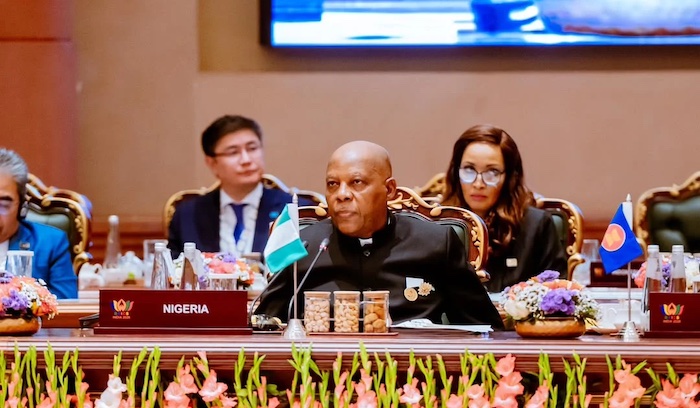
President Bola Tinubu has urged BRICS to accelerate reforms that, he said, will “rewrite” the rules of global governance and finance—demanding a more representative and fair international system and calling for changes to the UN Security Council and international financial institutions.
Speaking at the 2026 BRICS Summit in New Delhi on Sunday through a statement delivered by Vice President Kashim Shettima, Tinubu argued that the transformation BRICS champions must extend beyond dialogue to measurable outcomes, while positioning Nigeria as a strategic gateway to Africa’s expanding market under the African Continental Free Trade Area (AfCFTA).
Tinubu’s Core Demand: Reform Global Governance and the International Financial System
In the address, Tinubu made clear Nigeria’s position on restructuring global authority and funding frameworks—arguing that today’s institutions do not sufficiently reflect “contemporary economic and demographic realities.”
He called for:
- Reform of the UN Security Council
- A more representative, equitable, and responsive global governance architecture
- Changes to the international financial system to better serve developing economies
Tinubu described BRICS as a platform that amplifies the voice of the Global South and supports an “inclusive international order,” consistent with Nigeria’s long-standing call for institutional reform.
From Commitments to Implementation: Nigeria Pushes BRICS Partnership with Results
Beyond the critique of existing structures, Tinubu framed Nigeria’s expectation from BRICS: cooperation must move from promises to execution.
He urged a BRICS approach that shifts:
- from dialogue to delivery
- from commitments to implementation
- from cooperation to measurable development outcomes
The message, officials said, also reinforced Nigeria’s desire for partnerships that translate into investment, technology transfer, and productive capacity on the ground—not just summits and statements.
Nigeria as a Gateway to Africa’s AfCFTA Market
Tinubu invited foreign investors and BRICS partners to see Nigeria as a gateway to Africa’s growing consumer and trade network.
Under AfCFTA, the President argued that Nigeria offers scale, market access, and opportunity—particularly for investors seeking to reach regional demand through a broader continental trade framework.
Economic Resilience Under Tinubu’s “Renewed Hope Agenda”
Tinubu tied Nigeria’s reform advocacy to what he described as economic resilience—building an economy able to withstand global shocks while creating sustainable opportunities for Nigerians.
He said these goals are embedded in his Renewed Hope Agenda, including reforms aimed at:
- strengthening macroeconomic stability
- diversifying production
- raising productivity
- expanding infrastructure and human capital
- attracting investment
- promoting private-sector-led growth
- deepening climate resilience
The President also welcomed BRICS cooperation spanning trade, agriculture, food security, energy, infrastructure, manufacturing, healthcare, and critical minerals—especially partnerships focused on technology transfer, local value addition, industrial capacity, and employment.
Youth and Innovation: Nigeria Sees Human Capital as a Key Asset
Tinubu emphasized Nigeria’s young population as a competitive advantage, describing Nigerians’ creativity and enterprise as drivers of innovation and opportunity.
He identified strategic investment priorities including:
- digital skills
- entrepreneurship
- research
- artificial intelligence
- technology-enabled businesses
He referenced initiatives mentioned in the address such as 3MTT, Project BRIDGE, and national AI programmes—framing them as pathways for skills, digital inclusion, and innovation-driven growth.
Technology, AI, Digital Public Infrastructure and Cybersecurity in Focus
A major portion of the address centered on technology cooperation—especially for developing countries that, he argued, must produce knowledge and own intellectual property rather than remain dependent.
Tinubu said Nigeria welcomes deeper BRICS collaboration in areas such as:
- artificial intelligence
- digital public infrastructure
- fintech
- telecommunications
- cybersecurity
- biotechnology
- advanced manufacturing
He also described the risks for nations that “own no technology,” warning that such countries may end up renting their future rather than building it.
On digital systems, Tinubu said Nigeria seeks an open, secure, and inclusive ecosystem supporting:
- innovation
- digital trade
- responsible artificial intelligence
- cybersecurity
Climate Finance and Critical Minerals: Balancing Action with Development
Tinubu reaffirmed Nigeria’s sustainability approach, saying it balances climate action with the development aspirations of emerging economies.
He called for:
- affordable climate finance
- technology transfer and capacity-building for Africa
He added that Nigeria supports cooperation in:
- renewable energy and gas
- clean technologies
- climate-smart agriculture
- sustainable infrastructure
- responsible critical-mineral development
The President argued that climate responsibility must support broader economic growth—not impose costs without compensating development pathways.
Modi’s Opening Message: BRICS Must Work for the Global South—Not Just Governments
Earlier in the summit, Indian Prime Minister Narendra Modi said confidence in BRICS among Global South countries has grown because their voices are being heard and their experiences respected.
He described BRICS as diverse and cooperative, adding that the bloc is expanding participation beyond governments to include:
- entrepreneurs
- farmers
- researchers
- women
- young people
Modi also referenced initiatives such as BRICS CONNECT, BRICS MSME Cooperation Portal, and the BRICS Urban Mobility Hub, while stressing that sustainability must remain central to BRICS cooperation.
Tinubu’s message to BRICS on global governance and finance places Nigeria firmly within a wider push by developing economies for institutional reform—while linking that agenda to practical investment priorities in technology, infrastructure, human capital, climate finance, and industrialization.
With Nigeria positioning itself as a gateway under AfCFTA, the President argued that BRICS partnership should deliver real economic outcomes: jobs, expanded trade, technology transfer, and stronger productive capacity—so Africa can move from the margins to the frontiers of global growth and innovation.






Leave a Reply