
From a former Head of State undergoing knee replacement in India to Nigeria’s growing network of specialist hospitals, the episode raises a difficult question: why do Nigerians still travel abroad for treatments that an expanding domestic private health sector is increasingly capable of providing?
By Baron Eloagu
ABUJA, Nigeria — October 1, 2026
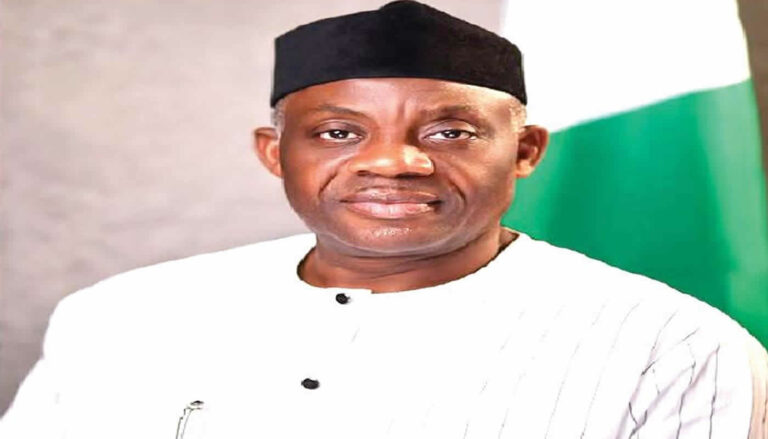
The appearance of former Nigerian Head of State, General Abdulsalami Abubakar, in promotional material by an Indian hospital following his knee replacement surgery has reignited debate over Nigeria’s decades-old struggle with medical tourism.
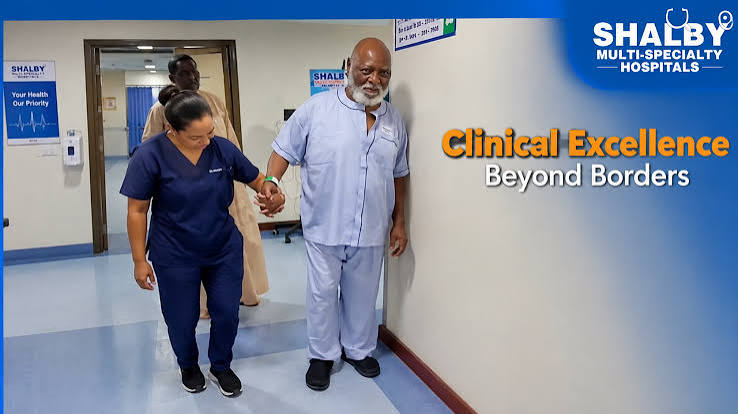
The promotional footage by Krishna Shalby Hospital in Ahmedabad features the 84-year-old former military leader during his treatment and rehabilitation, including physiotherapy sessions. The campaign carries phrases including “A milestone in international care” and “Clinical Excellence Beyond Borders.”
The development has generated public discussion not necessarily because Abubakar sought treatment abroad, but because his case has become another visible reminder of Nigeria’s continuing dependence on foreign medical facilities.
For many Nigerians, the more uncomfortable question is not why an elderly former Head of State travelled to India for orthopaedic care, but why Nigeria has struggled for decades to develop enough specialist medical facilities capable of attracting — and retaining — patients who can afford advanced treatment.
ABDULSALAMI’S CASE AND THE SYMBOLISM OF MEDICAL TOURISM
Abubakar, who served as Nigeria’s military Head of State from 1998 to 1999, is among several prominent Nigerians who have sought medical care outside the country.
The circumstances surrounding his appearance in the hospital’s promotional material have attracted particular attention. Available reports do not establish whether the former Head of State personally authorised the use of the footage for advertising purposes.
What is clear is that Krishna Shalby Hospital used images and videos of Abubakar’s treatment and recovery in promotional material highlighting its international-patient services.
The episode has therefore become bigger than one patient’s medical decision.
It has reopened the question of whether Nigeria has done enough to create a healthcare system in which citizens — including elderly former leaders — can obtain sophisticated treatment at home.
NIGERIA HAS THE DOCTORS — BUT SPECIALIST INFRASTRUCTURE REMAINS A CHALLENGE
Nigeria’s medical sector is not devoid of expertise.
The country has produced physicians, surgeons, nurses, pharmacists and other healthcare professionals who work in leading institutions around the world.
The problem is that expertise alone cannot constitute a world-class healthcare system.
Specialist medicine requires advanced equipment, reliable electricity, modern operating theatres, intensive-care capacity, diagnostics, trained support staff, medical research, maintenance systems and sustainable financing.
Nigeria’s continuing medical-tourism problem has been linked to inadequate infrastructure, specialist shortages, health-worker migration and weaknesses in the domestic healthcare system. A 2022 healthcare market study estimated that about 5,000 Nigerians leave the country each month for treatment and put annual losses from medical tourism at about US$1.3 billion.
Other Nigerian estimates have put annual spending on medical tourism at around N500 billion, although such figures vary according to the year, methodology and definition used. The Federal Ministry of Information, for example, cited the N500 billion figure in 2022.
BUT NIGERIA IS BEGINNING TO SHOW WHAT IS POSSIBLE
The argument that Nigeria cannot build sophisticated medical facilities is increasingly difficult to sustain.
Over the past several years, private investors and development-finance institutions have demonstrated that high-end healthcare infrastructure can be established within the country.
DUCHESS INTERNATIONAL HOSPITAL, LAGOS
The Duchess International Hospital in Ikeja was launched in October 2021 as a 100-bed, fully ensuite hospital, offering primary, secondary and tertiary healthcare services across a range of specialties and subspecialties. �
Duchess International Hospital
The facility represents an example of how private-sector investment can expand Nigeria’s specialist healthcare capacity.
EVERCARE HOSPITAL, LEKKI
Evercare Hospital Lekki was officially unveiled in March 2021.
At the commissioning, then Vice-President Yemi Osinbajo said the Evercare Health Fund was a US$1 billion emerging-markets healthcare fund and described its Nigerian investment as part of efforts to reverse outbound medical tourism and improve specialist healthcare capacity.
Evercare itself says its Nigerian investments are intended to fill healthcare capacity gaps, retain professional expertise locally and help reverse outbound medical-tourism spending.
MARCELLE RUTH CANCER CENTRE, LAGOS
The Marcelle Ruth Cancer Centre & Specialist Hospital also opened in Lagos with advanced cancer diagnostic and treatment capabilities.
At its 2021 launch, the centre said its objective was to address gaps in cancer diagnosis and treatment and reduce the need for patients to travel abroad for specialised care.
Its emergence was significant because oncology is one of the specialties frequently associated with Nigerians seeking treatment abroad.
AFRICAN MEDICAL CENTRE OF EXCELLENCE, ABUJA
Perhaps the clearest demonstration of what large-scale investment can achieve is the African Medical Centre of Excellence (AMCE) in Abuja.
Developed by Afreximbank in partnership with King’s College Hospital London, the facility officially opened in June 2025.
The hospital began operations with 170 beds, with plans to expand to 500 beds. Its services include oncology, cardiovascular medicine, haematology and general medical and surgical care.
The facility is backed by an investment of about US$300 million and was specifically designed to reduce outbound medical tourism.
By December 2025, AMCE reported that it had performed its first open-heart surgery and delivered advanced stereotactic body radiation therapy for lung cancer.
Those developments demonstrate that complex procedures previously associated with overseas treatment can increasingly be performed in Nigeria.
THE MONEY QUESTION
The debate over medical infrastructure inevitably returns to financing.
Nigeria has repeatedly demonstrated that billions of dollars can be mobilised for major infrastructure projects.
In 2021, businessman and investment banker Atedo Peterside argued that the US$1.5 billion then earmarked for rehabilitation of the Port Harcourt Refinery could theoretically finance 12 hospitals at US$125 million each — two in each geopolitical zone. �
Businessday NG +1
Peterside’s calculation was an advocacy argument, not an established cost benchmark for constructing every world-class hospital. Hospital costs vary considerably depending on land, bed capacity, equipment, specialty mix, financing, technology and operating requirements.
Nevertheless, the comparison illustrates the scale of resources that can be involved in national infrastructure choices.
Nigeria also has examples of large healthcare investments.
Nizamiye Hospital in Abuja, for instance, has previously been reported as requiring approximately US$35 million to establish. �
TheCable
Meanwhile, a proposed 150-bed hospital and two smaller clinics in Lagos were estimated at N28 billion in 2017, although that project was subsequently suspended.
These examples demonstrate that there is no single price tag for a “world-class hospital.”
THE REAL COST GOES BEYOND CONSTRUCTION
Building hospitals, however, is only the beginning.
A functioning specialist hospital requires continuous investment in:
Specialist doctors and nurses;
Diagnostic and surgical equipment;
Equipment maintenance;
Electricity and backup power;
Drugs and medical consumables;
Intensive-care services;
Infection control;
Medical research;
Continuing professional education;
Digital health systems;
Emergency transportation;
Affordable health insurance and payment mechanisms.
Without those systems, an impressive hospital building can quickly become another underperforming public asset.
The challenge is therefore not simply to build hospitals, but to create healthcare institutions that can operate sustainably at international clinical standards.
FROM MEDICAL TOURISM TO HEALTHCARE RETENTION
Nigeria’s medical-tourism problem also represents an economic issue.
When Nigerians travel to India, the United Kingdom, Turkey, the United States, the United Arab Emirates or other countries for treatment, expenditure leaves the Nigerian economy.
The money covers not only medical procedures but also accommodation, transportation, accompanying relatives, food and other travel-related costs.
A stronger domestic healthcare system could potentially retain a significant portion of that spending while creating jobs and encouraging specialist professionals to remain or return to Nigeria.
The AMCE model illustrates this approach. Its developers explicitly identify reducing outbound medical tourism and strengthening local healthcare capacity as central objectives.
THE ABDULSALAMI QUESTION IS REALLY A NIGERIA QUESTION
There is nothing inherently wrong with a Nigerian choosing to seek medical treatment abroad when a particular procedure, specialist or facility is considered more suitable.
Patients have the right to make healthcare decisions based on their circumstances.
The broader public-policy question is different.
Why should Nigerians who have the means to seek advanced medical care abroad have so few comparable choices at home?
And why should the country continue losing substantial foreign exchange to medical tourism when Nigerian doctors and private investors have already demonstrated that sophisticated healthcare facilities can be developed domestically?
General Abdulsalami Abubakar’s appearance in an Indian hospital advertisement has therefore become a striking symbol of a much larger national problem.
It is not an argument against India, Indian doctors or Nigerians seeking treatment abroad.
It is an argument for building a Nigerian healthcare system strong enough that overseas treatment becomes a choice, rather than a necessity for procedures that can safely and effectively be delivered at home.
CONCLUSION: BUILD BEFORE WE NEED IT
Nigeria has the human capital.
It has a large patient population.
It has private investors, development-finance institutions and international healthcare partners willing to participate.
And it has already produced examples of hospitals capable of delivering increasingly complex specialist care.
What remains is the difficult work of turning individual success stories into a sustainable national healthcare strategy.
The lesson from the Abdulsalami episode should therefore not be that an 84-year-old Nigerian should not travel abroad for surgery.
The deeper lesson is that Nigeria must build, finance and maintain healthcare institutions that its citizens can trust before they need them.
A country should not wait until its leaders become patients before discovering the importance of world-class hospitals.
For A1NEWS International, the question is no longer whether Nigeria can build excellent hospitals. The evidence shows that it can. The question is whether the country can make such excellence widespread, affordable, sustainable and accessible to ordinary Nigerians.




Leave a Reply