
By A1NEWS International
KANO, Nigeria — September 11, 2026: The National Human Rights Commission (NHRC) has demanded a swift, impartial and comprehensive investigation into the killing of Kano-based public commentator Ibrahim Khalil Danshagamu, warning that the fatal attack raises serious concerns about the safety of citizens who engage in public discourse and criticism of government.
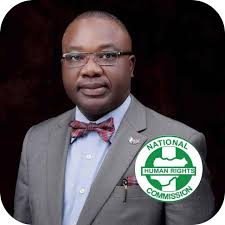
The NHRC Executive Secretary, Chief Tony Ojukwu, OFR, SAN, condemned what he described as the “grave” killing after Danshagamu was allegedly attacked by unknown assailants who forcibly entered his residence in Gaida Quarters, Kumbotso Local Government Area of Kano State, on Monday, September 8, 2026.
According to information cited by the Commission from the Kano State Police Command, Danshagamu sustained injuries during the attack and was subsequently taken to Murtala Mohammed Specialists Hospital, where he was pronounced dead on arrival.
The circumstances surrounding the attack, including the identity and motive of the assailants, remain subjects of investigation.
NHRC Raises Freedom of Expression Concerns
Ojukwu said the killing was particularly disturbing because Danshagamu was known for participating in public discussions on governance and public policy.
The NHRC chief linked the incident to broader concerns over the protection of freedom of expression and civic participation in Nigeria, stressing that citizens should be able to express opinions, question public authorities and participate in political and social debate without facing violence or intimidation.
“The right to life is fundamental,” the Commission said, pointing to Section 33 of the Constitution of the Federal Republic of Nigeria, 1999, as amended, as well as Article 4 of the African Charter on Human and Peoples’ Rights.
The Commission’s position places the killing within both Nigeria’s constitutional framework and its wider human-rights obligations.
Two Suspects Arrested as Police Investigation Continues
The NHRC acknowledged that the police had already arrested two suspects in connection with the incident.
However, Ojukwu urged the Inspector-General of Police and the Kano State Police Command to treat the case as an urgent matter of national importance.
The Commission is calling for investigators to go beyond identifying the individuals who allegedly carried out the attack.
It wants the investigation to establish, where evidence permits, the motive behind the killing and whether any sponsors, financiers, organisers or other persons aided, facilitated or otherwise participated in the alleged crime.
That demand could broaden the scope of the investigation considerably if investigators uncover evidence pointing beyond the immediate suspects.
‘Investigation Must Not Disappear Into the System’
Ojukwu further called for every suspect against whom credible evidence is established to be prosecuted without unnecessary delay.
He warned against a situation in which public outrage follows a high-profile killing only for investigations to lose momentum over time.
The NHRC’s demand for a transparent investigation is therefore aimed not only at securing arrests but also at establishing the complete chain of events surrounding Danshagamu’s death.
For the Commission, determining who was responsible, why the attack occurred and whether others were involved will be critical to ensuring accountability.
Protection for Journalists, Commentators and Rights Defenders
The NHRC also called on the Federal Government, Kano State Government and security agencies to review existing protective measures for people whose professional or civic activities may expose them to threats.
Those identified by the Commission include journalists, bloggers, public commentators, human-rights defenders and other citizens engaged in public-interest advocacy.
The appeal comes against the backdrop of growing concern over the risks faced by individuals participating in public debate, particularly during politically sensitive periods.
Ojukwu warned that violence cannot be allowed to become a mechanism for silencing criticism or dissent as Nigeria approaches a critical political and electoral period.
‘Dissent Is Not a Crime’
The NHRC Executive Secretary underscored the broader democratic implications of the killing.
“In a democracy, dissent is not a crime. Criticism must be answered with dialogue and accountability, not violence.”
The statement reflects the Commission’s argument that democratic participation depends on an environment in which citizens can disagree with public officials and one another without fear of physical retaliation.
Ojukwu said the period for condemnation alone had passed, insisting that authorities must now focus on establishing the facts and securing justice.
Questions the Investigation Must Answer
As the police investigation proceeds, several questions will be central to establishing what happened to Danshagamu.
Among them are:
- Who entered the commentator’s residence during the reported attack?
- What was the immediate motive for the assault?
- Were the suspects acting alone or on behalf of others?
- Was Danshagamu specifically targeted because of his public commentary?
- Did the attackers have prior knowledge of his activities or movements?
- Were there previous threats or warning signs?
- What evidence links the arrested suspects to the killing?
- Did any individual or group plan, finance or facilitate the attack?
At this stage, these remain investigative questions rather than established facts. Their answers will depend on evidence gathered by law-enforcement authorities.
NHRC Promises to Monitor Investigation
Ojukwu extended the Commission’s condolences to Danshagamu’s family, friends and associates and assured them that the NHRC would monitor the investigation and engage with relevant authorities to ensure that the matter receives appropriate attention.
The Commission’s intervention effectively places the case under additional human-rights scrutiny, particularly concerning the protection of life, freedom of expression and civic participation.
For Danshagamu’s family and associates, however, the immediate demand is accountability.
The NHRC says the objective must be clear: identify those responsible, establish the truth surrounding the killing and ensure that justice follows credible evidence.
The killing of Ibrahim Khalil Danshagamu has moved beyond a single criminal investigation to become a test of Nigeria’s commitment to protecting citizens engaged in public discourse.
With two suspects reportedly in custody, the next phase of the investigation will be closely watched. The critical issue will be whether authorities can establish the full circumstances of the attack and determine whether responsibility extends beyond those allegedly present at the scene.
For the NHRC, the message is unequivocal: public criticism, dissent and participation in democratic debate must never become grounds for violence.
The Commission is now calling for action that goes beyond condemnation — a credible investigation, evidence-based prosecution and accountability for everyone found responsible.


Leave a Reply