
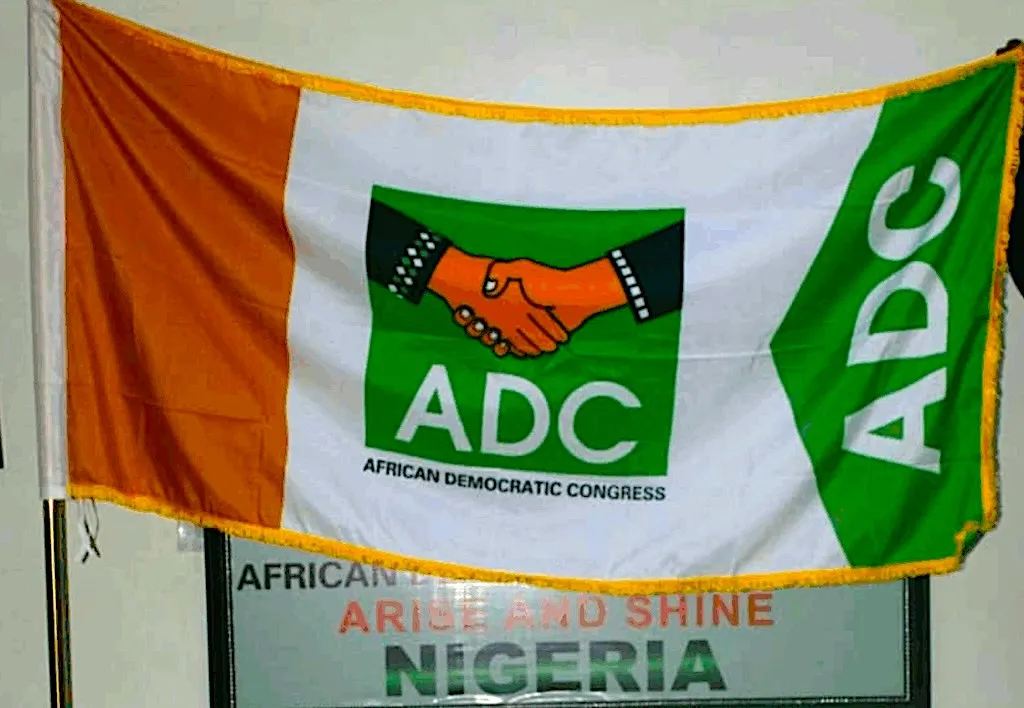
High-stakes direct primary exposes deep factional fault lines as coalition faces defining test ahead of Nigeria’s 2027 presidential election
By Baron Eloagu / May 25, 2026
ABUJA, NIGERIA –The African Democratic Congress (ADC) is today set to begin a decisive presidential primary process that will determine who flies its flag in the 2027 general election, as three heavyweight aspirants — Atiku Abubakar, Rotimi Amaechi, and Mohammed Hayatu-Deen — face off in what has quickly become one of Nigeria’s most closely watched opposition contests.
The exercise, conducted through a direct primary system across all 36 states and the Federal Capital Territory, comes amid rising internal tensions, competing power blocs, and unresolved debates over zoning, generational leadership, and coalition control.
Direct Primary Strategy Exposes Internal Tensions
Party officials confirmed that the ADC adopted the direct primary model in line with provisions of the Electoral Act 2026, allowing registered members across thousands of wards to participate in selecting the party’s presidential candidate.
The decision followed the collapse of early attempts to produce a consensus candidate, as all three aspirants reportedly resisted pressure to step down.
Political observers say the process has effectively turned into a test of:
- National political structure strength
- Delegate mobilisation capacity
- Coalition loyalty networks
- Regional influence balance
Atiku Abubakar: Experience vs Political Fatigue Debate
Former Vice President Atiku Abubakar enters the race as the most politically entrenched figure in the contest, backed by decades of national experience and a wide network of allies across party lines.
Since exiting the Peoples Democratic Party in 2025, Atiku has positioned himself as a central figure in the opposition coalition architecture now operating under the ADC platform.
His supporters argue that his political machinery remains unmatched, citing alliances with key figures including former governors and senior political operatives across northern and southern Nigeria.
However, critics within the party raise concerns over generational turnover, arguing that Atiku’s long political career may weaken the party’s appeal to younger voters.
A senior ADC member described him as “the most prepared but also the most politically controversial of the contenders.”
Rotimi Amaechi: Reform Credentials vs National Reach Question
Former Minister of Transportation Rotimi Amaechi is presenting himself as a governance-focused reform candidate with a record rooted in infrastructure delivery and administrative discipline.
His tenure under former President Muhammadu Buhari remains a key pillar of his campaign narrative, particularly the expansion of rail infrastructure across parts of Nigeria.
Supporters argue that Amaechi represents a “reset candidate” capable of restoring institutional confidence.
Yet political analysts caution that his challenge lies in converting technical achievements into broad electoral appeal within a fragmented opposition structure.
A party insider noted:
“Amaechi has governance credibility, but ADC is not yet a unified political machine at the national level.”
Regional zoning debates are also shaping perceptions, with some stakeholders insisting the South should retain the presidency — a factor some believe may favour Amaechi.
Mohammed Hayatu-Deen: Technocrat Appeal vs Political Structure Gap
Former banker Mohammed Hayatu-Deen is campaigning on an economic reform agenda centred on productivity, youth employment, and institutional restructuring.
His supporters describe him as a “policy-driven outsider” offering a break from Nigeria’s entrenched political class.
Recently endorsed by ADC stakeholders in the South-West, Hayatu-Deen has gained momentum among professional and reform-oriented blocs within the party.
However, his major limitation remains political visibility and grassroots mobilisation strength compared to his rivals.
Despite this, his campaign has focused heavily on anti-poverty messaging and governance restructuring, positioning him as a technocratic alternative.
Rising Factional Pressure and Internal Party Crisis
Even as voting begins, internal divisions within the ADC are intensifying.
A rival faction aligned with Dumebi Kachikwu reportedly dissolved the party’s National Working Committee and declared him the faction’s presidential candidate during a separate convention in Abuja.
The development has deepened uncertainty over:
- Party unity ahead of 2027
- Legitimacy of competing structures
- Control of electoral processes
- Risk of parallel candidacies
Political analysts warn that unresolved factional disputes could weaken the party’s credibility as a national opposition platform.
Coalition Politics and 2027 Power Calculations
The ADC primary is widely viewed as more than an internal party contest — it is effectively a rehearsal for Nigeria’s broader opposition strategy against the ruling establishment ahead of the 2027 elections.
Key stakeholders argue the outcome will determine:
- Whether opposition forces remain unified
- The direction of coalition leadership
- Electoral competitiveness against incumbency
- Regional voting bloc consolidation
The ADC presidential primary represents a critical turning point for Nigeria’s opposition politics, bringing together three heavyweight contenders with sharply different political identities — experience-driven leadership, reformist governance, and technocratic economic restructuring.
Yet beneath the competition lies a deeper challenge: internal cohesion.
As delegates cast their votes across the country, the party faces a defining question — whether it can emerge from today’s exercise as a united political force, or fracture further under the weight of ambition, ideology, and unresolved factional rivalry.
The outcome will significantly shape Nigeria’s 2027 electoral landscape.




Leave a Reply