
$2bn broadband expansion project promises 2.8 million jobs, but scrutiny grows over execution, financing, and impact
By A1 News International | Abuja, Nigeria
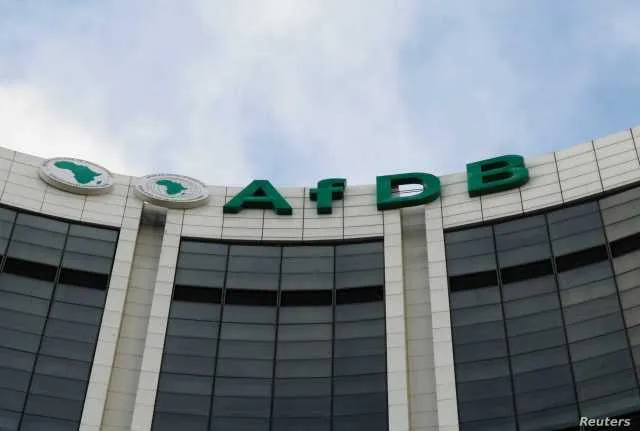
The African Development Bank Group (AfDB) has approved a $200 million loan to support Nigeria’s digital infrastructure expansion, part of a broader $2 billion initiative aimed at boosting connectivity and job creation.
While the project promises transformative impact, analysts say its success will hinge on execution, funding transparency, and coordination across multiple stakeholders.
According to a statement published by the AfDB, the loan will fund the Digital Value Chain Infrastructure for Boosting Employment (D-VIBE) Project, also known as Project BRIDGE.
The initiative seeks to expand Nigeria’s national fibre optic backbone from approximately 30,000 kilometres to 120,000 kilometres, connecting all 774 local government areas to high-speed broadband.
The network is expected to link critical sectors—including schools, healthcare facilities, agro-industrial zones, and rural communities—while also extending fibre connectivity to neighbouring countries such as Benin, Cameroon, Niger, and Chad.
Multi-Billion Dollar Financing Structure
The AfDB’s $200 million commitment forms part of a larger $800 million sovereign financing package, alongside $500 million from the World Bank and $100 million from the European Bank for Reconstruction and Development (EBRD).
Additional funding includes private sector investments, a €22 million European Union grant, and project preparation support from the Multilateral Cooperation Center for Development Finance.
However, experts point to the complexity of the financing model—structured as a public-private partnership (PPP)—as a potential risk factor.
Under the arrangement, public ownership is expected to range between 25 and 49 per cent, while private investors will control between 51 and 75 per cent through a Special Purpose Vehicle (SPV).
Analysts warn that PPP structures in Nigeria have historically faced governance challenges, delays, and accountability gaps.
Ambitious Targets, Execution Risks
The project is projected to increase Nigeria’s broadband penetration from 45 per cent to 70 per cent by 2030 and generate up to 2.8 million jobs over its lifecycle.
AfDB’s Nigeria Country Director, Abdul Kamara, said the initiative would unlock economic opportunities nationwide, particularly for young people.
But industry stakeholders caution that past infrastructure projects have struggled with implementation bottlenecks, including right-of-way disputes, regulatory inconsistencies, and funding delays.
There are also concerns about whether the projected job figures are direct employment opportunities or broader ecosystem estimates, a distinction often blurred in large-scale development projects.
Digital Inclusion vs Structural Constraints
Beyond infrastructure rollout, the project aims to address barriers to digital adoption through affordable devices, skills development, and support for digital platforms.
It also includes provisions for cybersecurity, renewable energy integration, and market competition.
However, investigations suggest that infrastructure alone may not guarantee digital inclusion, particularly in underserved rural areas where affordability, literacy, and power supply remain critical constraints.
Experts argue that without parallel reforms in electricity, education, and regulatory frameworks, broadband expansion may not translate into meaningful economic participation.
Alignment with National, Continental Goals
The D-VIBE project aligns with Nigeria’s Vision 2050, National Development Plan, and the current administration’s economic agenda, as well as the African Union’s Agenda 2063.
It also supports AfDB’s 10-year strategy (2024–2033), which prioritises inclusive growth and sustainable development across Africa.
Yet, observers note that alignment with policy frameworks does not automatically guarantee delivery, particularly in a challenging fiscal environment.
While the AfDB-backed digital expansion project represents one of the most ambitious connectivity investments in Nigeria’s history, its long-term impact will depend on execution discipline, transparency, and the ability to overcome systemic bottlenecks.
For now, the promise of millions of jobs and nationwide broadband access remains contingent on turning financing commitments into measurable outcomes.







Leave a Reply