
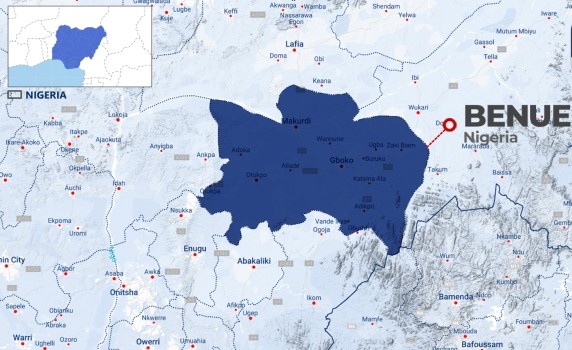
State government says no laboratory-confirmed Mpox case has been recorded, warns against misinformation while surveillance teams intensify monitoring across all 23 LGAs
By A1NEWS International
MAKURDI, Benue State — July 22, 2026
The Benue State Government has dismissed reports circulating on social media alleging an outbreak of Mpox in the state, stressing that no laboratory-confirmed case has been recorded and urging residents to remain calm while health authorities complete investigations into a suspected infection.
The clarification follows widespread online reports claiming that Mpox had broken out in Konshisha Local Government Area, triggering public concern and renewed fears over the spread of infectious diseases.
Health officials say the government has already activated its disease surveillance system and deployed response teams to investigate the reported case, but insist that laboratory analysis—not speculation—is required before any outbreak can be declared.
Government Responds to Suspected Case
According to the Benue State Ministry of Health and Human Services, surveillance officers were dispatched immediately after receiving reports of a suspected Mpox case at Tyokula Achihi Residence in Korinya, Konshisha Local Government Area.
Clinical samples were collected from the suspected patient and forwarded for laboratory examination in line with national disease surveillance protocols.
The Commissioner for Health and Human Services, Dr. Paul Ogwuche, said investigations remain ongoing and no conclusion can be drawn until laboratory results are available.
“At this stage, no Mpox outbreak has been confirmed in Benue State. It is important to emphasise that skin rashes and fever can result from several medical conditions, and laboratory confirmation is required before any diagnosis of Mpox can be made,” the commissioner stated.
State Surveillance System Activated
The Ministry disclosed that its disease surveillance network remains fully operational across all 23 local government areas of Benue State.
Health authorities said they are maintaining close collaboration with:
- The Nigeria Centre for Disease Control and Prevention (NCDC);
- The Federal Ministry of Health;
- The World Health Organization (WHO); and
- Other national and international public health partners.
The collaboration, according to officials, is aimed at ensuring early detection, rapid laboratory confirmation and swift response to any emerging public health threat.
Authorities Warn Against Misinformation
The government appealed to residents to avoid circulating unverified reports capable of creating unnecessary panic.
Officials noted that rumours of disease outbreaks can undermine public confidence, overwhelm health facilities and complicate surveillance efforts.
Residents were encouraged to rely on official updates from recognised health authorities while investigations continue.
The ministry also commended community members who promptly reported the suspected case, describing early reporting as a critical component of disease surveillance and outbreak prevention.
Residents Advised to Seek Medical Attention for Symptoms
While reassuring the public that no outbreak has been confirmed, the Ministry urged anyone experiencing symptoms consistent with infectious diseases to seek immediate medical attention.
Residents were specifically advised to report to the nearest health facility if they develop:
- Fever;
- Unexplained skin rashes;
- Blisters;
- Other unusual symptoms.
Health officials stressed that prompt medical evaluation improves patient care and strengthens efforts to identify and contain potential outbreaks.
Investigation Continues Pending Laboratory Results
The Benue State Government assured residents that the findings of the ongoing laboratory investigation would be made public immediately after they become available.
Officials stated that if laboratory tests confirm Mpox—or any other disease of public health importance—the government will activate appropriate response measures in accordance with national public health guidelines.
These measures could include case management, contact tracing, public awareness campaigns and other containment strategies recommended by health authorities.
Investigative Perspective: Why Laboratory Confirmation Matters
Public health experts caution that symptoms commonly associated with Mpox—including fever and skin rashes—can also occur in several other viral and bacterial illnesses.
For this reason, international disease surveillance protocols require laboratory confirmation before authorities officially declare an outbreak.
Experts warn that premature announcements based solely on suspected symptoms can fuel misinformation, generate unnecessary fear and hinder effective public health responses.
Nigeria has strengthened its disease surveillance capacity in recent years through collaboration between state governments, the NCDC and international partners, enabling faster investigation of suspected infectious diseases.
Public Health Preparedness Under Scrutiny
The incident highlights the growing importance of disease surveillance systems as Nigeria continues to strengthen preparedness against emerging and re-emerging infectious diseases.
Rapid reporting by communities, prompt deployment of health teams and transparent public communication remain key pillars of effective outbreak management.
Health authorities say maintaining public trust through accurate and timely information is essential to preventing panic while ensuring swift action whenever genuine health threats arise.
Although concerns over a possible Mpox outbreak have generated widespread attention in Benue State, health authorities insist that no outbreak has been confirmed.
With laboratory investigations ongoing, the government has called for calm, vigilance and responsible sharing of information while reaffirming its commitment to protecting public health.
For now, officials say residents should remain alert to symptoms, seek prompt medical care when necessary and await verified updates from the Ministry of Health and other recognised public health agencies.











Leave a Reply