
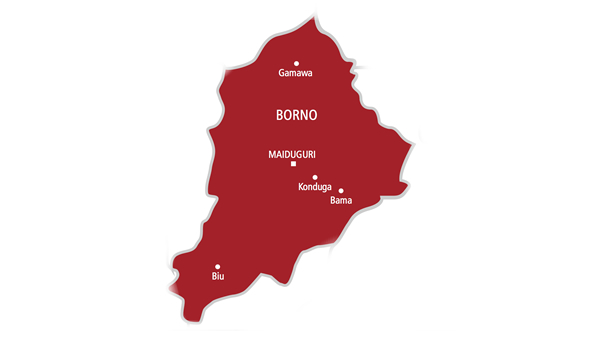
A total of 416 residents abducted from Ngoshe in Gwoza Local Government Area of Borno State have reportedly regained their freedom months after being taken captive in a violent attack attributed to suspected Boko Haram terrorists. The development marks one of the largest reported mass releases in the region in recent times.
By Bukar Goni | June 8, 2026
Maiduguri, Borno State – Hundreds of residents abducted during a violent raid in Ngoshe community, Gwoza Local Government Area of Borno State, have reportedly been released after months in captivity.
The victims, numbering 416 women and children, were allegedly freed by suspected members of the Boko Haram insurgent group, according to local sources and community representatives.
The release comes months after the initial abduction, which was part of a broader wave of attacks that have continued to destabilize parts of Nigeria’s North-East region despite sustained military operations.
CONFIRMATION FROM COMMUNITY REPRESENTATIVES
The development was confirmed by the President of the Borno South Youth Alliance, Borno South Youth Alliance, Samaila Kaigama, who disclosed that the victims were released following sustained engagement efforts.
Kaigama said the group had maintained communication channels and acted as an intermediary in discussions involving the abductors and affected communities.
According to him, the release represents the outcome of prolonged negotiations, community pressure and persistent advocacy for the return of the abducted residents.
He stated that:
“We are happy and grateful that through our efforts, our persistent cries, and long discussions, the results are now being seen.”
The group further confirmed that all 416 women and children taken from Ngoshe were part of those released.
BACKGROUND: THE NGOSHE ATTACK
The mass abduction occurred following a deadly assault on Ngoshe community in March, during which suspected insurgents attacked a military position in the area.
According to earlier reports, the attackers overran a security facility, destroyed operational vehicles, and caused casualties among security personnel and civilians.
The raid also resulted in the abduction of several residents, triggering widespread fear across surrounding communities in Gwoza Local Government Area.
The incident was part of a broader pattern of insurgent activity in border communities near the Cameroon frontier, where armed groups have historically exploited difficult terrain and limited security presence.
ROLE OF COMMUNITY-LEVEL INTERVENTION
While official security agencies have continued counter-insurgency operations in the region, local advocacy groups have increasingly played informal roles in communication and mediation during hostage situations.
The Borno South Youth Alliance indicated that its involvement was driven by concern for the safety of civilians and the urgency of securing their release.
However, security analysts caution that such engagements often occur in complex and sensitive environments, where formal state authority remains critical to long-term stabilization.
Government officials have not yet issued a comprehensive statement confirming the details of the release at the time of filing this report.
GOVERNMENT RESPONSE STILL AWAITED
Efforts to obtain official confirmation from the Borno State Government were unsuccessful as of press time.
The Commissioner for Information and Internal Security, Usman Tar, did not respond to multiple calls and messages seeking comment.
Authorities are expected to provide details regarding the condition of the released victims, screening procedures and rehabilitation plans.
Security experts say that mass releases of abducted persons typically require careful medical, psychological and security evaluation before reintegration into communities.
SECURITY CONTEXT: ONGOING INSURGENCY PRESSURE
The release comes against the backdrop of sustained insurgency activity in parts of Borno State and the wider North-East region.
Groups linked to Boko Haram and Islamic State West Africa Province (ISWAP) have continued to carry out attacks on rural communities, security formations and transportation routes despite years of military operations.
The Gwoza axis, in particular, has remained a strategic hotspot due to its proximity to mountainous terrain and cross-border routes that provide tactical advantages to armed groups.
Security analysts argue that while military pressure has degraded insurgent capabilities in some areas, sporadic large-scale attacks and abductions remain a persistent threat.
HUMANITARIAN AND REINTEGRATION CHALLENGES
With hundreds of abducted civilians reportedly returning home, attention is now shifting to humanitarian and reintegration concerns.
Experts warn that victims of prolonged captivity often require:
- Medical evaluation and trauma care
- Psychological rehabilitation
- Family tracing and reunification
- Community reintegration support
- Security monitoring in high-risk areas
Humanitarian organizations operating in the region have repeatedly called for increased funding and structured reintegration programs for victims of insurgency-related abductions.
The reported release of 416 abducted residents from Ngoshe marks a significant development in the long-running security crisis affecting Borno State.
While the return of the victims brings relief to affected families and communities, the circumstances surrounding the abduction and release underscore the continuing fragility of security in parts of Nigeria’s North-East.
As authorities work to verify details and assess the condition of the released individuals, the broader challenge remains unchanged: addressing the structural drivers of insurgency while strengthening protection for vulnerable rural communities.
The incident once again highlights the urgent need for coordinated security, humanitarian and governance responses to prevent further mass abductions in the region.






Leave a Reply