
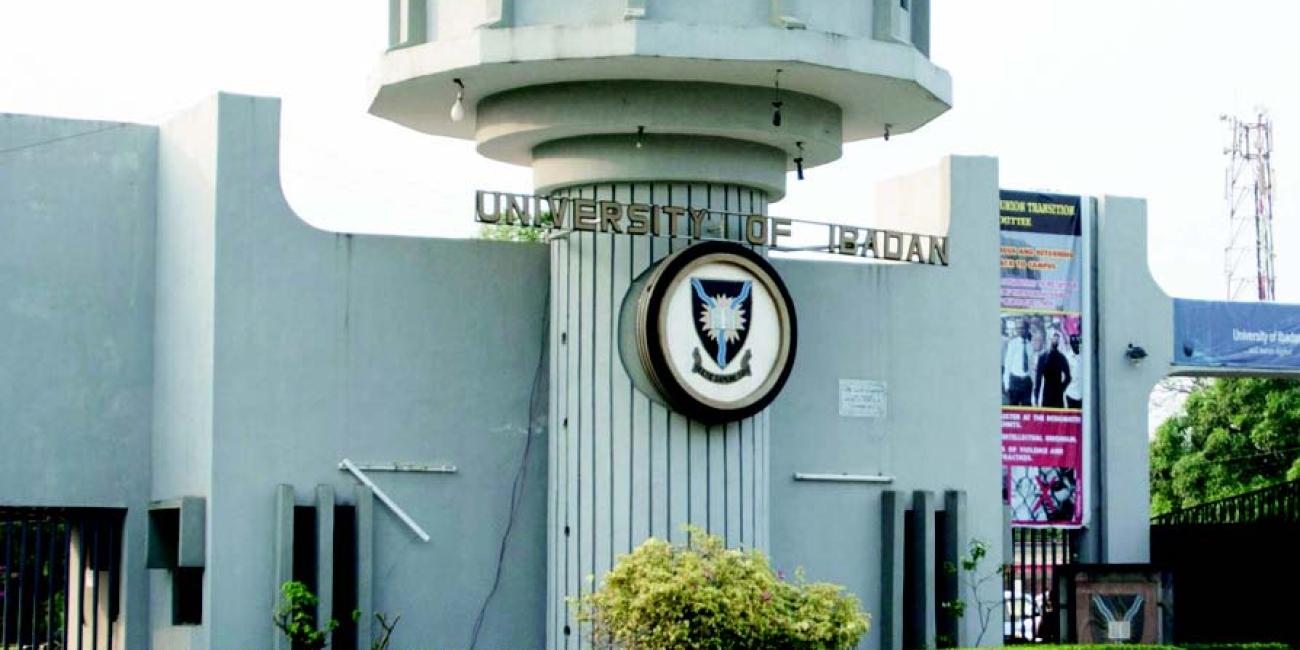
Appellate court gives UI 48 hours to negotiate with postgraduate student Kayode Bello after prolonged legal battle over blocked graduation portal.
By Aderonke Unigbe
Ibadan, Oyo State | June 30, 2026
Appeal Court Intervenes in Protracted Graduation Dispute
The Court of Appeal, Ibadan Division, has directed the management of the University of Ibadan (UI) to immediately enter into reconciliation talks with postgraduate student Kayode Bello, whose inability to graduate with his master’s degree has evolved into a prolonged legal dispute.
The appellate court ordered both parties to explore an out-of-court settlement within 48 hours, signalling the judiciary’s preference for an amicable resolution before proceeding with substantive hearings on the appeal.
The directive, contained in an official court communication dated June 29, 2026, comes months after the university challenged an earlier Federal High Court judgment that ordered it to restore Bello’s access to his academic portal and facilitate his graduation.
Court Orders Immediate Reconciliation
According to the official correspondence bearing Reference No. CA/IB/MBA/VOL.II/63, signed by the Deputy Chief Registrar of the Court of Appeal, Ibadan Division, Mrs. Maryam Belgore Ahmed, representatives of the University of Ibadan and Kayode Bello have been directed to meet before the Deputy Chief Registrar to work out modalities for resolving the dispute.
The court fixed Wednesday, July 1, 2026, as the deadline for the meeting, which is scheduled to hold at 2:00 p.m. at the Deputy Chief Registrar’s office within the Court of Appeal Complex, Adeoyo, Ibadan.
The directive followed proceedings in Appeal No. CA/IB/427/2025, heard on June 29, 2026, before a three-member panel of justices.
Appeal Panel Prefers Mediation to Prolonged Litigation
The appellate panel, led by Justice Abraham George, with Justice Binta F. Zubairu and Justice Fadawu Umaru as members, opted to suspend adversarial proceedings in favour of mediation.
Rather than immediately hearing the pending applications before it, the justices encouraged both parties to resolve the matter through dialogue under the supervision of the court.
The judges subsequently adjourned the appeal until July 3, 2026, when parties are expected to report the outcome of the reconciliation efforts.
The court indicated that should mediation fail, it would proceed with hearing the pending applications, subject to its schedule.
Origin of the Legal Battle
The dispute centres on allegations that the University of Ibadan blocked Bello’s access to his postgraduate student portal, effectively preventing him from completing the administrative processes required for graduation.
Bello challenged the university’s action before the Federal High Court in Ibadan.
The trial court reportedly ruled in his favour, directing the University of Ibadan and its officials to restore his access to the academic portal and enable him to graduate.
However, according to court documents, the university appealed the decision rather than implementing the judgment, thereby prolonging the dispute.
Questions Over Compliance With Court Judgments
The appeal has also renewed debate about compliance with judicial decisions by public institutions.
Legal observers note that while parties have the constitutional right to challenge judgments through the appellate process, issues sometimes arise where successful litigants allege that favourable lower court decisions remain unenforced during the pendency of appeals.
Whether the university sought or obtained a stay of execution of the Federal High Court judgment remains a legal issue likely to be clarified during subsequent proceedings if mediation fails.
Implications for Academic Administration
The case has attracted attention within Nigeria’s higher education sector because it touches on broader questions regarding university governance, students’ academic rights and institutional accountability.
Education policy analysts say universities possess statutory authority to regulate academic affairs, including graduation requirements.
However, they also note that administrative decisions remain subject to judicial review where affected individuals allege violations of due process, contractual obligations or constitutional rights.
The outcome of the dispute may therefore influence future litigation involving student records, graduation approvals and academic administration in Nigerian universities.
Court Pushes Alternative Dispute Resolution
The Court of Appeal’s decision reflects the judiciary’s increasing emphasis on Alternative Dispute Resolution (ADR) as a means of reducing litigation, lowering legal costs and preserving institutional relationships.
Rather than allowing the dispute to proceed through lengthy appellate hearings, the court has encouraged both parties to negotiate a mutually acceptable resolution.
Legal practitioners say mediation often offers a quicker and less adversarial path to resolving disputes involving educational institutions.
What Happens Next?
The reconciliation meeting is expected to bring together representatives of the University of Ibadan, Kayode Bello and officials of the Court of Appeal.
Should both parties reach an agreement, the court may adopt the settlement as its judgment, effectively bringing the litigation to an end.
If negotiations collapse, the appellate court is expected to resume formal consideration of the appeal and determine whether the Federal High Court’s earlier judgment should be upheld, varied or set aside.
The Court of Appeal’s intervention represents an important effort to resolve a dispute that has extended beyond academic administration into prolonged litigation.
While the University of Ibadan maintains its right to challenge the lower court’s decision, the appellate court has made clear its preference for dialogue before further judicial proceedings.
The outcome of the mediation may not only determine Kayode Bello’s graduation but could also shape future approaches to resolving disputes between Nigerian universities and their students without prolonged courtroom battles.










Leave a Reply