
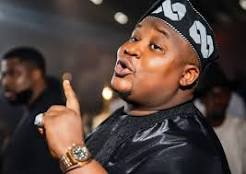
The defeat of socialite Pascal Okechukwu in the APC primaries has triggered fierce reactions across the South-East, exposing deep divisions over political loyalty, Igbo identity, “City Boy” politics, and the lingering wounds of the 2023 elections.
By Baron Eloagu
OWERRI, Imo State — May 17, 2026 The political defeat of Nigerian celebrity businessman and socialite Pascal Okechukwu, popularly known as Cubana Chief Priest, in the All Progressives Congress (APC) primary election for the Orsu/Orlu/Oru East Federal Constituency seat in Imo State has escalated into something far bigger than an ordinary electoral setback.
What began as a failed primary bid has now evolved into a volatile cultural, political, and emotional debate across the South-East, with supporters and critics fiercely divided over issues of betrayal, ethnic loyalty, political arrogance, and the consequences of publicly disparaging Igbo identity for political alignment.
The controversy intensified after reports emerged that the celebrity socialite allegedly secured only 14 votes out of over 2,800 accredited votes during the APC primary exercise — a result that quickly became ammunition for both mockery and political introspection within online Igbo political spaces.
But beyond the ridicule lies a deeper conversation about the fractures within South-East politics, the unresolved anger from the 2023 elections, and the growing backlash against prominent Igbo figures perceived to have aligned too closely with the ruling establishment at the expense of regional sentiment.
From Celebrity Influence to Political Humiliation
For months, Cubana Chief Priest had projected confidence about his political ambitions and growing proximity to the corridors of federal power.
The nightlife entrepreneur and influencer, known for his close association with political and entertainment elites, had publicly defended President Bola Ahmed Tinubu and repeatedly positioned himself as part of a new generation of politically connected Igbo figures capable of “connecting Ndigbo to the center.”
That political branding earned him admiration in some circles and resentment in others.
Critics accused him of aggressively promoting ruling party narratives while allegedly mocking political movements and sentiments dominant in the South-East during and after the 2023 elections.
His comments about the Nigerian Civil War and statements interpreted as dismissive of Igbo political grievances generated particularly intense backlash among sections of the region’s politically conscious youth.
Now, following his crushing primary defeat, many of those earlier controversies have resurfaced with renewed intensity.
“Disconnected From the Base”
Political commentators across social media platforms described the APC primary outcome as a symbolic rejection by grassroots political actors within his constituency.
Several critics argued that despite Cubana Chief Priest’s visible access to influential political networks, such elite proximity failed to translate into local political acceptance.
One commentator described the defeat as “a lesson in the limits of borrowed political influence.”
“A man who claimed he would connect Ndigbo to the center has now discovered he was disconnected from the base,” the analyst said.
Others referenced earlier statements in which the celebrity businessman reportedly criticized supporters of former Labour Party presidential candidate Peter Obi, claiming he would “teach Peter Obi political lessons.”
For critics, the irony of his own political rejection became impossible to ignore.
The Ghost of 2023 Still Lingers
Underlying the emotional reactions is the unresolved political trauma many South-East voters still carry from the 2023 presidential election.
The massive regional support for the Labour Party and Peter Obi created a strong emotional movement across the South-East, particularly among young voters who viewed the election as both political resistance and ethnic reawakening.
Many political observers say that movement fundamentally changed the region’s political psychology.
As a result, prominent Igbo figures perceived to have openly sided against the dominant South-East political mood became vulnerable to accusations of betrayal.
Analysts say Cubana Chief Priest’s vocal support for the ruling establishment placed him directly within that sensitive political fault line.
“The wounds of 2023 never truly healed,” one South-East political strategist noted. “Anybody perceived as insulting the emotional sentiments attached to that movement was always going to face resistance.”
“City Boys” Politics and the Backlash Against Elite Alignment
The controversy has also revived the increasingly controversial “City Boys” narrative — a label often used for political loyalists aligned with Tinubu’s political structure.
Within parts of the South-East, the phrase has gradually evolved into shorthand for politicians accused of prioritizing federal political patronage over regional political interests.
Critics argue that some Igbo elites aligned themselves with national power brokers while allegedly dismissing broader concerns about economic hardship, insecurity, and perceived political marginalization affecting the region.
Supporters of Cubana Chief Priest, however, insist the attacks against him have become excessive and dangerously personal.
They argue that losing a primary election does not amount to political extinction and warn against a culture where Ndigbo publicly celebrate the downfall of fellow Igbo aspirants.
“Globally, many successful politicians lost elections multiple times before eventually succeeding,” one APC chieftain from Imo State told A1NEWS International. “Political defeat is not the end of political relevance.”
Spirituality, Culture and the Narrative of Consequence
Perhaps the most controversial aspect of the backlash has been the emergence of deeply cultural and spiritual interpretations surrounding Cubana Chief Priest’s defeat.
Across online discussions, some individuals framed the outcome not merely as political failure, but as spiritual consequence for allegedly insulting Ala-Igbo and diminishing the dignity of the Igbo people.
These narratives drew references to other prominent Igbo personalities who, according to critics, allegedly experienced political decline, scandals, public disgrace, or personal controversies after falling out with broader regional sentiment.
Among names frequently mentioned in these debates are Rochas Okorocha, Ralph Uwazuruike, Yul Edochie, Kenneth Okonkwo and Anambra State Governor Charles Soludo.
While many analysts dismiss such interpretations as emotional political mythology, others argue they reveal the enduring influence of spirituality and communal consciousness within Igbo political culture.
In many traditional Igbo belief systems, public dishonor against one’s community is often viewed not merely as political disagreement, but as moral transgression capable of attracting social consequences.
The Dangerous Rise of Political Absolutism
However, political observers also warn that the current atmosphere risks deepening intolerance within the South-East political space.
Analysts caution against reducing complex political disagreements into narratives of curses, spiritual punishment, or ethnic purity tests.
They argue that democracy depends on ideological diversity, political competition, and freedom of alignment — even when such alignments prove unpopular.
Some fear that increasingly hostile reactions against dissenting political voices could discourage broader political participation and reinforce cycles of internal fragmentation already weakening South-East bargaining power nationally.
“There is a difference between political criticism and political excommunication,” one academic from the region stated. “When every disagreement becomes betrayal, democratic conversation becomes impossible.”
Beyond the Mockery: A Warning to Political Elites
Despite the heated emotions, the episode may ultimately serve as a broader warning to political elites attempting to navigate Nigeria’s volatile ethnic and political terrain.
In an era shaped by economic hardship, identity politics, social media outrage, and collapsing public trust, political influence can no longer rely solely on elite connections or celebrity popularity.
Grassroots legitimacy remains essential.
Observers say the APC primary outcome demonstrates that proximity to powerful networks in Abuja does not automatically guarantee acceptance among local political structures back home.
The defeat of Cubana Chief Priest in the APC primary election has become more than a constituency-level political story. It has evolved into a reflection of the emotional, ideological, and cultural battles currently shaping South-East politics ahead of 2027.
For some, the outcome represents poetic justice against perceived political arrogance and ethnic insensitivity.
For others, the public humiliation of a fellow Igbo aspirant reveals a dangerous culture of internal political cannibalism.
Yet beneath the outrage, mockery, and spiritual interpretations lies a larger unresolved question confronting the South-East: how can the region balance political pragmatism, ethnic solidarity, and democratic diversity without destroying itself from within?
As the countdown to 2027 quietly accelerates, that question may become even more consequential than the primary defeat itself.



Leave a Reply