
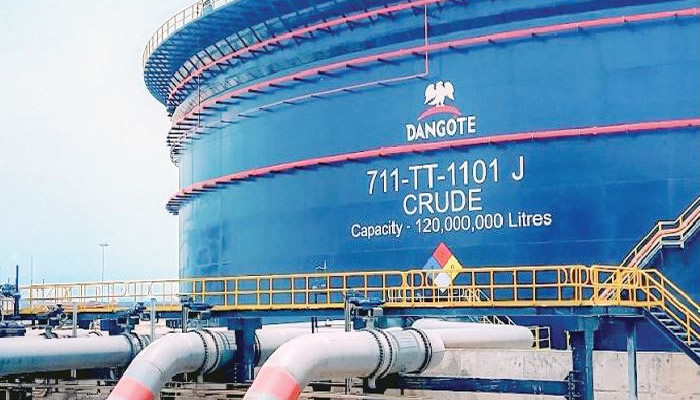
Latest ₦50 reduction signals continued push for affordable fuel as industry players assess likely impact on retail prices, inflation and Nigeria’s downstream petroleum market
By Anita Babalola – June 26, 2026
LAGOS, Nigeria — Dangote Petroleum Refinery has announced another reduction in the gantry price of Premium Motor Spirit (PMS), popularly known as petrol, lowering the ex-depot price from ₦1,175 to ₦1,125 per litre.
The latest adjustment represents a ₦50 per litre reduction and is expected to influence fuel pricing across Nigeria’s downstream petroleum market as marketers review their retail pricing structures.
The company said the price cut reflects its commitment to improving affordability for consumers, maintaining market stability and supporting the Federal Government’s broader energy security objectives.
Industry stakeholders are now watching closely to see how quickly independent marketers and retail outlets will adjust pump prices in response to the refinery’s latest pricing decision.
Refinery Attributes Reduction to Market Conditions
In a statement announcing the new price, Dangote Refinery explained that the reduction was driven by prevailing market conditions and operational efficiencies achieved within its refining processes.
According to the company, it remains committed to transferring cost savings to downstream partners and ultimately to Nigerian consumers.
The refinery said the adjustment demonstrates its determination to make petroleum products more accessible while contributing to a stable and competitive domestic fuel market.
It also reaffirmed its commitment to ensuring consistent product availability across the country.
Potential Relief for Motorists and Businesses
The reduction has generated optimism among motorists, transport operators and businesses that rely heavily on petrol-powered operations.
Should marketers fully reflect the lower ex-depot price at filling stations, consumers could experience some relief from transportation and logistics costs, which have remained elevated in recent months.
Economists note that lower fuel prices often have a ripple effect across the economy by reducing operating expenses for businesses, easing transportation costs and slowing inflationary pressures.
However, analysts caution that the extent of any reduction at retail outlets will depend on several factors, including distribution costs, storage expenses, existing inventories purchased at higher prices and marketers’ operating margins.
Competition Intensifies in the Downstream Sector
The latest price adjustment is also expected to reshape competition within Nigeria’s deregulated downstream petroleum industry.
Since commencing large-scale domestic fuel supply, Dangote Refinery has become a dominant player in the market, increasing competitive pressure on fuel importers and petroleum marketers.
Energy analysts believe sustained price reductions could encourage greater market efficiency while reducing Nigeria’s dependence on imported refined petroleum products.
The development aligns with broader efforts to deepen local refining capacity and improve energy self-sufficiency.
Boosting Domestic Energy Security
Dangote Refinery said its pricing strategy forms part of its long-term commitment to strengthening Nigeria’s energy security.
The company noted that increasing domestic refining capacity remains critical to guaranteeing reliable fuel supply, reducing foreign exchange demand for fuel imports and supporting economic growth.
By expanding local production and ensuring steady product availability, the refinery believes Nigeria can build a more resilient petroleum sector capable of responding to fluctuations in global oil markets.
Industry observers say enhanced domestic refining could also reduce supply disruptions that previously resulted from import bottlenecks and foreign exchange constraints.
Impact on Inflation and Economic Activity
The latest reduction comes at a time when businesses and households continue to grapple with rising operating costs.
Lower fuel prices could moderate inflationary pressures, particularly in transportation, agriculture, manufacturing and logistics, sectors that depend significantly on petroleum products.
Financial analysts suggest that sustained reductions in fuel costs could gradually improve consumer purchasing power and lower the cost of moving goods across the country.
Nevertheless, they caution that the overall economic impact will depend on whether reductions at the refinery are fully transmitted through the distribution chain to end users.
Industry Awaits Retail Price Adjustments
Attention has now shifted to petroleum marketers nationwide, who will determine whether and when to adjust pump prices in line with the revised ex-depot rate.
Consumers are expected to monitor filling stations closely in the coming days as the downstream market responds to the latest development.
Stakeholders have urged marketers to ensure that the benefits of the reduced gantry price are passed on to motorists in a transparent and timely manner.
Dangote Refinery’s decision to reduce the gantry price of petrol to ₦1,125 per litre marks another significant development in Nigeria’s evolving downstream petroleum sector.
While the move offers renewed hope for lower retail fuel prices, its full impact will depend on market response, distribution costs and pricing decisions by marketers.
As competition continues to reshape Nigeria’s fuel market, industry players and consumers alike will be watching to see whether the latest reduction translates into tangible relief at filling stations and contributes to broader economic stability.













Leave a Reply