
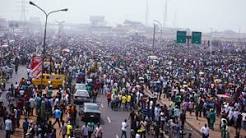
From unemployment and inflation to insecurity and collapsing infrastructure, growing public frustration is exposing the contradictions of political loyalty in Nigeria’s deepening socio-economic crisis.
By Baron Eloagu | ABUJA, Nigeria | May 19, 2026
As Nigeria battles worsening inflation, unemployment, insecurity, collapsing infrastructure, and rising public frustration, as well as campaigns fur 2027 general elections, a growing debate is emerging across social and political spaces: why do many citizens continue to defend and support political leaders they accuse of creating the very hardships destroying their lives?
Across markets, campuses, motor parks, social media platforms, and political gatherings, many Nigerians are increasingly questioning what they describe as a culture of “self-destructive political loyalty” — where victims of economic hardship continue to campaign for the same political structures they believe have failed them.
The conversation has intensified amid rising fuel prices, worsening poverty levels, prolonged strikes in public institutions, electricity failures, insecurity, and deepening distrust in governance.
For critics, the contradiction reflects a dangerous political culture driven by tribal sentiment, patronage systems, fear, misinformation, and survival politics.
For others, it reflects the complex realities of identity, emotional attachment, and economic dependence within Nigeria’s political ecosystem.
The Paradox of Political Loyalty Amid Hardship
Across Nigeria, millions continue to grapple with:
- Rising unemployment because political leaders has refused to fulfil their campaign promises
- High food inflation because farmers are internally displaced
- Insecurity as terrorists and kidnappings run parallel governments
- Collapsing purchasing power due to 2 digits inflection
- Poor electricity supply on high tariff
- Weak healthcare systems due to long time negligence
- Inadequate infrastructure
Yet political mobilization remains intense, with many citizens still openly defending political actors blamed for worsening living conditions.
This contradiction has become one of the most visible features of Nigeria’s contemporary political climate.
Observers point to examples where:
- Jobless youths aggressively campaign for recycled political elites
- Citizens affected by fuel price hikes defend subsidy policies
- Victims of poor infrastructure still support long-standing political establishments
- Communities plagued by insecurity remain divided along party or ethnic lines
Analysts say the phenomenon reflects deeper structural issues embedded in Nigeria’s political culture.
Poverty and Dependency Politics
Political sociologists argue that economic hardship itself often becomes a tool of political control.
In societies with widespread poverty and weak institutional protections, many citizens depend directly or indirectly on political patronage for survival.
This dependency system can include:
- Temporary cash handouts
- Food distribution
- Political appointments
- Local patronage networks
- Election-period incentives
- Ethnic or regional protection systems
As a result, voters may support political actors not necessarily because they believe governance is effective, but because they fear losing access to survival networks.
One political analyst told A1NEWS International:
“In highly vulnerable economies, politics becomes less about ideology and more about access to survival. my friend was jobless for eight years, but joined the ruling party as a party thug, and was later elevated to local council care-taker committee chairman and was able to buy cars and acquire properties in less than two years” he said.
Ethnicity, Identity, and Emotional Politics
Another major factor shaping political loyalty in Nigeria is identity politics.
For decades, elections in Nigeria have often been influenced by:
- Ethnic affiliation
- Religious identity
- Regional solidarity
- Historical grievances
- Cultural loyalty
Critics argue that competence, governance records, and policy outcomes are frequently overshadowed by emotional and tribal considerations, its our turn syndrome.
This has created situations where citizens continue supporting political figures primarily because:
- “He is our son”
- “It is our region’s turn”
- “We must protect our own”
- “Our group must remain connected to power”
Analysts warn that identity-driven politics can weaken accountability by making criticism appear like betrayal of communal interests.
The Cost of “Stomach Infrastructure”
The phrase “stomach infrastructure” has increasingly become symbolic of transactional politics in Nigeria.
The term refers to situations where immediate material benefits such as:
- Food
- Cash gifts
- Temporary favors
- Political patronage
become more influential in voter decisions than long-term governance outcomes.
Critics say this culture allows politicians to exploit widespread poverty while avoiding accountability for:
- Failed infrastructure
- Poor education systems
- Corruption
- Economic decline
- Insecurity
Some observers argue that desperation caused by economic hardship often pushes citizens to prioritize immediate survival over long-term national development.
Youth Frustration and Political Contradictions
Nigeria’s youth population remains among the hardest hit by economic instability.
High unemployment, weak job creation, inflation, and rising living costs continue to affect millions of young Nigerians.
Yet political polarization among youths has intensified rather than diminished.
Analysts say many young people increasingly view politics not only as governance, but as:
- Identity warfare
- Online tribalism
- Emotional allegiance
- Social belonging
- Economic opportunity
The result is a deeply fragmented political environment where policy debates are often replaced by personal attacks, propaganda wars, and blind loyalty.
Critics warn that this weakens democratic accountability and reduces pressure for meaningful reforms.
Insecurity and Public Anger
The persistence of:
- Terrorism
- Banditry
- Kidnappings
- Communal violence
- Armed attacks
has also fueled public frustration.
Many Nigerians living in conflict-prone regions continue questioning why insecurity remains widespread despite repeated government promises and large security budgets.
However, even in heavily affected communities, political divisions remain sharp.
Security analysts say emotional political loyalty often overrides objective assessment of governance failures.
This has created a situation where citizens directly affected by insecurity may still defend political establishments linked to security failures.
Infrastructure Collapse and Governance Questions
Poor infrastructure remains one of the most visible signs of governance failure confronting ordinary Nigerians.
Across many parts of the country, citizens continue facing:
- Bad roads
- Erratic electricity supply
- Poor water systems
- Weak healthcare infrastructure
- Failing public schools
Yet elections often remain dominated by ethnic calculations and political propaganda rather than performance evaluation.
Development experts warn that until governance outcomes become central to political decision-making, public accountability may remain weak.
Fuel Prices and Economic Pressure
Rising fuel prices have become one of the defining economic realities affecting Nigerians.
With petrol prices increasing dramatically in recent years, transportation costs, food prices, and general living expenses have escalated nationwide.
Businesses, households, and small enterprises continue to struggle under mounting operational costs.
Yet political debates around fuel subsidy removal and energy sector reforms remain highly polarized.
Critics argue that public frustration is increasingly colliding with entrenched political loyalty structures.
The Psychology of Political Survival
Psychologists and governance experts say long-term exposure to hardship can sometimes normalize dysfunction within societies.
Citizens repeatedly exposed to:
- Corruption
- Broken promises
- Economic instability
- Institutional failure
may gradually lower expectations of governance.
Over time, political survival replaces democratic aspiration.
This creates an environment where:
- Citizens defend poor leadership out of emotional attachment
- Accountability becomes secondary
- Cynicism replaces reform expectations
- Short-term benefits outweigh structural change
Calls for Civic Reawakening
Civil society groups and governance advocates are increasingly calling for greater civic consciousness and issue-based politics.
They argue that sustainable national development requires voters to prioritize:
- Competence
- Capacity
- Integrity
- Policy vision
- Track record
- Accountability
rather than:
- Ethnic sentiment
- Religious loyalty
- Political handouts
- Personality cults
Analysts say democratic progress depends heavily on informed citizen participation capable of separating emotional loyalty from governance performance.
Nigeria’s deepening socio-economic crisis has exposed painful contradictions within the country’s political culture.
At the center of the debate lies a troubling question: why do many citizens continue defending systems and leaders they simultaneously accuse of worsening their suffering?
The answer appears rooted in a complex mixture of poverty, identity politics, patronage networks, fear, emotional attachment, and institutional weakness.
As hardship continues to rise, the growing public conversation reflects not only frustration with political leadership, but also a broader national struggle over accountability, civic consciousness, and the future direction of Nigeria’s democracy.
Ultimately, the challenge facing Nigeria may no longer be simply about changing leaders — but changing the political culture that repeatedly empowers failure while punishing reform.



Leave a Reply