
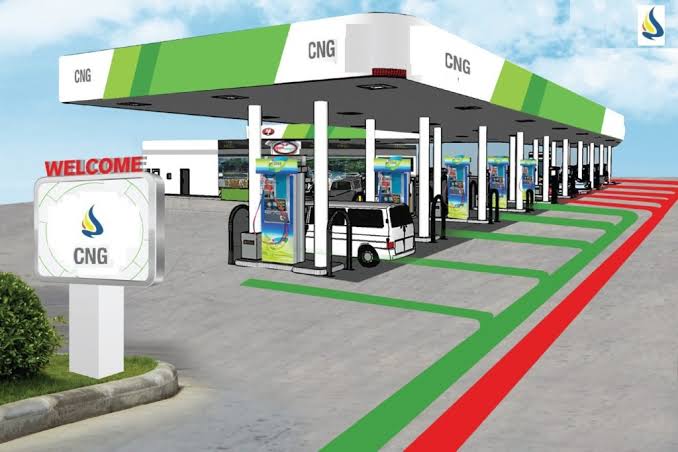
Industry leaders warn that weak regulation, uncertified vehicle conversion centres and inadequate testing facilities could threaten Nigeria’s clean mobility agenda as government agencies move to strengthen safety standards.
By John Ishaku
LAGOS, Nigeria — August 5, 2026
Key stakeholders in Nigeria’s automotive and transport sectors have expressed concern over growing safety risks that could undermine the country’s transition to Compressed Natural Gas (CNG) and Electric Vehicles (EVs), warning that inadequate regulation, uncertified conversion centres and weak technical infrastructure pose significant threats to the Federal Government’s clean mobility agenda.
The stakeholders urged authorities to strengthen standards enforcement, improve public awareness and invest in modern testing facilities to ensure that the shift to cleaner transportation delivers both environmental and public safety benefits.
The concerns were raised during the Third Nigeria Auto Industry Summit, organised by the Nigeria Auto Journalists Association (NAJA) in collaboration with the National Automotive Design and Development Council (NADDC) in Lagos.
The summit, themed “Nigeria’s Clean Mobility Future: The EV and CNG Journey Under the President Bola Tinubu Administration,” brought together regulators, industry experts, policymakers and automotive professionals to assess the opportunities and challenges associated with Nigeria’s transition to alternative fuel vehicles.
SON Warns Against Uncertified Products and Poor Installations
The Standards Organisation of Nigeria (SON) cautioned that public confidence in CNG and electric vehicles could be severely damaged if uncertified products continue to enter the Nigerian market.
Delivering a presentation at the summit, the Director-General of SON, Dr. Ifeanyi Okeke, represented by the agency’s Deputy Director of Research and Statistics, Olalekan Omoniyi, said CNG and EV technologies are globally recognised as safe when manufactured, installed and maintained according to approved national and international standards.
However, he warned that substandard components and poorly executed installations significantly increase safety risks.
“CNG and EV technologies are inherently safe when they are designed, manufactured, installed and maintained in accordance with recognised national and international standards,” he said.
“They become dangerous when uncertified products and poor installation practices are allowed into the market. The integrity of the entire system depends on compliance with established standards.”
According to SON, eliminating fake products and enforcing quality standards remain essential to sustaining Nigeria’s transition to cleaner transportation.
Explosion Highlights Regulatory Challenges
Omoniyi cited the explosion of a CNG cylinder installed in an Audi 80 at a filling station along the Benin-Auchi Expressway in Edo State as an example of the dangers posed by non-compliance with approved standards.
Investigations into the incident reportedly traced the explosion to the installation of an uncertified cylinder and failure to comply with the Nigerian Gas Vehicle Installation Standard (NNG 1214:2024).
He identified the growing number of informal vehicle conversion workshops and the influx of grey-market CNG cylinders and conversion kits as major regulatory challenges confronting the industry.
According to him, enforcement agencies are struggling to keep pace with the rapid expansion of Nigeria’s CNG market.
Electric Vehicle Standards Still Developing
Beyond CNG, SON acknowledged that Nigeria’s regulatory framework for electric vehicles remains a work in progress.
Critical areas requiring further development include:
- Battery safety standards.
- Charging infrastructure interoperability.
- Battery recycling systems.
- Second-life battery applications.
- Certification and testing procedures.
The organisation also noted that evaluating high-pressure gas cylinders and high-voltage EV batteries requires advanced laboratories and highly trained technical personnel.
Officials stressed that continued investment in technical infrastructure will be essential as electric vehicle adoption grows.
Government Seeks to Build Public Confidence
Despite the concerns, SON reassured Nigerians that the government’s clean energy transportation programme remains fundamentally safe provided certified equipment and approved installation procedures are used.
The agency encouraged motorists to patronise only accredited installers and avoid purchasing uncertified conversion kits or components.
According to SON, maintaining high safety standards is critical to attracting investment and encouraging wider public acceptance of alternative fuel technologies.
FRSC Developing New Operating Guidelines
The Federal Road Safety Corps (FRSC) announced that it is developing comprehensive Standard Operating Procedures (SOPs) for the deployment, regulation and operation of electric and CNG-powered vehicles.
The Corps Marshal, Shehu Mohammed, said Nigeria’s road safety framework must evolve alongside rapidly changing automotive technologies.
“As cleaner mobility gains momentum, regulatory institutions must evolve alongside emerging technologies,” he said.
He explained that the FRSC is working with government agencies, manufacturers and industry stakeholders to ensure that new technologies improve not only environmental sustainability but also road safety.
According to him, the Corps aims to develop operational guidelines that align Nigeria with international best practices in clean transportation.
Road Safety Remains Central to Clean Mobility
The FRSC maintained that reducing carbon emissions should not come at the expense of public safety.
The agency believes effective regulation, stronger vehicle inspection procedures and continuous stakeholder engagement will help build public confidence in electric and gas-powered vehicles.
Officials also disclosed that the Corps is strengthening collaborations with industry regulators to ensure safety standards evolve alongside technological innovation.
Industry Urges Nigeria Not to Fall Behind
Earlier, Chairman of the Nigeria Auto Journalists Association, Theodore Opara, described the summit as an important platform for shaping the future of Nigeria’s automotive industry.
He observed that countries across the world are accelerating the adoption of cleaner transportation technologies to reduce greenhouse gas emissions, improve energy efficiency and stimulate economic growth.
According to him, Nigeria risks losing competitiveness if it fails to keep pace with global developments.
“This summit is more than an industry conference,” Opara said.
“It is a strategic platform to shape the future of Nigeria’s automotive industry.”
He urged government, regulators and private investors to work collaboratively in building a safe, efficient and globally competitive clean mobility ecosystem.
Nigeria’s Clean Mobility Drive
Nigeria has intensified efforts to promote alternative energy transportation following the removal of petrol subsidies and the increasing cost of conventional fuels.
The Federal Government has introduced several initiatives encouraging motorists and commercial transport operators to adopt CNG-powered vehicles, while investments in electric mobility are gradually increasing.
Industry experts say the long-term success of the programme will depend on:
- Strong regulatory enforcement.
- Availability of certified conversion centres.
- Public education.
- Reliable charging and refuelling infrastructure.
- Investment in technical capacity.
- Continuous safety monitoring.
Without these safeguards, they warn, isolated safety incidents could undermine public trust and slow the country’s transition to cleaner transportation.
As Nigeria accelerates its transition toward cleaner and more sustainable transportation, stakeholders insist that safety must remain the foundation of every policy, regulation and technological deployment.
While CNG and electric vehicles offer significant environmental and economic benefits, experts argue that weak enforcement, uncertified products and inadequate technical infrastructure could jeopardise public confidence if left unaddressed.
With the Standards Organisation of Nigeria tightening quality controls and the Federal Road Safety Corps developing new operational guidelines, attention is now turning to implementation.
Industry observers say the success of Nigeria’s clean mobility agenda will depend not only on expanding access to CNG and electric vehicles but also on ensuring that every vehicle, component and installation meets internationally accepted safety standards.












Leave a Reply