
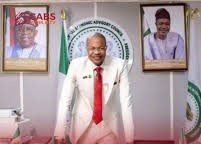
House of Representatives opens public investigation into alleged insertion of an unestablished Presidential Foreign Investment Promotion Council into the 2026 budget, while concerns grow over the exclusion of key figures linked to the controversy.
By Umar Baba
ABUJA, Nigeria — Nigeria’s House of Representatives on Monday begins one of the most closely watched legislative investigations into the 2026 Appropriation Act, as lawmakers seek to unravel how ₦1.32 billion was reportedly allocated to a government agency that had not been legally established.
The inquiry follows weeks of controversy surrounding the Presidential Foreign Investment Promotion Council (PFIPC)—an entity that government officials have maintained was never formally created under Nigerian law but nevertheless appeared in the approved federal budget.
The investigation is expected to examine whether the controversial allocation resulted from administrative error, institutional failure, deliberate budget manipulation or possible criminal conduct.
However, even before proceedings begin, the credibility of the probe has come under scrutiny after observers questioned the omission of two of the central figures associated with the controversy from the committee’s initial witness list.
House Activates Constitutional Investigative Powers
Speaker of the House of Representatives Rt. Hon. Tajudeen Abbas is expected to inaugurate the ad hoc investigative committee at the National Assembly Complex in Abuja.
The panel derives its authority from Sections 88 and 89 of the 1999 Constitution (as amended), which empower the National Assembly to investigate the conduct of public institutions and the administration of public funds.
The committee is chaired by Hon. Yusuf Gagdi, representing Kanke/Kanam/Pankshin Federal Constituency of Plateau State.
Lawmakers say the exercise is intended to establish accountability, protect public resources and strengthen confidence in Nigeria’s budgeting process.
The ₦1.32 Billion Question
At the centre of the investigation is a straightforward but significant question:
How did an agency that allegedly had no legal existence receive budgetary allocation in the 2026 Appropriation Act?
According to documents before lawmakers, approximately ₦1.32 billion was appropriated for the Presidential Foreign Investment Promotion Council.
The allocation has generated widespread concern among transparency advocates, budget analysts and civil society organisations, who argue that every entity receiving public funds should have clear legal status and statutory authority.
The committee is expected to trace the allocation from the executive budget proposal through legislative review to its eventual inclusion in the final Appropriation Act.
Investigators will seek to determine:
- At what stage the allocation entered the budget.
- Which officials approved or processed the provision.
- Whether existing financial regulations were followed.
- Whether weaknesses exist within Nigeria’s budget preparation process.
Arrest Deepens the Controversy
Public attention intensified after security agencies arrested Adeyemi Adeniyi, who allegedly presented himself as the Director-General of the Presidential Foreign Investment Promotion Council.
Authorities accuse him of falsely representing the agency and allegedly facilitating its appearance within the federal budget.
The matter became more controversial after reports emerged that Adeniyi allegedly claimed he paid ₦100 million through intermediaries to facilitate the establishment of the council.
Those allegations have been categorically denied by both the Presidency and the Office of the President’s Chief of Staff, Femi Gbajabiamila.
As of the time of filing this report, no court has established the truth or otherwise of the allegations, and investigations remain ongoing.
Key Government Institutions Summoned
The committee has invited senior officials from across government to assist its investigation.
Among those expected to appear are:
- Minister of Budget and Economic Planning
- Minister of Finance
- Minister of Industry, Trade and Investment
- Attorney-General of the Federation
- Minister of Foreign Affairs
- Governor of the Central Bank of Nigeria
- Chairman of the Economic and Financial Crimes Commission (EFCC)
- Chairman of the Independent Corrupt Practices and Other Related Offences Commission (ICPC)
- Auditor-General for the Federation
- Chairman of the Fiscal Responsibility Commission
- Secretary to the Government of the Federation
- Head of the Civil Service of the Federation
- Nigerian Investment Promotion Commission (NIPC)
- Director-General of the Department of State Services (DSS)
- Inspector-General of Police
The committee has also invited civil society organisations, professional associations, development partners, budget experts and members of the public to submit memoranda.
Why Was the Chief of Staff Not Invited?
One of the most contentious aspects of the investigation concerns the absence of the President’s Chief of Staff and Adeyemi Adeniyi from the committee’s initial invitation list.
The omission has generated criticism from both within and outside the National Assembly.
A member of the committee, speaking anonymously because he was not authorised to comment publicly, reportedly questioned the decision, arguing that individuals directly linked to public allegations should ordinarily have an opportunity to present their own accounts before investigators.
Political analyst Jackson Ojo similarly argued that inviting individuals mentioned in public allegations could strengthen public confidence in the transparency of the inquiry.
However, it remains unclear whether additional witnesses may be invited as the investigation progresses.
Parliamentary investigations frequently expand their witness lists after reviewing documentary evidence and initial testimonies.
Budget Integrity Under Fresh Scrutiny
The controversy has renewed broader debate over Nigeria’s budget-making process.
Public finance experts have repeatedly warned about:
- Budget insertions lacking adequate justification.
- Weak legislative-executive coordination.
- Limited transparency during appropriation.
- Poor post-budget oversight.
- Weak institutional accountability.
Several anti-corruption organisations have called for comprehensive digitisation of budget preparation and real-time public disclosure of all amendments introduced during legislative consideration.
Governance analysts argue that improving transparency could significantly reduce opportunities for irregular allocations.
Civil Society Demands Institutional Reforms
Transparency advocates say the investigation should extend beyond identifying individual responsibility.
Instead, they argue, lawmakers should examine systemic weaknesses that make questionable budget provisions possible.
Among reforms frequently proposed are:
- Stronger verification mechanisms before budget approval.
- Independent auditing of new government agencies.
- Mandatory publication of all legislative budget amendments.
- Enhanced collaboration between the Budget Office, Ministry of Finance and National Assembly.
- Criminal sanctions for fraudulent insertion of non-existent institutions into public budgets.
What the Committee Must Establish
The investigation is expected to answer several critical questions:
- Did the Presidential Foreign Investment Promotion Council legally exist when funds were appropriated?
- If not, how was public money allocated to it?
- Were due process requirements followed?
- Did any public officials abuse their office?
- Were procurement or financial regulations violated?
- Are existing safeguards sufficient to prevent future occurrences?
The findings could have significant implications for public financial management and future appropriation processes.
Why This Investigation Matters
Budget integrity lies at the heart of democratic accountability.
Every appropriation represents taxpayers’ money intended for constitutionally recognised public purposes.
Should lawmakers establish that allocations were made to entities without legal existence, analysts say the findings could trigger broader reforms in Nigeria’s budgeting architecture and strengthen calls for greater transparency in public finance.
Conversely, if the investigation finds administrative explanations consistent with existing procedures, it may help clarify the circumstances that produced the controversy.
Either outcome is expected to influence public confidence in government spending oversight.
As the House of Representatives begins its investigation into the controversial ₦1.32 billion allocation to the Presidential Foreign Investment Promotion Council, expectations are high that the inquiry will provide clear answers about one of the most debated issues arising from the 2026 federal budget.
The probe represents more than an examination of a single budget line—it is a test of Nigeria’s commitment to transparency, fiscal accountability and legislative oversight.
Whether the investigation ultimately identifies procedural failures, institutional weaknesses or individual wrongdoing, its outcome could shape future reforms aimed at protecting public funds and strengthening confidence in Nigeria’s budgetary process.



Leave a Reply