

Government Moves to Stabilise Supply Amid Rising Household Energy Costs and Mounting Public Concern
By Angela Udende / June 15, 2026
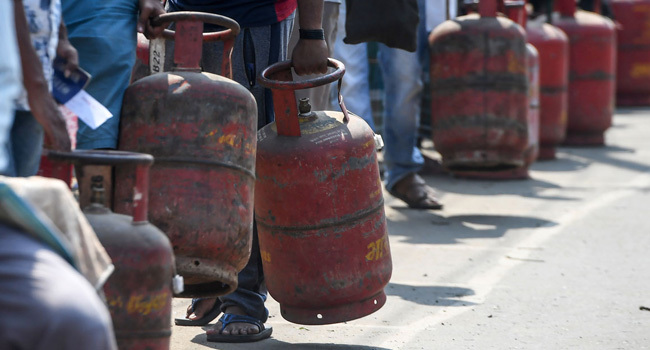
ABUJA, NIGERIA — Facing growing public concern over the escalating cost of cooking gas across Nigeria, the Federal Government has directed key industry stakeholders to increase the importation of Liquefied Petroleum Gas (LPG) in a bid to address supply shortfalls, stabilise prices, and guarantee energy security for millions of households.
The intervention comes as fresh data from the National Bureau of Statistics (NBS) reveal significant increases in cooking gas prices nationwide, raising concerns about affordability for households already grappling with inflation, high transportation costs, and declining purchasing power.
Minister of State for Petroleum Resources (Gas), Ekperikpe Ekpo, announced that the Nigerian Midstream and Downstream Petroleum Regulatory Authority (NMDPRA) has been instructed to intensify engagement with gas producers, marketers, importers, and other industry players to boost supply and ensure market stability.
The government’s move underscores the growing pressure on policymakers to cushion Nigerians from rising energy costs while sustaining the country’s transition from traditional fuels such as firewood and kerosene to cleaner cooking alternatives.
Rising Gas Prices Trigger Government Intervention
The latest government action follows widespread complaints from consumers over the sharp increase in the retail cost of cooking gas in recent months.
According to the Minister, the Federal Government is fully aware of the hardship being experienced by consumers and remains committed to ensuring that gas remains accessible and affordable.
“Marketers have committed to increasing import volumes to complement domestic production,” the minister disclosed.
He further revealed that the commencement of LPG deliveries from the newly completed Seplat gas facility scheduled for July is expected to substantially improve national supply and ease pressure on the market.
Industry analysts believe the additional volumes could provide temporary relief, particularly in urban centres where LPG remains the dominant cooking fuel for middle-income households.
What’s Driving the Price Surge?
While many consumers have blamed government policies for the rising cost of cooking gas, authorities insist that broader market forces are largely responsible.
According to Ekpo, several factors have combined to push prices upward, including:
- Foreign exchange volatility
- Rising logistics and transportation costs
- Inadequate storage and distribution infrastructure
- Global fluctuations in LPG prices
- Increased operational costs within the energy sector
The minister argued that these challenges reflect prevailing economic realities rather than policy failures.
Energy experts note that Nigeria’s continued dependence on imported LPG components leaves the domestic market vulnerable to exchange rate movements and global commodity price shocks.
Despite possessing one of Africa’s largest gas reserves, Nigeria still faces infrastructure gaps that limit its ability to fully meet domestic demand from local production.
Government Prioritises Local Consumption
Amid concerns that domestic shortages may be linked to exports, the government has firmly denied claims that locally designated LPG is being diverted to foreign markets.
Ekpo stated that regulatory safeguards remain in place to ensure that gas earmarked for Nigerian consumers remains within the country.
He emphasized that a standing directive requiring all LPG produced in Nigeria to prioritise local consumption has already yielded positive results.
According to the minister, the policy has:
- Increased domestic availability
- Reduced dependence on imports
- Improved supply resilience
- Strengthened market stability
“No producer is exporting LPG volumes designated for the domestic market,” he assured.
The clarification seeks to address concerns among consumers and civil society groups who have questioned whether Nigeria’s vast gas resources are adequately serving local needs.
NBS Data Paints a Troubling Picture
Recent statistics released by the National Bureau of Statistics highlight the scale of the challenge facing consumers.
The NBS Cooking Gas Price Watch for April 2026 shows that the average retail price of a 5kg cylinder refill increased from ₦7,655.73 in March to ₦8,706.93 in April.
This represents a month-on-month increase of 13.73 percent.
On a year-on-year basis, the price rose by 10.42 percent compared to the ₦7,855.60 recorded in April 2025.
The situation is even more pronounced for larger household cylinders.
The average cost of refilling a 12.5kg cylinder rose from ₦19,652.83 in March to ₦22,382.20 in April 2026, representing a 13.89 percent monthly increase.
Compared to April 2025, when the same refill cost ₦20,268.06, the year-on-year increase stands at 10.43 percent.
The figures indicate that millions of Nigerians are spending significantly more on household energy despite government efforts to promote gas adoption nationwide.
Implications for Nigeria’s Clean Energy Transition
The surge in cooking gas prices poses a significant challenge to Nigeria’s clean energy agenda.
For years, the government has encouraged households to abandon firewood, charcoal, and kerosene in favour of LPG as part of efforts to reduce environmental degradation, indoor air pollution, and health risks.
However, energy economists warn that sustained price increases could reverse these gains.
Many low-income households may be forced to return to traditional fuels if LPG becomes unaffordable, potentially undermining years of investment in clean cooking initiatives.
Environmental advocates also caution that a return to firewood consumption could accelerate deforestation and worsen public health outcomes, particularly among women and children who are disproportionately exposed to smoke from traditional cooking methods.
Industry Awaits Supply Boost from Seplat Facility
Stakeholders are closely watching the anticipated commencement of deliveries from Seplat’s new gas facility, which government officials believe could significantly improve supply dynamics.
If production targets are achieved, the facility could reduce supply bottlenecks and help moderate prices over time.
However, analysts caution that increased supply alone may not fully address affordability challenges unless broader macroeconomic pressures, particularly foreign exchange instability and transportation costs, are also addressed.
The Federal Government’s directive to increase LPG imports reflects growing concern over rising cooking gas prices and their impact on Nigerian households. While authorities insist that domestic supply remains secure and that new production volumes are on the horizon, consumers continue to face mounting energy costs driven by economic and structural challenges. As government, regulators, and industry players work to stabilise the market, the effectiveness of these interventions will be measured not only by supply availability but by whether ordinary Nigerians can once again afford the cleaner cooking fuel the nation has spent years promoting.













Leave a Reply