

Deadly attack in Kaduna reignites debate over amnesty programmes, security strategy, and the growing threat posed by allegedly rehabilitated bandits returning to violence.
By Zakari Musa / June 9, 2026
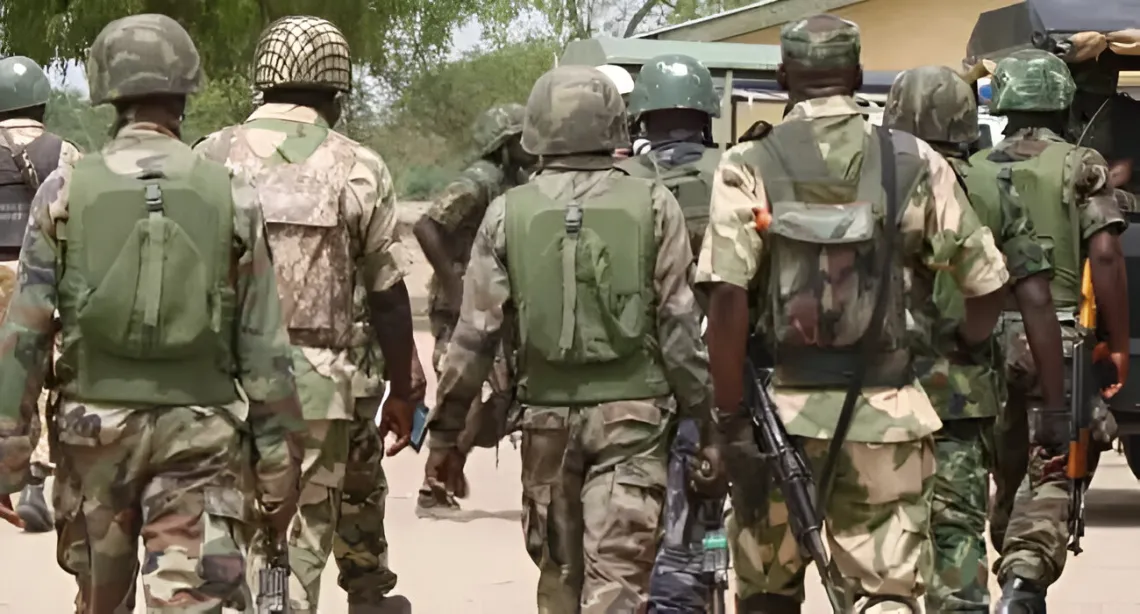
KADUNA, NIGERIA —Fresh concerns have emerged over Nigeria’s controversial policy of rehabilitating and reintegrating former bandits and insurgents following reports that eight soldiers were killed in an ambush allegedly carried out by a group described as “repentant bandits” in Kaduna State.
The deadly attack, which reportedly occurred on Monday during a military operation in the state, has left families grieving while awaiting official communication from military authorities.
The incident has also reignited public debate over the effectiveness of non-kinetic approaches to insecurity, particularly dialogue, amnesty, and rehabilitation programmes designed to encourage armed groups to abandon violence.
DEADLY ENCOUNTER ALONG KADUNA RIVER AXIS
Sources familiar with the incident said the soldiers came under attack while responding to intelligence indicating that armed bandits were moving toward vulnerable communities located along the Kaduna River corridor between Chikun and Igabi Local Government Areas.
According to a relative of one of the slain soldiers, preliminary reports indicate that the troops encountered the armed group during an operation aimed at preventing an anticipated attack on rural settlements.
The encounter reportedly escalated into a fierce gun battle, resulting in the death of one military officer and seven soldiers.
“Yes, I can confirm the killing of eight soldiers, including my brother, by the so-called repentant bandits in Kaduna State,” a family source said.
The source added that relatives of the deceased personnel were still mourning and had not yet received formal notification from military authorities at the time of reporting.
FAMILIES LEFT IN LIMBO
The absence of official communication has compounded the pain of affected families, who are reportedly relying on information from colleagues and unofficial military channels.
Several relatives expressed concern about delays in official confirmation, a situation that often leaves families struggling to verify reports concerning loved ones deployed to volatile regions.
Military authorities had not issued a public statement on the reported casualties as of press time.
SECOND ATTACK IN TWO WEEKS?
The source further alleged that the same armed group had attacked military personnel approximately one week earlier at another location within Kaduna State.
According to the account, one soldier was killed during the previous ambush, while a senior military commander sustained severe injuries and is currently receiving medical treatment.
Although these claims could not be independently verified, security analysts note that repeated attacks against military formations indicate that armed groups continue to possess significant operational capabilities despite ongoing counterinsurgency efforts.
RENEWED SCRUTINY OF ‘REPENTANT BANDITS’ PROGRAMME
The latest killings have intensified scrutiny of government-backed initiatives aimed at persuading bandits and insurgents to surrender their weapons and reintegrate into society.
Over the years, both federal and state governments have promoted non-kinetic strategies that include dialogue, disarmament, deradicalisation, rehabilitation, and economic empowerment as alternatives to purely military solutions.
Supporters of the approach argue that military force alone cannot resolve complex security challenges rooted in poverty, weak governance, and social exclusion.
However, critics contend that many so-called repentant fighters exploit amnesty programmes as temporary safe havens before returning to criminal activities.
The Kaduna incident is likely to strengthen calls for a comprehensive review of such policies.
OPERATION SAFE CORRIDOR UNDER PUBLIC SPOTLIGHT
At the centre of the debate is the Federal Government’s Operation Safe Corridor, a programme established to rehabilitate and reintegrate former insurgents and fighters who voluntarily surrender.
While authorities maintain that the initiative has helped reduce violence in certain areas, public confidence remains divided.
Many Nigerians question whether adequate mechanisms exist to monitor rehabilitated individuals after their release.
Security experts have repeatedly warned that without robust verification, intelligence monitoring, and community oversight, former combatants could exploit the programme to gather intelligence or reconnect with criminal networks.
VICTIMS DEMAND ACCOUNTABILITY
Civil society groups, victims’ associations, and community leaders have consistently argued that reconciliation efforts should not come at the expense of justice.
Families displaced by years of bandit attacks have often expressed frustration over what they perceive as preferential treatment for former fighters, some of whom reportedly receive vocational training, financial support, and reintegration assistance.
Critics argue that thousands of victims who lost relatives, homes, farms, and livelihoods have received little compensation or psychological support.
The latest attack is expected to further fuel demands for stronger accountability measures and criminal prosecution of high-profile bandit leaders.
CONCERNS OVER SECURITY REPORTING
The incident has also revived discussions about transparency in reporting insecurity across parts of northern Nigeria.
Observers have raised concerns about what they describe as reduced public reporting of banditry incidents despite continued attacks in several communities.
Media advocates argue that transparent reporting remains essential for public accountability, informed policymaking, and community awareness.
They warn that limiting information about security threats could create gaps in public understanding of the scale and nature of ongoing violence.
SECURITY EXPERTS CALL FOR POLICY REVIEW
Analysts say the Kaduna ambush underscores the need for a balanced security framework that combines military pressure with carefully monitored rehabilitation programmes.
According to security experts, any reintegration strategy must be supported by credible intelligence gathering, community engagement, victim-centred justice mechanisms, and continuous monitoring of former combatants.
They warn that failure to address public concerns could undermine confidence in government efforts to restore peace in conflict-prone regions.
The reported killing of eight soldiers in Kaduna has once again exposed the complexities of Nigeria’s fight against banditry and insurgency.
Beyond the immediate tragedy, the incident has reopened difficult questions about the effectiveness of rehabilitation programmes for former fighters, the protection of military personnel on active duty, and the balance between reconciliation and justice.
As families mourn their loved ones and await official confirmation, many Nigerians are demanding answers about whether current security strategies are sufficient to confront an evolving threat landscape.
For now, the Kaduna ambush stands as another painful reminder that despite years of military operations and peace initiatives, insecurity remains one of Nigeria’s most pressing national challenges.











Leave a Reply