

At 4th National Dialogue on Decent Job Creation, Thelema Lion Foundation calls for employment-centred migration policy, stronger MSMEs, practical skills and coordinated government-private sector action to give young Nigerians a viable future at home
By A1NEWS International
ABUJA, NIGERIA — August 13, 2026:
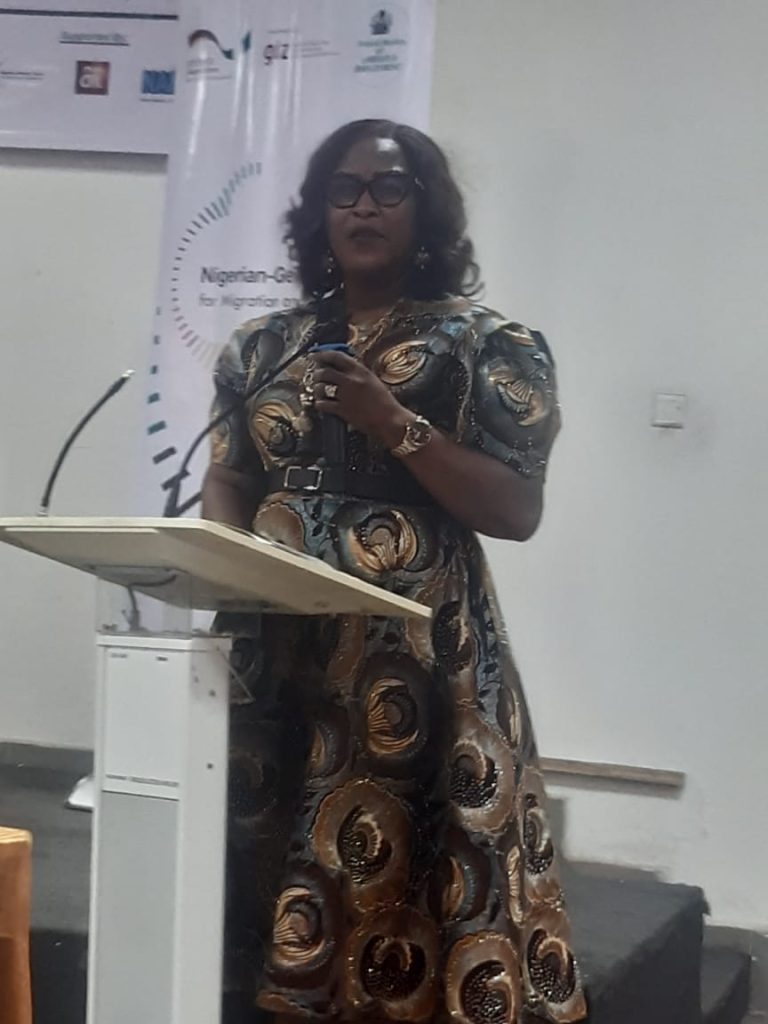
Nigeria must urgently create decent and sustainable employment opportunities capable of making staying, working and building a future in the country a realistic alternative to irregular migration, the Founder of Thelema Lion Foundation has said.
The foundation’s position was presented at the 4th Annual National Dialogue on Decent Job Creation, organised by the Eminent Emerging Entrepreneurs Foundation and Thelema Lion Foundation, in partnership with the National Human Rights Commission (NHRC) and the Federal Ministry of Labour and Employment.
The dialogue, themed “From Productivity to Prosperity: Strengthening Policy to Create Decent Jobs and End Irregular Migration,” brought together government officials, policymakers, entrepreneurs, employers, development partners, civil society organisations, members of the diplomatic community and young Nigerians.
In the foundation’s assessment, Nigeria’s irregular migration challenge cannot be effectively addressed through warnings, border controls or migration restrictions alone.
The deeper question is whether the country can create an economic environment in which young Nigerians have skills that translate into income, businesses that can survive and jobs that provide dignity and security.
IRREGULAR MIGRATION IS ALSO AN EMPLOYMENT AND DEVELOPMENT ISSUE
Thelema Lion Foundation argued that irregular migration should not be treated solely as a migration or border-security problem.
According to the foundation, young Nigerians who leave through irregular routes are often responding to a combination of unemployment, limited economic opportunities, insecurity, inadequate social protection and the search for a better standard of living.
The organisation stressed that many young Nigerians are not necessarily abandoning their country because they reject it.
Rather, they are searching for dignity, security, opportunity and a viable future.
This distinction has important policy implications.
If the underlying economic pressures remain unresolved, campaigns against irregular migration may have limited impact.
The foundation therefore called for an integrated approach linking employment policy, skills development, entrepreneurship, human rights, social protection and migration management.
‘WHAT WILL MAKE YOUNG NIGERIANS STAY?’
One of the central questions raised at the dialogue was whether Nigeria can make staying in the country economically attractive.
The foundation challenged policymakers to consider what would be required for a young Nigerian to conclude:
“I can dream here. I can work here. I can prosper here. And I can build my future here.”
That objective, according to the organisation, requires more than economic growth figures.
It requires an environment where citizens can convert education and skills into productive work and where entrepreneurs can establish and scale businesses.
The foundation identified several interconnected priorities:
- Creation of decent and sustainable jobs;
- Relevant and market-driven skills development;
- Support for Micro, Small and Medium Enterprises;
- Stronger entrepreneurship ecosystems;
- Worker protection and social security;
- Public-private partnerships;
- Better policy coordination; and
- Safe, regular and dignified migration pathways.
FROM PRODUCTIVITY TO PROSPERITY
The foundation’s argument is built around a simple economic chain:
Productivity → Employment → Income → Dignity → Economic resilience → Prosperity.
But productivity alone does not automatically translate into improved living standards.
Workers require access to markets, employers need an enabling business environment, and entrepreneurs require finance and infrastructure.
The foundation therefore called for policies capable of connecting skills to actual economic opportunities.
“Productivity must lead to prosperity,” the foundation said in its welcome address.
It further argued that:
Skills must lead to opportunities.
Education must lead to employability.
Entrepreneurship must lead to sustainable businesses.
The message is essentially a call to close the gap between what Nigerians learn and what the economy is capable of rewarding.
THE EDUCATION-TO-EMPLOYMENT GAP
Nigeria’s expanding youth population creates both an opportunity and a policy challenge.
Every year, large numbers of young Nigerians leave secondary schools, universities, polytechnics and other institutions and enter a labour market that cannot always provide suitable employment.
Thelema Lion Foundation argued that education policy must therefore become more closely aligned with labour-market demand.
The objective should not simply be to produce more graduates, but graduates and skilled workers with capabilities that employers and markets actually need.
This includes technical skills, digital capabilities, entrepreneurship, financial literacy, vocational competence and other practical abilities.
MSMEs AT THE CENTRE OF JOB CREATION
The foundation also highlighted Micro, Small and Medium Enterprises (MSMEs) as critical components of Nigeria’s employment strategy.
Small businesses employ large numbers of Nigerians and operate across virtually every sector and region.
However, many face persistent challenges involving access to affordable finance, electricity, infrastructure, taxation, market access, regulation, technology and business management.
A serious employment policy must therefore consider whether existing support programmes are sufficient to help small businesses move from survival to sustainable growth.
The foundation called for stronger support systems capable of helping entrepreneurs build enterprises that can employ workers and remain operational beyond government intervention cycles.
SKILLS DEVELOPMENT FOR YOUNG PEOPLE AND WOMEN
The foundation also called for increased investment in skills development, particularly for young people and women.
The objective should be to equip citizens with skills that can generate employment, entrepreneurship and income.
Such programmes, however, must be connected to real market opportunities.
Training without access to equipment, financing, markets or employment can leave beneficiaries with certificates but little change in their economic circumstances.
The challenge for policymakers is therefore to design skills programmes around complete economic pathways rather than isolated training exercises.
WORKERS’ RIGHTS MUST BE PART OF THE JOB CREATION EQUATION
Thelema Lion Foundation also placed emphasis on the protection of workers’ rights.
The creation of employment, it argued, should not be measured only by the number of jobs generated.
The quality of those jobs matters.
Decent employment should provide workers with dignity, fair treatment, safe working conditions and appropriate protections.
This position places job creation within the broader human-rights framework, particularly given the partnership with the National Human Rights Commission.
The foundation’s argument is that economic desperation should not force Nigerians to accept exploitative working conditions simply because employment is scarce.
GOVERNMENT CANNOT DO IT ALONE
Another major theme of the address was the need for collaboration between government and non-governmental actors.
The foundation called for stronger partnerships involving:
Government + Private Sector + Civil Society + Development Partners + Communities + Entrepreneurs.
Government, it argued, must establish an enabling policy and regulatory environment.
Businesses must create productive opportunities.
Development organisations can provide technical assistance and investment.
Civil society can support accountability and inclusion.
Communities can identify local economic opportunities.
Entrepreneurs can convert resources and skills into businesses.
The effectiveness of such partnerships, however, will depend on clearly defined responsibilities, measurable targets and transparent monitoring.
BEYOND CONFERENCES: FROM RECOMMENDATIONS TO RESULTS
The foundation issued an important challenge to participants: the dialogue should not become another gathering where compelling speeches are followed by recommendations that disappear into official documents.
Instead, it called for action points, partnerships, measurable commitments and implementable policies.
This is arguably one of the most important tests facing Nigeria’s numerous economic and employment dialogues.
The country does not lack policy documents or conferences on unemployment.
The more difficult problem is translating recommendations into programmes that produce measurable improvements in employment, incomes and business survival.
THE HUMAN COST BEHIND THE STATISTICS
The foundation urged policymakers to remember the human stories behind unemployment and migration statistics.
Behind every unemployment figure is a person attempting to build a livelihood.
Behind every migration statistic is an individual searching for security, dignity or opportunity.
And behind every government policy is the potential either to expand opportunity or deepen exclusion.
This human-centred approach is particularly important when discussing irregular migration because the issue involves more than numbers.
It involves the aspirations and decisions of individual Nigerians and their families.
SAFE AND REGULAR MIGRATION SHOULD NOT BE IGNORED
The foundation did not advocate simply closing Nigeria’s borders or preventing Nigerians from seeking opportunities abroad.
Instead, it called for a shift towards safe, regular and dignified pathways for mobility and employment.
This recognises that migration itself is not inherently negative.
Nigerians can legitimately seek education, employment, entrepreneurship and professional opportunities outside the country.
The policy concern arises when people are compelled to take dangerous, irregular or exploitative routes because legitimate pathways are inaccessible.
A comprehensive migration policy should therefore combine domestic economic development with legal channels for international mobility.
THE BIGGER POLICY QUESTION
The dialogue raises a difficult question for Nigerian policymakers:
Can the country create enough productive economic opportunities to match the aspirations of its rapidly expanding young population?
If the answer is yes, Nigeria’s demographic structure could become one of its greatest economic advantages.
If the answer is no, the country could continue to experience pressure from unemployment, irregular migration, skills mismatch and economic insecurity.
The choice will depend heavily on policy execution.
Thelema Lion Foundation’s intervention at the 4th Annual National Dialogue on Decent Job Creation places employment at the centre of Nigeria’s development and migration debate.
Its argument is straightforward: Nigerians cannot simply be told to stay home if the economic conditions necessary for a dignified life are absent.
To discourage irregular migration sustainably, Nigeria must create credible alternatives.
That means jobs that pay, businesses that survive, skills that are relevant, workers whose rights are protected and policies that allow young Nigerians to see a future within the country.
The responsibility does not belong to government alone.
It requires coordinated action by policymakers, employers, entrepreneurs, development partners, civil society, communities and young Nigerians themselves.
Ultimately, the success of Nigeria’s employment policy should not be measured by the number of conferences held or programmes announced.
It should be measured by whether more Nigerians can genuinely say:
“I can dream here. I can work here. I can prosper here. And I can build my future here.”
That is the real test of the journey from productivity to prosperity.









Leave a Reply