
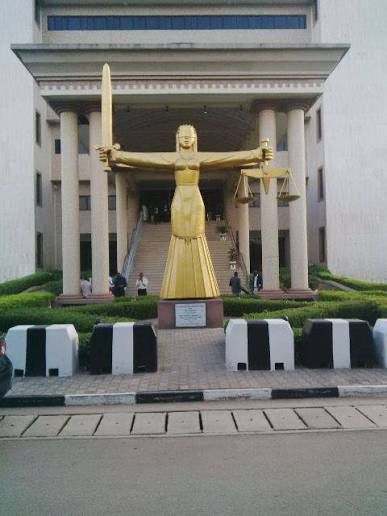
Witness Tells Abuja High Court He Mistakenly Stamped Original Ministry Letter During Investigation of Alleged $6 Billion Contract Infractions
By A1NEWS International / June 10, 2026
ABUJA, Nigeria — Fresh controversy emerged on Wednesday in the ongoing trial of former Minister of Power and Steel, Dr. Olu Agunloye, as a prosecution witness admitted before a Federal Capital Territory High Court in Apo that he mistakenly certified and stamped the wrong document during the investigation into the controversial Mambilla Hydroelectric Power Project.
The disclosure came during cross-examination by defence counsel, Adeola Adedipe (SAN), in a case brought by the Economic and Financial Crimes Commission (EFCC) against the former minister over alleged infractions linked to the award of the multi-billion-dollar Mambilla power project contract.
The development has introduced new questions regarding the handling and certification of documentary evidence central to one of Nigeria’s most closely watched corruption and procurement-related prosecutions.
Agunloye Faces Seven-Count Charge
Dr. Agunloye is standing trial before Justice Jude Onwuegbuzie on an amended seven-count charge bordering on alleged disobedience of presidential directives, conspiracy, forgery, and receipt of gratification.
The EFCC alleges that the former minister unlawfully facilitated approvals connected to the construction of the 3,960-megawatt Mambilla Hydroelectric Power Station and subsequently received financial benefits linked to the transaction.
According to the anti-graft agency, Agunloye allegedly received N5.212 million in 2019 through intermediaries connected to Sunrise Power and Transmission Company Limited.
The commission further claims that the former minister conspired with officials of the company to forge documents relating to the controversial Build, Operate and Transfer (BOT) agreement for the project.
Agunloye has consistently denied all allegations and pleaded not guilty.
Witness Cross-Examined Over FEC Documents
At Wednesday’s proceedings, the fifth prosecution witness, Iliya Iyakwari, was questioned extensively about documents submitted to the EFCC by the Federal Ministry of Power.
The witness was shown Exhibit EFCC 3K, described as an extract of the Federal Executive Council (FEC) conclusions dated May 31, 2003.
Under questioning, Iyakwari confirmed that the document was among materials forwarded by the ministry to the EFCC during the investigation.
However, when asked whether the extract had been altered or tampered with before reaching investigators, the witness said he could not verify its authenticity beyond what was forwarded to his department.
“What was sent to us was what we forwarded to the EFCC. I would not know whether it was tampered with,” he told the court.
The witness further admitted that he never had access to the original FEC conclusions and only handled copies of the document.
Admission of Certification Error
A major turning point in the proceedings occurred when Iyakwari explained how a certification irregularity arose during the transmission of documents to investigators.
According to him, a letter originally sent by the Ministry of Power to the EFCC in June 2023 was discovered to have been forwarded without proper certification.
He testified that an EFCC official later returned the document to the ministry’s legal department in January 2024 to correct the omission.
The witness stated that his director instructed him orally to certify the relevant documents.
“In the process of doing so, I mistakenly stamped the original letter dated June 27, 2023,” Iyakwari told the court.
The admission drew significant attention from lawyers and observers present in court, as documentary certification procedures remain critical to the admissibility and credibility of evidence in criminal proceedings.
Defence Raises Questions Over Evidence Handling
The defence team sought to probe deeper into the circumstances surrounding the certification process and the chain of custody of the documents.
Adedipe questioned the witness on whether another Federal Executive Council document allegedly tendered earlier in the proceedings differed from the one he certified.
The witness said he was unaware of such discrepancies and maintained that he could not determine whether any alterations had occurred within the legal department.
He also acknowledged that he did not know whether an EFCC officer involved in returning the document for certification was serving as a witness or investigator in the case.
Prosecution Objects to Further Questioning
The line of questioning sparked objections from prosecution counsel, Abba Mohammed (SAN), who argued that the witness could not be interrogated on documents he neither generated nor tendered before the court.
Mohammed urged the court to disallow the questions, citing legal authorities to support his position.
In response, the defence argued that the objection lacked merit and that the witness’s role in certifying the documents made the questions relevant to assessing the integrity of the evidence before the court.
After listening to submissions from both parties, Justice Onwuegbuzie upheld the prosecution’s objection and restricted further questioning on the disputed documents.
Mambilla Project Remains One of Nigeria’s Most Controversial Power Contracts
The Mambilla Hydroelectric Power Project has long been at the centre of legal disputes, contractual controversies, and international arbitration proceedings.
Conceived as one of Africa’s largest hydroelectric power projects, the initiative was designed to significantly increase Nigeria’s electricity generation capacity.
However, years of contractual disagreements, litigation, and procurement controversies have delayed implementation and increased scrutiny over decisions taken during previous administrations.
The ongoing criminal trial is widely viewed as a significant test of accountability regarding major public infrastructure contracts.
Court Adjourns Proceedings
Following Wednesday’s proceedings, Justice Onwuegbuzie adjourned the matter until June 18, 2026, for continuation of trial and further cross-examination.
Legal analysts say the witness’s admission concerning the mistaken certification of documents could become an important issue as the court continues to evaluate the credibility, authenticity, and evidential value of documents tendered by the prosecution.
The admission by an EFCC witness that he mistakenly stamped an original ministry document has added a new dimension to the prosecution of former Power Minister Olu Agunloye over the controversial Mambilla Hydroelectric Power Project.
As the trial progresses, attention is likely to focus not only on the substantive allegations against the defendant but also on the integrity of documentary evidence presented before the court.
With proceedings set to resume next week, the case remains one of the most closely watched corruption-related trials involving a major federal infrastructure project.




Leave a Reply