
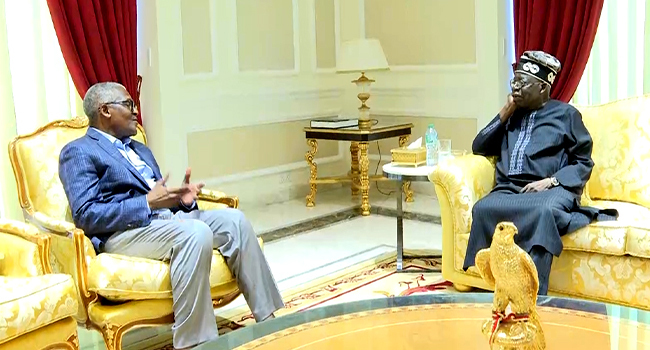
Dangote urges de-escalation as global oil volatility threatens Nigeria’s inflation and energy costs
By A1 News International
Abuja, Nigeria — March 24, 2026
The President of Dangote Group, Aliko Dangote, has warned that escalating conflict in the Middle East could trigger severe economic consequences for Nigeria, following a meeting with President Bola Ahmed Tinubu. He cautioned that rising global oil prices could worsen inflation, energy costs, and living conditions if tensions are not urgently contained.
What Happened
Speaking after his meeting with President Tinubu in Lagos, Dangote expressed concern over mounting instability in the global oil market driven by the Middle East crisis.
He noted that although Nigeria is not directly involved in the conflict, the interconnected nature of the global economy means the country cannot escape the consequences.
Economic Implications
Dangote warned that sustained increases in crude oil prices could have cascading effects across Nigeria’s economy, particularly in energy-dependent sectors.
He explained that higher fuel costs would impact transportation, manufacturing, and small-scale businesses that rely heavily on petrol and diesel-powered generators.
Oil Market Pressure and Local Impact
Global oil prices have surged in recent weeks amid fears of supply disruptions linked to the Middle East conflict. The uncertainty has already begun to reflect in Nigeria’s downstream sector.
Petrol prices have risen as refiners and marketers adjust to higher crude costs, with the Dangote Refinery and other operators implementing price increases.
Tinubu’s UK Visit and Investment Signals
Dangote also used the opportunity to commend President Tinubu’s recent state visit to the United Kingdom, describing it as a strategic step toward strengthening Nigeria’s economic outlook.
He pointed to a major agreement valued at approximately £746 million aimed at infrastructure development, particularly in ports and related sectors.
Why It Matters
The intersection of global conflict and domestic economic vulnerability places Nigeria in a precarious position. While higher oil prices may boost government revenue, the immediate effect on citizens is rising fuel costs, inflation, and reduced purchasing power.
This development raises fresh concerns about accountability and oversight in Nigeria’s public institutions.









Leave a Reply