
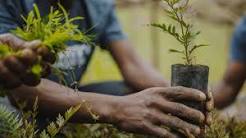
Five million tree campaign links climate action with job creation across communities
By A1 News International
Abuja, Nigeria — March 28, 2026
Ogun State’s five million tree-planting initiative is gaining momentum, with increasing youth participation in agro-forestry programmes designed to tackle environmental degradation and unemployment. The scheme is emerging as a dual-purpose intervention—addressing climate challenges while opening up new economic opportunities at the grassroots level.
Jobs Through Sustainability
The state-backed programme is creating a pipeline of green jobs for young people, particularly in nursery development, seedling production, planting operations, and post-planting maintenance. Local authorities report that structured training in grafting, pest control, and agro-forestry techniques is equipping participants with practical skills.
Officials say many of the beneficiaries—largely unemployed youths—are already generating income through nursery services and tree-care activities, signaling early economic returns from the initiative.
Grassroots Climate Action Gains Ground
Implementation has relied heavily on community-driven participation. Schools, youth groups, and local leaders are working with state agencies to identify degraded land for restoration and establish monitoring frameworks.
These local partnerships are proving critical to sustaining the initiative, particularly in improving tree survival rates and embedding environmental awareness at the community level. Monitoring teams are also helping ensure accountability beyond the planting phase.
Long-Term Economic Potential
Environmental and economic analysts suggest the programme could evolve into a scalable model for Nigeria’s green economy if sustained. Beyond immediate employment, projections include growth in agro-forestry value chains, carbon capture opportunities, and improved watershed systems that support agriculture.
There is also emerging potential for micro-enterprises around nursery supplies, sustainable wood products, and tree maintenance services—sectors that could deepen rural economic activity.
Challenges and Implementation Gaps
Despite early gains, stakeholders highlight critical challenges that could determine the programme’s long-term success. These include the need for consistent funding, access to technical expertise, and robust tracking systems to measure tree survival rates and socio-economic impact.
Experts also point to weak linkages between trained youths and financial institutions, markets, and agricultural extension services—gaps that could limit scalability if not addressed.
The Ogun initiative reflects a growing shift in subnational governance toward climate-linked economic policy. As Nigeria confronts rising unemployment and environmental stress, programmes that integrate ecological restoration with job creation could redefine public investment priorities.











Leave a Reply