
New draft rules could significantly raise the financial and compliance barriers for digital-asset businesses while imposing tighter investor-protection measures and oversight of foreign stablecoin issuers
By Kadijat Muhammed
ABUJA, Nigeria — August 24, 2026
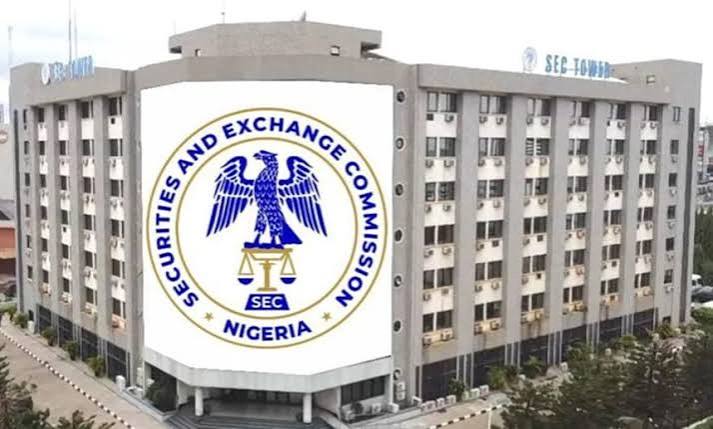
Nigeria’s Securities and Exchange Commission (SEC) has proposed a sweeping new regulatory framework for the digital-asset industry that could require cryptocurrency exchanges and custodians to maintain up to ₦2 billion in minimum capital and pay a ₦30 million registration fee before operating in the country.
The proposals are contained in the SEC’s draft rules on “Digital and Virtual Asset Operations, Custody and Markets,” released on August 20, 2026.
The proposed framework represents a significant escalation in regulatory requirements for cryptocurrency businesses operating in, or targeting residents of, Nigeria.
Beyond registration fees and capital thresholds, the draft introduces new supervisory charges, fidelity insurance requirements, retail-investor limits, enhanced suitability assessments and additional obligations for foreign stablecoin issuers.
The proposals are still draft rules, meaning the requirements could change before final adoption.
₦2bn Capital Threshold For Exchanges And Custodians
Under the proposed framework, digital-asset exchanges and digital-asset custodians would each be required to maintain a minimum capital of ₦2 billion.
Three other categories—digital-asset platform operators, digital-asset offering platforms and real-world asset tokenisation platforms—would face a proposed minimum capital requirement of ₦500 million each.
The proposed capital structure is significant because it could determine which businesses have the financial capacity to enter or remain in Nigeria’s regulated digital-asset market.
For smaller operators, the requirements could represent a substantial barrier to entry.
For the SEC, however, higher capital requirements could provide a stronger financial buffer for businesses handling customer assets and operating within a market exposed to substantial volatility, cyber risks and operational failures.
₦30m Registration Fee For Five Categories
The SEC has proposed a ₦30 million registration fee for each of the following categories:
- Digital asset exchanges;
- Digital asset custodians;
- Digital asset platform operators;
- Digital asset offering platforms; and
- Real-world asset tokenisation platforms.
The proposed fee is separate from the minimum capital requirements.
This means an exchange seeking registration could potentially face both a ₦30 million registration charge and a ₦2 billion minimum capital requirement, alongside other compliance and operating costs.
That distinction is important because registration fees are direct regulatory costs, while minimum capital is intended to remain within the business as paid-up capital subject to applicable rules.
Virtual Asset Service Providers Face Separate Regime
The SEC also proposed a different structure for virtual asset service providers (VASPs).
VASPs would require:
- ₦200 million minimum capital;
- ₦100,000 processing fee; and
- ₦300,000 application fee.
The proposed structure indicates that the commission is seeking to differentiate regulatory requirements according to the nature and risk profile of digital-asset businesses.
However, businesses operating across multiple categories could potentially face overlapping obligations depending on the final regulatory framework and how their activities are classified.
Fidelity Insurance Bond Proposed
The draft rules would also require regulated entities to maintain a fidelity insurance bond covering at least 25 per cent of their minimum paid-up capital.
If adopted in its proposed form, the requirement would create another layer of financial protection around regulated operators.
For an exchange subject to a ₦2 billion minimum capital requirement, for example, the 25 per cent threshold would translate to ₦500 million in coverage.
The proposed measure reflects growing regulatory emphasis on protecting customers from losses associated with fraud, employee misconduct and certain operational risks.
Incubation Programme Gets New Entry Costs
The SEC has also proposed fees for companies seeking to operate through its Accelerated Regulatory Incubation Programme.
Under the draft framework, applicants would pay:
- ₦200,000 initial assessment fee; and
- ₦2 million application fee.
The incubation framework is designed to allow innovative businesses to operate within a controlled regulatory environment while the SEC assesses their business models and compliance capabilities.
The proposed fees, however, mean that even businesses seeking an initial route into the regulated market would face direct financial obligations.
SEC Plans Turnover-Based Supervisory Charges
The proposed framework goes beyond one-time registration fees.
The commission intends to introduce ongoing supervisory charges linked to the turnover of regulated entities.
For a digital-asset exchange operating under the incubation programme, the proposed supervisory charge would be 0.015 per cent of adjusted turnover, while other entities would pay 0.0075 per cent.
After full registration, the proposed rates would increase to:
- 0.025 per cent of adjusted turnover for digital-asset exchanges; and
- 0.015 per cent for other regulated entities.
The charges would be payable quarterly or at another frequency determined by the commission.
What This Means For Operators
The proposed system would make regulatory costs partly dependent on business volume.
That could create a different financial burden for high-volume exchanges compared with smaller operators.
For the SEC, turnover-linked charges provide an ongoing supervisory funding mechanism.
For operators, however, the additional cost could become significant as transaction volumes increase.
Retail Investors Could Face New Investment Limits
One of the most consequential provisions concerns how much ordinary retail investors could commit to digital-asset offerings.
Under the proposal, a retail investor would generally not be permitted to invest more than ₦1 million in a single issuer or more than ₦10 million across digital-asset offerings within a 12-month period.
The proposal could materially change how digital-asset offerings are marketed to Nigerian retail investors.
The SEC says additional safeguards would apply where an investor seeks to commit more than ₦1 million or 5 per cent of their net worth, whichever is higher, according to the draft framework supplied.
Platforms Would Have To Assess Investor Capacity
Digital-asset offering platforms would face additional responsibilities when dealing with investors who exceed the proposed thresholds.
They would be required to:
- Provide a prominent risk warning;
- Obtain the investor’s express consent;
- Confirm that the investor understands the nature and risks of the investment;
- Assess the investor’s knowledge and experience;
- Assess the investor’s financial position; and
- Determine the investor’s ability to absorb potential losses.
Platforms would also have to maintain records of the warnings, investor consent and assessments.
They would further be expected to operate systems capable of monitoring and enforcing the prescribed investment limits.
The shift places part of the responsibility for investor protection directly on the digital-asset platform.
Institutional And High-Net-Worth Investors
The proposed retail restrictions would not necessarily apply in the same manner to all investors.
The draft provides for possible exemptions for institutional, qualified and high-net-worth investors, as well as other categories recognised by the commission.
The distinction reflects a traditional securities-regulation principle: investors deemed to possess greater financial capacity, investment experience or sophistication may receive different regulatory treatment from ordinary retail participants.
However, the final definitions and eligibility requirements will be important in determining how broad those exemptions become.
Targeting Nigerians Without Registration Would Be Prohibited
One of the most significant provisions is the proposed territorial reach of the regulations.
The draft states that no person or company would be permitted to conduct digital or virtual asset business in Nigeria or target Nigerian residents without registration, approval or authorisation from the SEC.
This could have implications for offshore cryptocurrency platforms that do not maintain a conventional physical presence in Nigeria but actively provide services to Nigerian customers.
If adopted in its proposed form, the provision would strengthen the SEC’s ability to assert regulatory jurisdiction over businesses whose operations are directed at the Nigerian market from outside the country.
Foreign Stablecoin Issuers Face New Requirements
The proposed framework also addresses foreign stablecoin issuers seeking to operate in Nigeria.
The SEC proposes requirements including:
- Appointment of a local representative;
- Evidence of authorisation in an acceptable foreign jurisdiction;
- Compliance with Nigerian reserve requirements;
- Compliance with liquidity requirements; and
- Compliance with Nigeria-specific redemption obligations.
Stablecoins are particularly important because they are designed to maintain a relatively stable value against an underlying asset, commonly a fiat currency.
Their increasing use in digital payments, trading and cross-border transactions means regulators globally are paying closer attention to reserve assets, redemption rights and consumer protection.
Corporate Governance To Become Mandatory
The proposed rules would also require regulated digital-asset entities to comply with Nigeria’s corporate governance code and other governance requirements prescribed by the SEC.
This represents a move beyond financial requirements.
The regulator is seeking greater oversight of how digital-asset companies are structured, managed and controlled.
That could place increased emphasis on board composition, internal controls, risk management, compliance functions, accountability and reporting.
The Regulatory Balancing Act
The SEC’s proposals highlight the difficult balance facing regulators.
Nigeria has one of Africa’s largest and most active cryptocurrency user bases, but the industry also presents significant risks involving fraud, market manipulation, cybercrime, consumer losses, money laundering and operational failures.
A stronger regulatory regime could improve market confidence and provide greater protection for consumers.
But excessive compliance costs could also create unintended consequences.
Smaller legitimate businesses may find it difficult to meet the proposed capital thresholds, potentially concentrating the market among larger operators.
That raises an important policy question:
Will higher regulatory barriers strengthen Nigeria’s digital-asset market—or push smaller operators and users towards less-regulated offshore platforms?
Compliance Costs Could Reshape The Industry
The proposed requirements could fundamentally alter the economics of operating a cryptocurrency business in Nigeria.
An exchange facing a ₦30 million registration fee, ₦2 billion minimum capital requirement, insurance obligations, supervisory charges, technology costs, compliance staffing and ongoing reporting requirements would need significant financial capacity before achieving commercial scale.
The likely consequence could be a more consolidated market.
Larger companies may be better positioned to absorb regulatory expenses, while smaller firms and start-ups may seek partnerships, mergers or alternative markets.
For investors, consolidation could provide greater confidence if it results in stronger and better-capitalised operators.
But reduced competition could also increase market concentration.
The Unanswered Questions
Several issues will require close attention before the draft becomes final regulation.
Among them are:
- Whether the ₦2 billion capital requirement will remain unchanged;
- How the SEC will define each category of digital-asset operator;
- Whether businesses operating across several categories will face multiple capital requirements;
- How foreign platforms targeting Nigerians will be identified and regulated;
- How high-net-worth and qualified-investor exemptions will operate;
- How turnover-based supervisory fees will be calculated;
- How stablecoin reserves will be independently verified;
- How the rules will interact with other Nigerian financial-sector regulations; and
- What transitional period existing operators will receive to comply.
These details could determine whether the new framework becomes a foundation for sustainable industry development or creates significant regulatory friction.
From Cryptocurrency Boom To Regulatory Maturity
Nigeria’s digital-asset market has evolved considerably from its largely informal beginnings.
The proposed SEC framework suggests the regulator is moving toward a model in which cryptocurrency and tokenised assets are treated as a formal component of the financial and investment ecosystem rather than an activity operating largely outside traditional regulatory structures.
The introduction of capital requirements, insurance, investor suitability assessments, governance obligations and continuing supervision indicates a shift toward institutionalisation of the digital-asset market.
The challenge will be ensuring that regulation protects investors without eliminating innovation.
The SEC’s proposed ₦30 million registration fee and up to ₦2 billion minimum capital requirement could mark a major turning point for Nigeria’s cryptocurrency industry.
If adopted, the rules would significantly increase the financial, governance and compliance obligations of digital-asset businesses while giving the regulator greater oversight of exchanges, custodians, tokenisation platforms, offering platforms and foreign stablecoin issuers.
For investors, the proposed retail limits and enhanced risk assessments could provide additional protection against excessive exposure to highly volatile digital assets.
For operators, however, the proposed framework could make Nigeria’s regulated crypto market substantially more expensive to enter and maintain.
The central policy test will therefore be proportionality.
Nigeria needs a digital-asset regulatory system strong enough to prevent abuse, protect investors and preserve financial stability—but flexible enough to allow legitimate innovation and competition to survive.
Because the proposals remain draft rules, stakeholders will have an opportunity to scrutinise the requirements before the SEC determines the final framework.
The outcome could ultimately determine whether Nigeria becomes a more credible regulated hub for digital assets—or whether regulatory costs drive a significant portion of crypto activity beyond the reach of domestic supervision.
EDITORIAL NOTE: The requirements discussed in this report are contained in the SEC’s draft rules released on August 20, 2026. They should not be treated as final regulations until formally adopted by the Commission.













Leave a Reply