
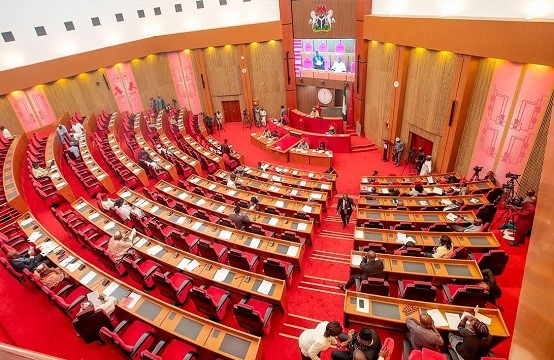
Lawmakers condemn the absence of key government agencies from a Public Accounts Committee hearing, warning that failure to appear undermines parliamentary oversight and accountability in the management of public funds.
By Umar Baba
ABUJA, Nigeria — August 3, 2026
The Nigerian Senate has issued a fresh 72-hour ultimatum to some of the country’s most strategic public institutions—including the Nigerian National Petroleum Company Limited (NNPCL), the Central Bank of Nigeria (CBN), the Niger Delta Development Commission (NDDC), and the Nigerian Upstream Petroleum Regulatory Commission (NUPRC)—to appear before its Committee on Public Accounts over unresolved audit queries.
The ultimatum follows the failure of officials from the invited agencies to honour invitations to a committee hearing on Monday, with lawmakers expressing frustration over what they described as a disregard for the constitutional oversight powers of the National Assembly.
The Senate warned that continued non-compliance could trigger legislative sanctions, underscoring growing concerns about transparency, accountability and public financial management within key government institutions.
Committee Expresses Concern Over Agencies’ Absence
The directive was issued during a meeting of the Senate Committee on Public Accounts after none of the invited agencies appeared before lawmakers, nor provided formal explanations for their absence.
Committee Chairman, Senator Ibrahim Dankwambo, said the hearing formed part of the committee’s constitutional responsibility to scrutinise audit reports and ensure accountability in the management of public resources.
According to him, the committee had scheduled the engagements to reduce the backlog of audit issues requiring legislative attention.
“We wanted to reduce the volume of work to enhance our oversight. The letters and invitations were issued, but our guests have not arrived,” Dankwambo stated.
He stressed that compliance with committee invitations is essential for effective legislative oversight and the promotion of transparent governance.
Senators Condemn ‘Disrespect’ to the National Assembly
The absence of the agencies drew strong criticism from members of the committee.
Senator Babangida Hussaini described the failure to appear as a direct affront to the authority of the National Assembly.
He argued that parliamentary committees derive their powers from the Constitution and therefore deserve the cooperation of all public institutions.
“The committee has powers, and it is most disrespectful to the National Assembly for any agency to fail to appear to respond to audit queries,” Hussaini said.
He further warned that continued disregard for legislative invitations could weaken accountability mechanisms and encourage a culture of impunity within public institutions.
Calls for Immediate Sanctions
Another committee member, Senator Patrick Ndubueze, advocated stronger punitive measures against agencies that ignored the Senate’s invitations.
He argued that institutions entrusted with managing public funds should demonstrate the highest standards of accountability and should not disregard invitations from lawmakers without offering any justification.
According to him, agencies that fail to honour oversight engagements risk undermining public confidence in governance.
Ndubueze urged the committee to invoke available legislative powers should the agencies fail to comply within the stipulated period.
Final 72-Hour Deadline Issued
Following deliberations, the committee unanimously resolved to issue what lawmakers described as a final opportunity for the affected agencies to appear.
The agencies have been directed to appear before the committee on August 6, with the Senate warning that failure to comply may attract further legislative action.
While the committee did not specify the exact sanctions under consideration, parliamentary procedures allow committees to recommend measures ranging from fresh summonses to more stringent enforcement actions, subject to applicable laws and Senate rules.
Why the Audit Queries Matter
Although details of the outstanding audit queries were not disclosed during the meeting, audit reviews conducted by the Office of the Auditor-General for the Federation are a central component of Nigeria’s public financial accountability framework.
The Public Accounts Committee examines audit observations involving ministries, departments, agencies and government-owned enterprises to determine whether public funds have been managed in accordance with existing laws and financial regulations.
Such hearings often focus on issues including:
- Unexplained expenditures.
- Procurement compliance.
- Revenue remittances.
- Financial reporting.
- Internal control systems.
- Implementation of previous audit recommendations.
The committee’s work is considered critical in strengthening transparency and ensuring value for money in public administration.
Strategic Institutions Under Legislative Scrutiny
The agencies invited to appear occupy pivotal roles in Nigeria’s governance and economic architecture.
Among them are:
- NNPCL, responsible for the country’s commercial oil and gas operations.
- CBN, Nigeria’s apex monetary authority.
- NUPRC, the regulator overseeing upstream petroleum activities.
- NDDC, established to facilitate development projects across the Niger Delta region.
Given their significant financial responsibilities and public mandates, lawmakers say regular accountability engagements remain essential to promoting public trust and fiscal discipline.
Legislative Oversight and Constitutional Responsibility
Under Nigeria’s constitutional framework, the National Assembly exercises oversight over public institutions through its standing committees.
These committees are empowered to review public expenditures, examine audit reports, summon officials and make recommendations aimed at improving governance and accountability.
Oversight hearings also provide an opportunity for public institutions to clarify audit observations, respond to findings and explain corrective measures already taken.
Constitutional experts note that cooperation between government agencies and legislative committees is an important element of democratic governance, helping to ensure that public resources are managed transparently and in the public interest.
Growing Demand for Accountability
The Senate’s latest action comes amid increasing public demand for stronger accountability across government institutions, particularly those managing significant national revenues.
Civil society organisations, anti-corruption advocates and governance experts have repeatedly called for more effective implementation of audit recommendations and greater transparency in public financial management.
Observers say timely appearances before oversight committees help reinforce confidence in public institutions and demonstrate respect for constitutional checks and balances.
The Senate’s decision to issue a 72-hour ultimatum to the NNPCL, CBN, NDDC, NUPRC and other agencies signals lawmakers’ determination to reinforce legislative oversight and ensure that public institutions remain answerable for the management of national resources.
Whether the affected agencies honour the latest summons on August 6 will likely shape the Senate’s next course of action and could influence broader debates on accountability, institutional cooperation and fiscal governance.
As Nigerians continue to demand greater transparency in public administration, the outcome of the hearing may serve as an important indicator of how effectively constitutional oversight mechanisms are functioning in safeguarding the public interest.





Leave a Reply